RB17 almost ready: Red Bull's track hypercar promises to be faster than an F1 car
 © Red Bull Racing
Red Bull Advanced Technologies starts final assembly of the RB17, a 1,200 hp track-only hypercar by Adrian Newey, due for testing in the coming weeks.
Author: Nikita Novikov
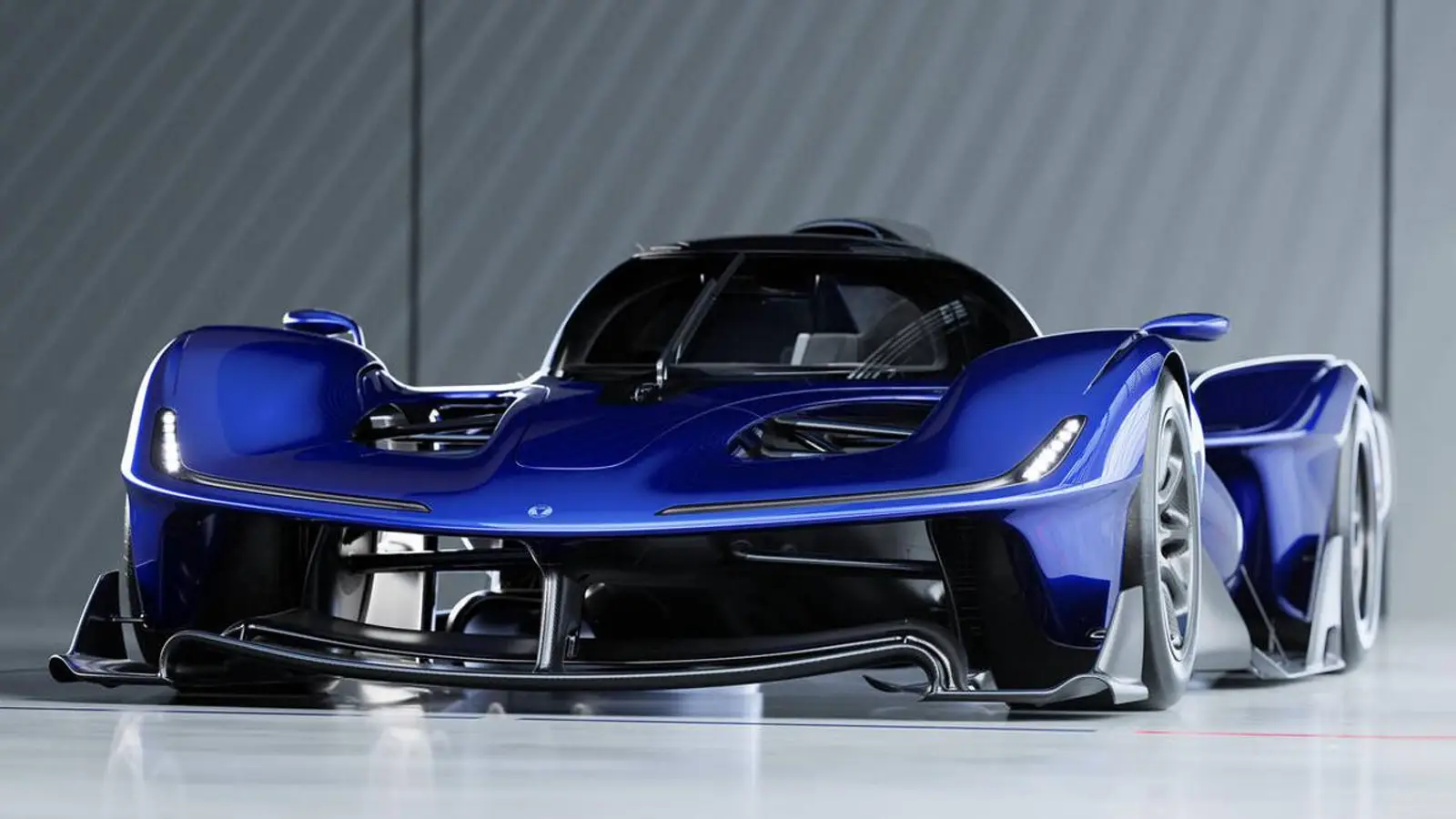
Red Bull Advanced Technologies has started final assembly of the first RB17 — a track-only hypercar designed by Adrian Newey. The car will produce 1,200 hp, weigh just 900 kg and is set to start testing in the coming weeks.
The RB17 is conceived not as a road-going supercar for the collection but as a two-seat racing-prototype-grade machine. A total of 50 examples are planned, each costing around 5 million pounds, or roughly 5.8 million euros. Customer deliveries are due to begin in spring 2027 and stretch over about two years, until the end of 2028.
The powertrain is one of the main reasons to talk about the RB17 not as an image project but as a genuine engineering statement from Red Bull. At its core is a Cosworth-developed naturally aspirated V10 producing 1,000 hp. Another 200 hp comes from an electric motor integrated into the Xtrac hybrid gearbox. Top speed is quoted at 354 km/h.
According to Red Bull’s simulations, the RB17 can lap faster than a current Formula 1 car at several circuits. At Spa, the indicative lap time is around 1 minute 38 seconds — about a second quicker than today’s F1 machine. For a track day, that’s an almost absurd level: the owner doesn’t just get a rare hypercar, but a piece of machinery that demands preparation, a team and an understanding of how to handle that kind of aerodynamics.
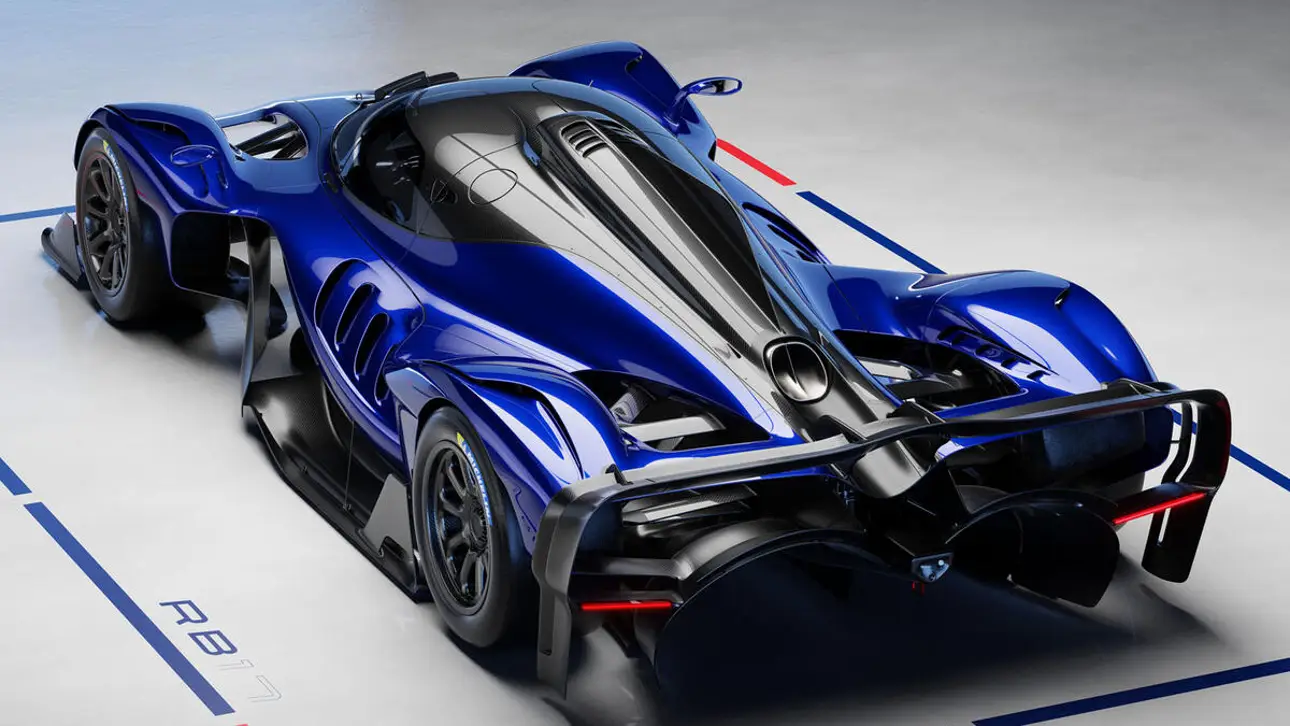
The structure is fully carbon. The bodywork has noticeably changed during development relative to the mock-up shown at the Goodwood Festival of Speed in 2024, although the overall proportions are unchanged. There are now slim headlights, refined air intakes and active aero elements. A particular detail is the long fin on the engine cover, through which the V10’s exhaust exits. The gas flow is directed under the rear wing to increase downforce.
Programme head Rob Gray called the idea “Adrian Newey’s parting gift”, since it appeared shortly before he left Red Bull for Aston Martin. The solution required extra work because of high thermal loads, but it neatly illustrates Newey’s approach: even the exhaust here works not only for sound but also for aerodynamics.
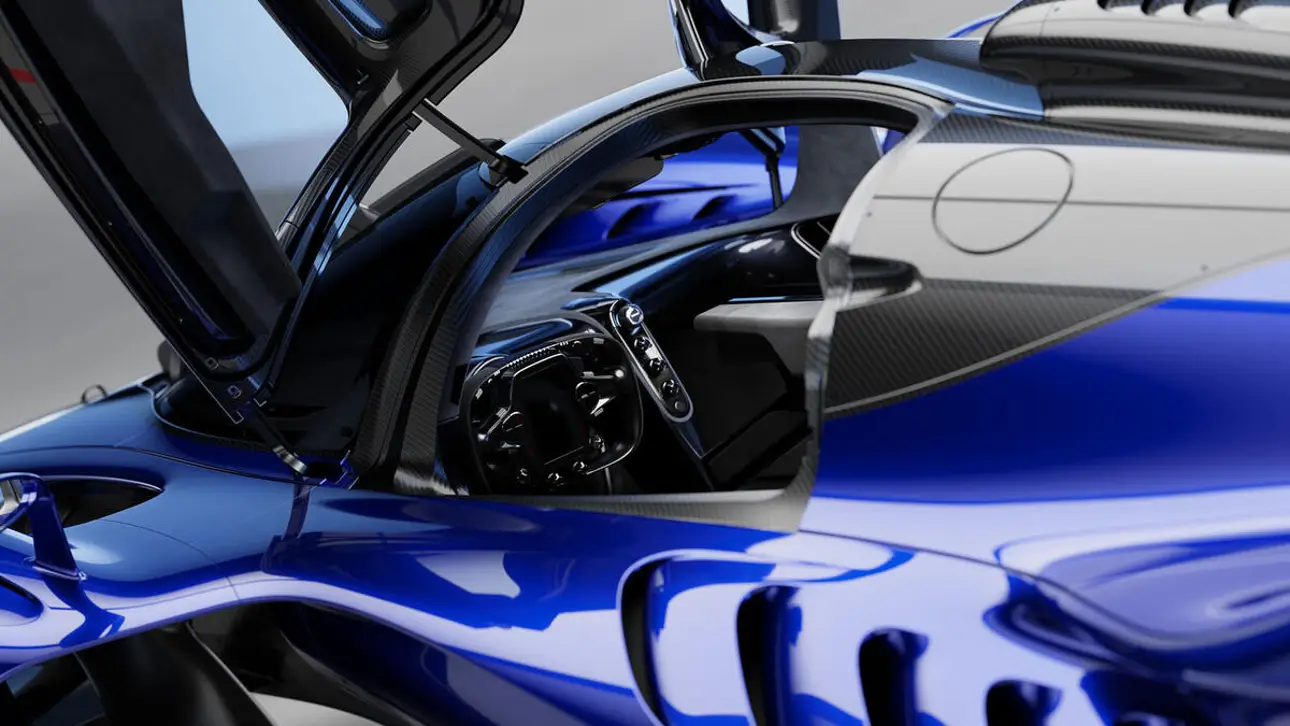
Downforce on the RB17 can reach 1,700 kg, but above 150 km/h it has to be limited by active aero — otherwise drag and tyre loads grow. The suspension is also active: it manages ride height and keeps the body at a stable level. The cabin is racy and tight, but two-seat: the passenger sits next to the driver and slightly behind, to keep the frontal area narrow. Instead of screens, there are physical knobs and rollers.
Officially the RB17 was designed for the track only, but a road-going conversion by Lanzante through the UK’s Individual Vehicle Approval procedure is already being discussed. The estimated cost of such a conversion is between 250,000 and 500,000 pounds, or roughly 290,000 to 580,000 euros.
After the 50 cars, Red Bull isn’t saying yet whether there will be a next project. It’s a rare case where a pause sounds logical: building something faster than the RB17 would already mean going beyond what a private customer can actually use.
This English edition was prepared using AI translation under editorial oversight by SpeedMe. The original reporting is by Nikita Novikov
Latest Stories