How long does an EV really last? Fresh data quietly buries an old fear
 © A. Krivonosov
Recurrent's analysis of 1.61 billion km shows EVs keep 97% of their range after three years and 95% after five. Charging is faster, winter losses are smaller.
Author: Daria Kashirina
A fresh Recurrent report shows that EVs are becoming more practical on several fronts at once: range is growing, charging is getting faster, and battery degradation looks less frightening than many expected.
Based on more than 1.61 billion km of driving data, the average EV keeps roughly 97% of its original range after three years, and 95% after five. If a new 2026 model covers 523 km today, by 2031 its expected range could land at around 497 km. It doesn’t mean the battery isn’t aging — it is — but for an everyday owner the loss tends to feel less like drama and more like a mild trim of the original number.
The average expected range of popular EVs reached 523 km in 2026. In 2025 it was 472 km, and back in 2020 just 420 km. The jump isn’t only about bigger batteries. Manufacturers are tightening aerodynamics, thermal management and software to squeeze more kilometers out of every kWh.
Even so, the longest legs still belong to the biggest packs. The electric Chevrolet Silverado with its 205 kWh battery can travel up to 880 km on a charge. That’s not a universal formula, though: large SUVs and pickups drag down the market’s average efficiency. In 2026 the average EV consumption is 23.3 kWh per 100 km, while the most efficient models slip in at around 14.3 kWh per 100 km.
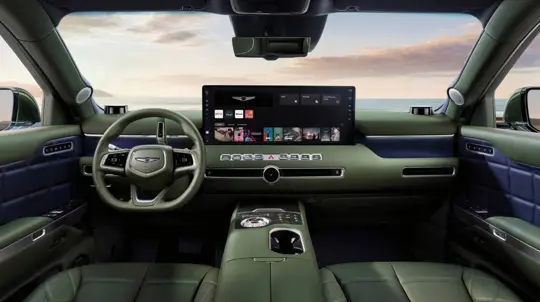
The most visible progress is in charging. The best models can already add 161 km of range in under 10 minutes. What matters isn’t the headline peak power but how long the car holds a high charging rate. The Hyundai Ioniq 5, Ioniq 6, Kia EV6 and Genesis GV60 stand out here thanks to their 800-volt architecture. At the premium end, the Porsche Taycan and Lucid push things even further.
Winter still bites into range. At 0 °C, EVs hold on to about 78% of their range on average; at minus 6.7 °C, around 70%. A heat pump helps: at 0 °C it adds roughly 10% more range compared with a conventional electric heater.
EVs are past the stage where buyers had to take promises on faith. The central question is shifting: not “will the battery die?” but whether a specific model fits your climate, your routes and your charging habits.
This English edition was prepared using AI translation under editorial oversight by SpeedMe. The original reporting is by Daria Kashirina
Latest Stories