Audi wants to erase the last pause in its dual-clutch gearbox
 © A. Krivonosov
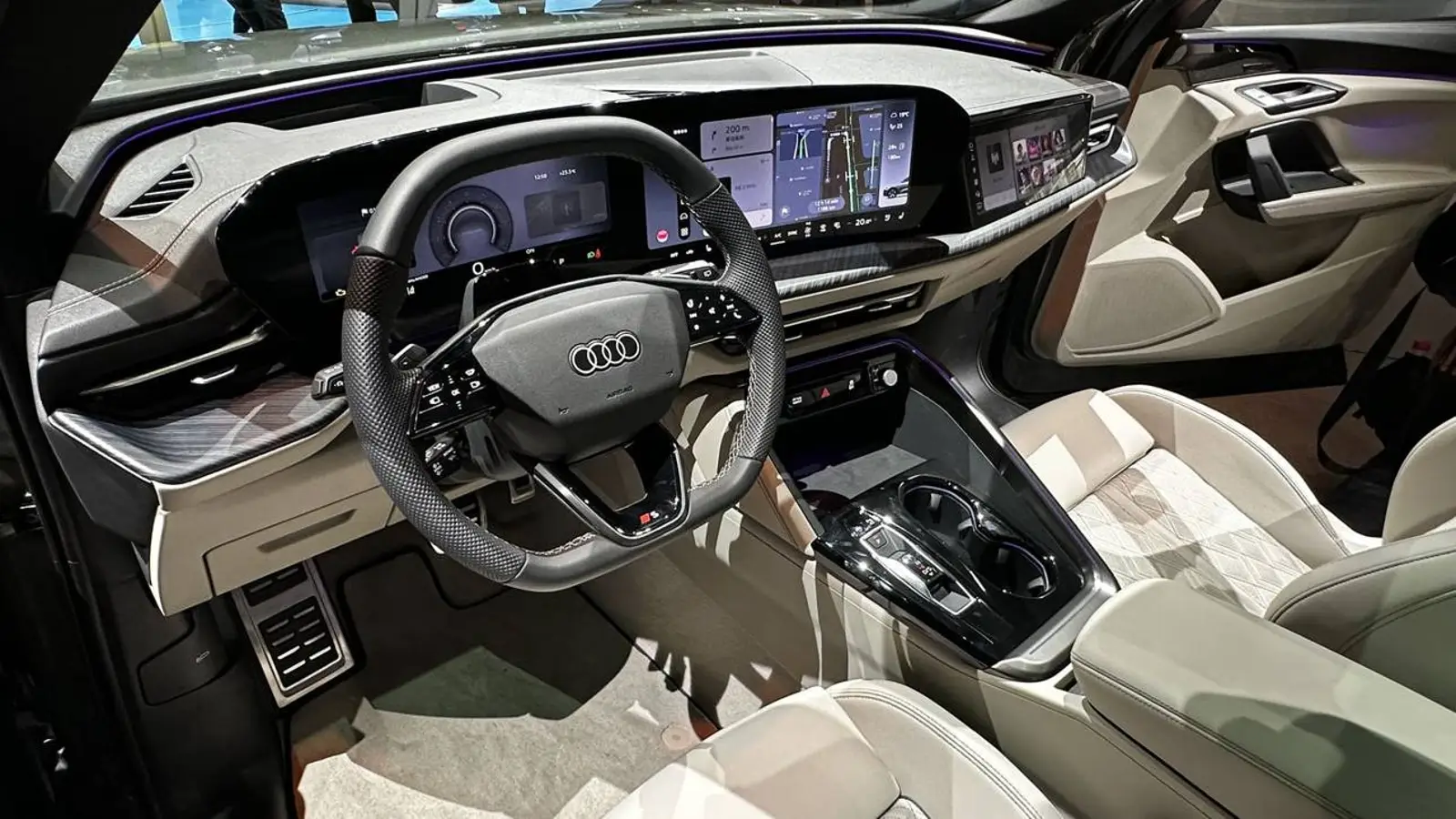
Audi files a patent for an S tronic gearbox that begins engaging the next clutch before the previous one fully releases, almost erasing the shift pause.
Author: Polina Kotikova
Audi has decided to refine a gearbox already considered one of the fastest among automated transmissions. A new patent describes a scheme in which the dual-clutch S tronic could shift gears almost without the familiar micro-pause.
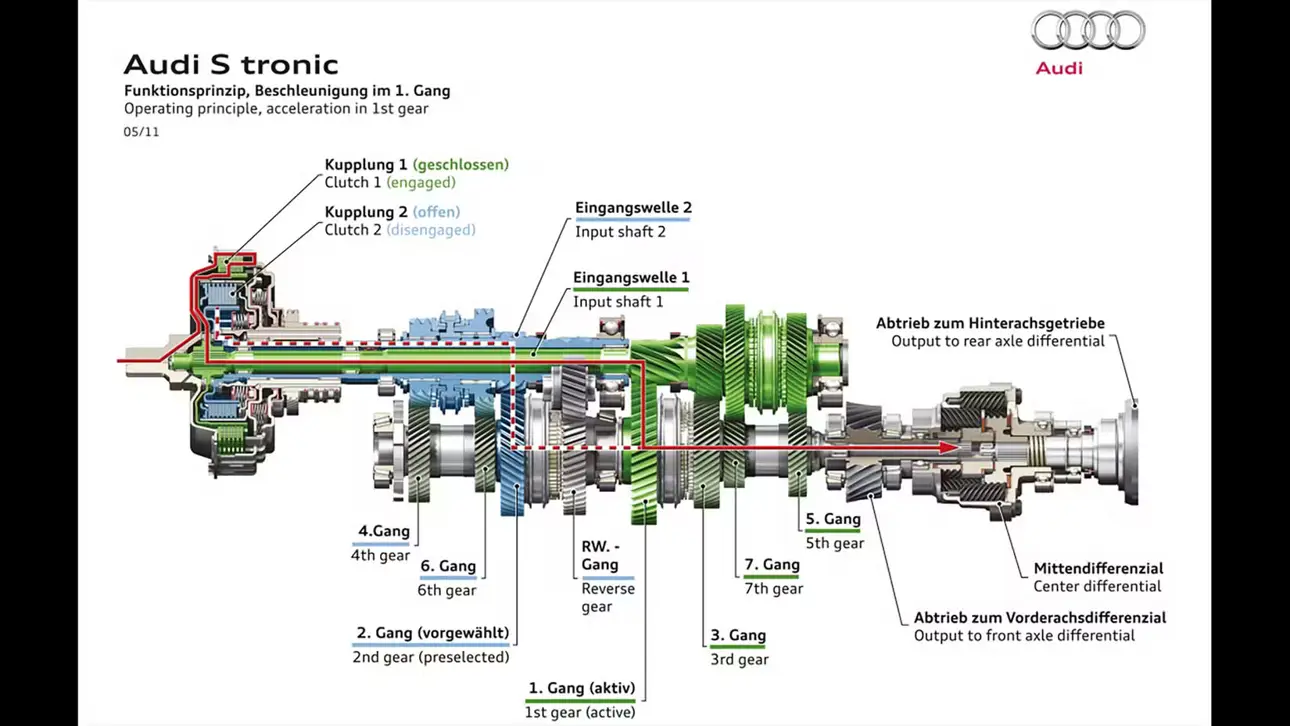
A conventional DCT (a preselective gearbox with two clutches) works thanks to two clutches and two sets of gears. At Audi, odd gears are linked to one shaft, even gears to another. While the car is rolling in one gear, the next one is already prepared, so the shift takes only a fraction of a second. Yet engineers decided even those fractions were too much.
In the patent Audi proposes starting to close the second clutch before the first one has fully opened. Instead of a brief wait between releasing one clutch and engaging the other, the two processes partially overlap. The document repeatedly uses the term «kiss point» — the moment when the clutch disc just touches the flywheel during engagement, or, conversely, the moment when it pulls away during disengagement.
The idea is to take up all the small slack in the system in advance. The new gear is brought close to its working state before the actual shift, and the clutches briefly operate with overlap. In theory this almost eliminates the torque interruption: power doesn’t drop out, and the shift feels more cohesive and crisp.
On track, cutting a shift from 0.2 seconds to nearly zero won’t deliver as much as the marketing might suggest. For the driver, however, the effect lands differently: the car simply feels quicker, especially in Sport mode. Not because the engine gains horsepower, but because that brief pause between throttle input and the next surge of acceleration disappears.
There’s an amusing side note. If shifts become truly seamless, Audi may have to keep a bit of drama on purpose for its sportier models — for instance, so the RS3’s exhaust still has time to crackle when the gear changes.
That said, it’s no certainty that the technology will quickly reach every Audi Sport model. Some of the most powerful cars, including the RS6 and RS Q8, already use classic torque-converter automatics rather than DCTs. Still, the patent shows the direction: even in the EV era, Audi keeps looking for ways to make a combustion car feel alive — not just through power, but through a sense of mechanical precision.
This English edition was prepared using AI translation under editorial oversight by SpeedMe. The original reporting is by Polina Kotikova
Latest Stories