Hongqi answers the new EV wave by rebuilding what drivers see first — the cabin
 © A. Krivonosov
Hongqi keeps the exterior tweaks subtle on the updated H5 sedan and HQ9 minivan, but rethinks both interiors to chase China's new EV brands.
Author: Daria Kashirina
Hongqi is lining up two important debuts: the updated H5 and HQ9 hit the market on May 20. The exterior changes are restrained, but inside both models move noticeably closer to the style of China's so-called «new forces» — bigger screens, a cleaner dashboard and a different control logic.
The Hongqi H5 has a calmer, more solid front end. Designers stripped away some of the extra decoration, reworked the daytime running lights and redesigned the headlights: the sedan now looks visually closer to the larger H9. The taillight shape is unchanged at the rear, but the internal graphics have shifted and the central chrome element is gone. More performance-oriented Michelin tyres are also part of the package.
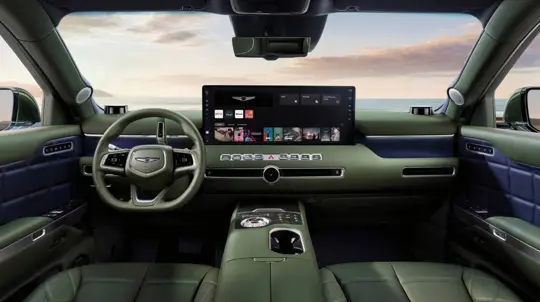
The biggest change on the H5 is the cabin. The old vertical central screen is gone. In its place sits a separate «floating» display, and the instrument cluster has also been spun off into its own module. Physical buttons remain below the screen — good news for anyone who doesn't want to dig through menus for everything. Another notable change is the move to a column-mounted gear selector. Seats and door cards have been updated too. No revolution is expected under the bonnet.
The H5 should keep its 1.5-litre turbo with 169 hp and 258 Nm, plus the 2.0-litre engine with 224 hp and 340 Nm. The plug-in hybrid likely stays as well: the current version pairs a 1.5-litre engine with a 228 hp electric motor and offers 130 or 170 km of EV range on the CLTC cycle. Fuel consumption with a depleted battery is around 4.5 l/100 km on the WLTC cycle.
The Hongqi HQ9 minivan is being updated in a more chauffeur-ready direction. The exterior keeps the imposing grille with vertical slats and the signature red emblem. The dimensions are sizeable: 5222 mm long, 2005 mm wide, 1935 mm tall, with a 3200 mm wheelbase.
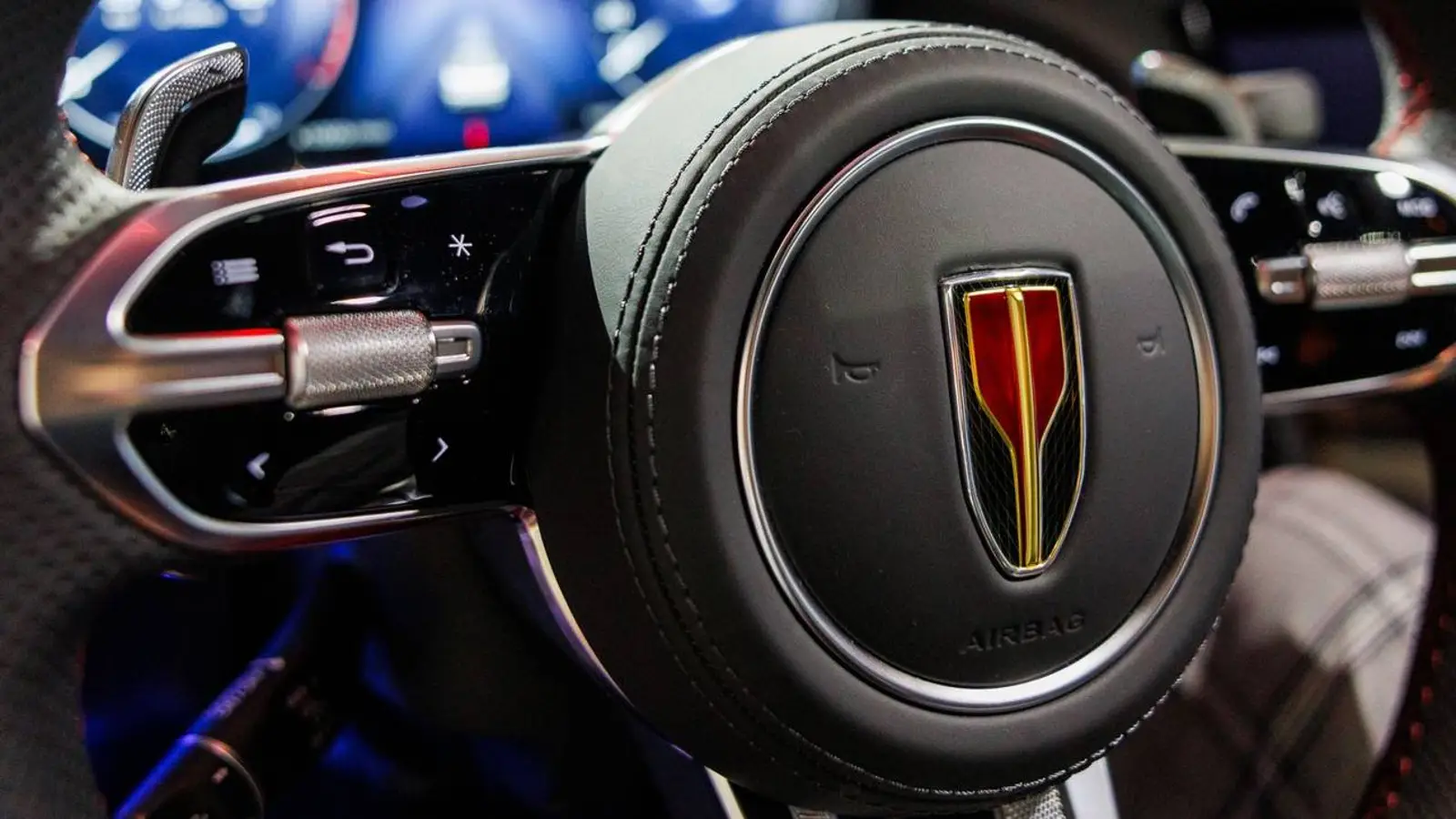
Inside the HQ9 the changes are more visible. There's a new screen layout: the central display and the passenger-side screen are now the same size, larger and sharper. The gear selector has migrated to the steering column, freeing up space on the centre console for a wireless charger. The steering wheel is new, the seats have been reworked and the door pockets are bigger. The second row gets individual seats with their own control screen, and a folding screen and a table are provided in the back.
The HQ9 PHEV will get a 2.0-litre engine producing 120 kW within the hybrid system, paired with a 39.5 kWh battery. Depending on the version, EV range will be 168 or 173 km, and the pack now uses lithium iron phosphate chemistry. The petrol version keeps its 2.0T with a 48-volt mild-hybrid system: 252 hp and 380 Nm.
Hongqi hasn't torn up the styling of the H5 or HQ9, but it has grasped the key point: today's Chinese buyer looks at the cabin first. That's exactly where these older petrol and hybrid models have to prove they can still hold their own against the new electric brands.
This English edition was prepared using AI translation under editorial oversight by SpeedMe. The original reporting is by Daria Kashirina
Latest Stories