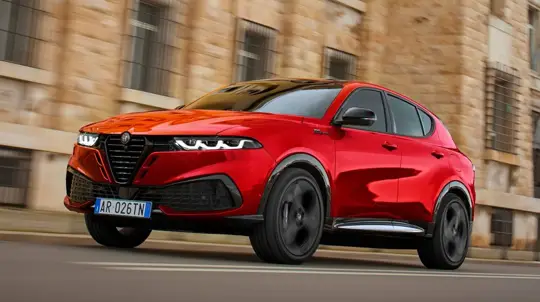
Volkswagen quietly retires the Touran — the family minivan loses to the SUV era
 © A. Krivonosov
Volkswagen has quietly ended Touran production in Wolfsburg after 24 years. Around 2.3 million units built, no successor planned — the SUV era takes another minivan.
Author: Daria Kashirina
Volkswagen Touran left almost unnoticed, yet for the family-car market this is a significant moment. On 29 April 2026, the last example of a model that lasted 24 years rolled off the line in Wolfsburg — one of the symbols of the practical European minivan.
The Touran arrived in late 2002 and quickly became an important car for Volkswagen. Between December 2002 and December 2025, Germany registered 1,070,558 new Tourans, and Italy registered 116,507. The best year was 2004: 95,408 units in Germany and 15,310 in Italy. Total output reached roughly 2.3 million examples.
Age is not the only reason for the shutdown. The second generation was already more than 11 years old, and from 6 July 2026 the UN General Safety Regulation II, Stage C requirements come into force. Without modifications or exemptions, the Touran could no longer be registered. Volkswagen chose not to update an old model in the face of declining demand. A pity, because the Touran was that rare car where practicality wasn’t a pose — it was simply delivered.
The 4.53-metre second generation offered three individual seats in the middle row and an optional third row. In five-seat form the boot held 743 litres, 834 litres with the middle row slid forward, and up to 1,980 litres with the seats folded. Even the seven-seater played fair: 137 litres behind the raised third row, 633 litres without it.
By 2024 the engine range had been pared down to a 1.5 TSI with 150 hp and a 2.0 TDI with 122 or 150 hp. In its final years volume slipped to around 20,000 cars a year, although Germany still registered more than 14,000 Tourans in 2025.
There will be no successor. The closest model in size is the Tiguan, but seven seats are only available in the larger Tayron. With that, Volkswagen finally surrenders the minivan segment to crossovers. The trouble is that a tall body with a fashionable silhouette doesn’t always replace a car in which every centimetre was designed for the family.
This English edition was prepared using AI translation under editorial oversight by SpeedMe. The original reporting is by Daria Kashirina
Latest Stories