Rivian shows what a real automotive AI assistant looks like — one that operates the car
 © rivian.com
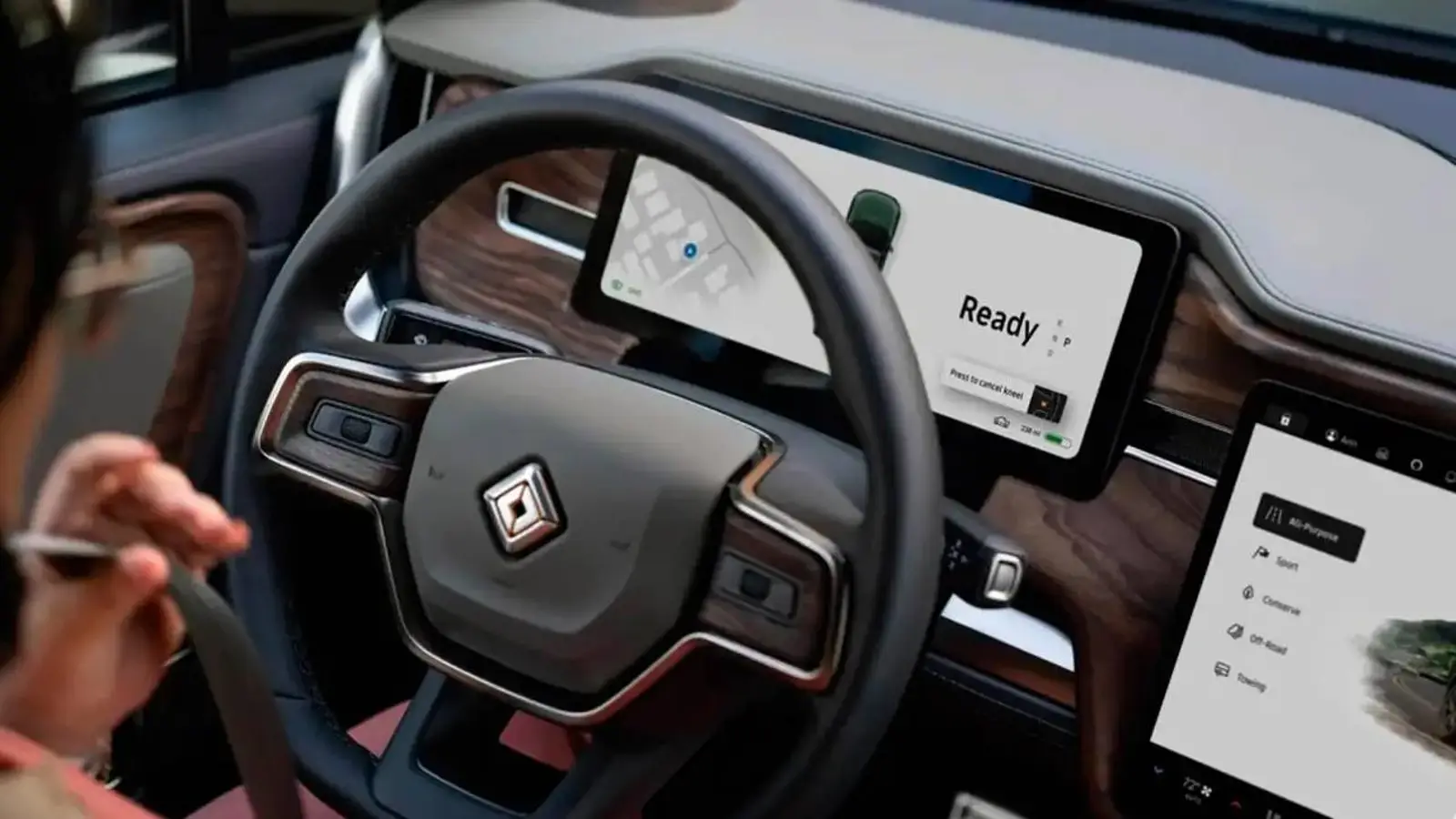
Rivian rolls out its AI Assistant to R1T, R1S and the upcoming R2. Unlike Tesla's Grok, it controls drive modes, climate and motorized panels by voice.
Author: Polina Kotikova
Rivian has begun the mass rollout of its AI Assistant, and this is no longer just a voice helper for chitchat. The feature arrived with the 2026.15 update and is available across the brand’s entire EV lineup — from the first-generation R1S and R1T to the upcoming R2 crossover.
Rivian first showed the assistant back in December, at Autonomy & AI Day. At the time it looked like a statement of big ambitions: in-house AI chips, autonomous features and a next-level voice interface. Now the system has reached actual owners, and the first hands-on tests turned out to be far more interesting than the promises.
The key difference with Rivian Assistant is that it doesn’t just answer questions. It has access to the vehicle’s onboard systems and can take action. The assistant can switch drive modes, adjust climate, open and close motorized panels, pull range data and calculate how much energy will be left on arrival.
It understands several commands in one phrase. Instead of jumping through center-screen menus, you can ask it to change settings, plan a route or clarify trip details in one go. There’s also integration with Google Calendar and music services: the assistant works with your schedule and helps build playlists.
Another strong feature is messaging. Rivian Assistant can read incoming texts and help with replies. But here a funny and not entirely convenient quirk has already surfaced: owners noticed that messages are read verbatim. If someone sends a particularly explicit or rude text, the assistant may say it out loud in front of passengers or children.
Next to Rivian, Tesla’s Grok looks less useful. It answers questions, searches for information, adds points to navigation and sets reminders, but it doesn’t yet replace full control of the car’s functions. Rivian’s assistant is closer to a real digital co-pilot built into the car, rather than one that simply lives alongside it.
There are weak spots too. Users have already started asking the assistant about future Rivian models, and sometimes it serves up dubious information — for instance about the R3X launch timing. Treating it as a source of insider scoops is definitely not advisable.
Rivian is trying to make AI not a cabin toy, but a new way of operating the car. And if the system keeps evolving at this pace, buttons and menus in EVs will soon start to look not modern, but simply a backup option.
This English edition was prepared using AI translation under editorial oversight by SpeedMe. The original reporting is by Polina Kotikova
Latest Stories