BYD Blade Battery in Hongqi 2026: What the FAW–FinDreams Deal Means
 © A. Krivonosov
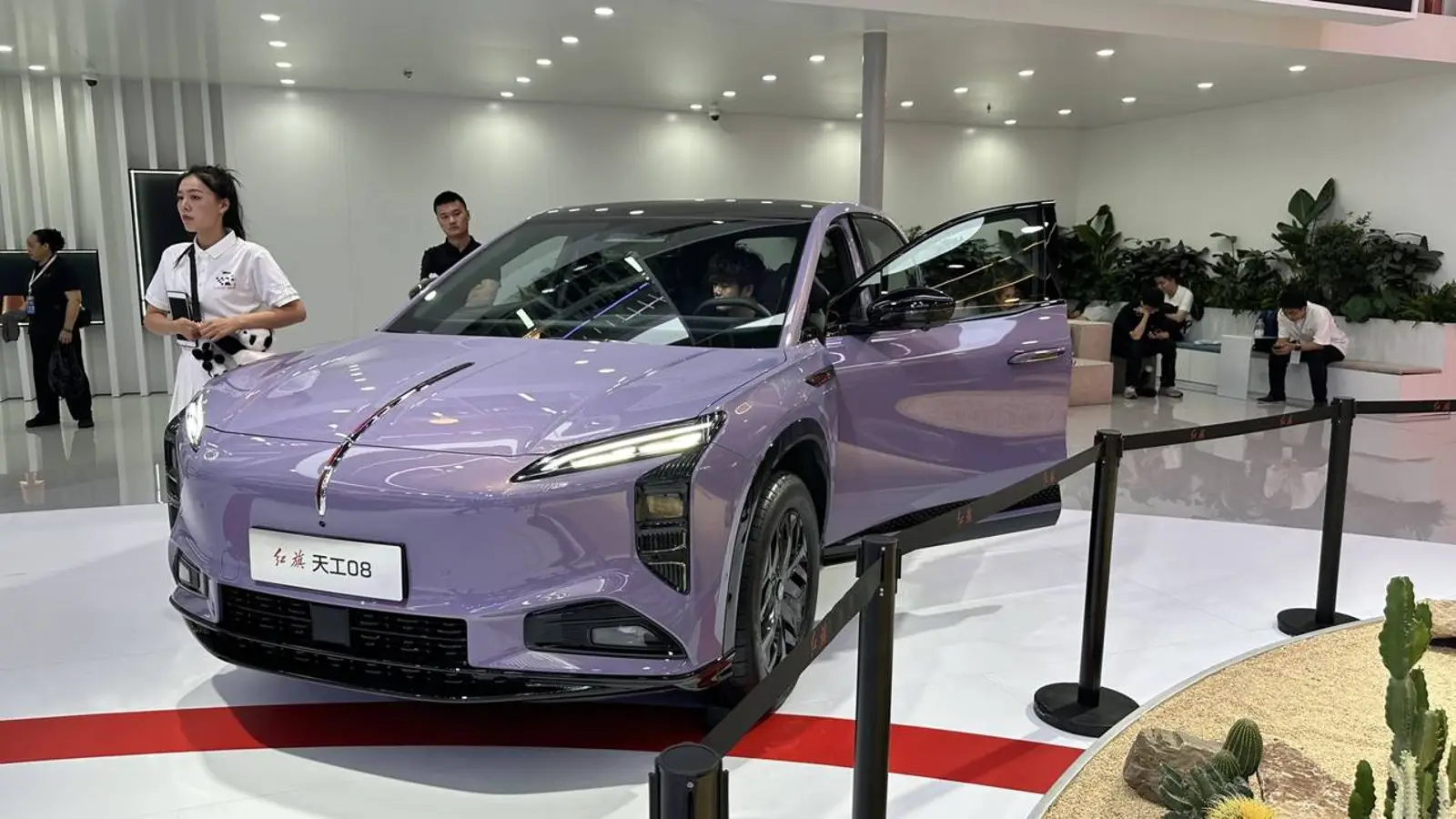
BYD’s next-gen Blade Battery is heading into a new Hongqi electric platform through the FAW–FinDreams joint venture, backed by megawatt-class charging.
Author: Daria Kashirina
BYD’s newest battery technology is about to move beyond the vehicles of its own group. The FAW–FinDreams joint venture has picked up the project for Hongqi’s next pure-electric platform and is already adapting the second-generation Blade Battery for it.
At the same time, FAW has announced the first use of megawatt-class charging on its own vehicles. For Hongqi, that’s a major leap over its current lineup. The electric Tiangong 05 and Tiangong 06 already run on FAW’s own 800-volt batteries and can charge from 10% to 80% in around 12 minutes. BYD’s new system is designed for charging stations rated up to 1,500 kW and was built specifically to cut charging time down to just a few minutes.
BYD unveiled the second-generation Blade Battery in March 2026. The company says it delivers more than a 5% increase in energy density over the first generation, better cold-weather performance, and support for ultra-fast charging. In BYD’s own cars, the new battery already pairs four-digit range under the Chinese test cycle with megawatt-class charging.
The batteries for FAW will be built in Changchun. The joint plant is planned to reach 45 GWh of annual capacity, split across three phases of 15 GWh each. Total investment is put at 18 billion yuan. Once fully ramped up, the plant will be able to supply batteries for around 600,000 vehicles a year.
The first phase is already in stable series production and supplies battery packs for Hongqi and Audi models. But one key question remains unanswered for future owners. A megawatt-class battery doesn’t by itself guarantee megawatt-class charging on the road. BYD plans to roll out 20,000 of its own Flash Charging stations across China by the end of 2026, but hasn’t said whether future Hongqi models will get access to that network, or on what terms.
So the bigger shift here isn’t just happening inside Hongqi. If the project reaches production as planned, BYD will start turning one of its core technologies from an advantage reserved for its own cars into a product it sells to other automakers.
This English edition was prepared using AI translation under editorial oversight by SpeedMe. The original reporting is by Daria Kashirina
Latest Stories