Epicland X9 2026: price, range and specs of the Dongfeng-Huawei six-seat SUV
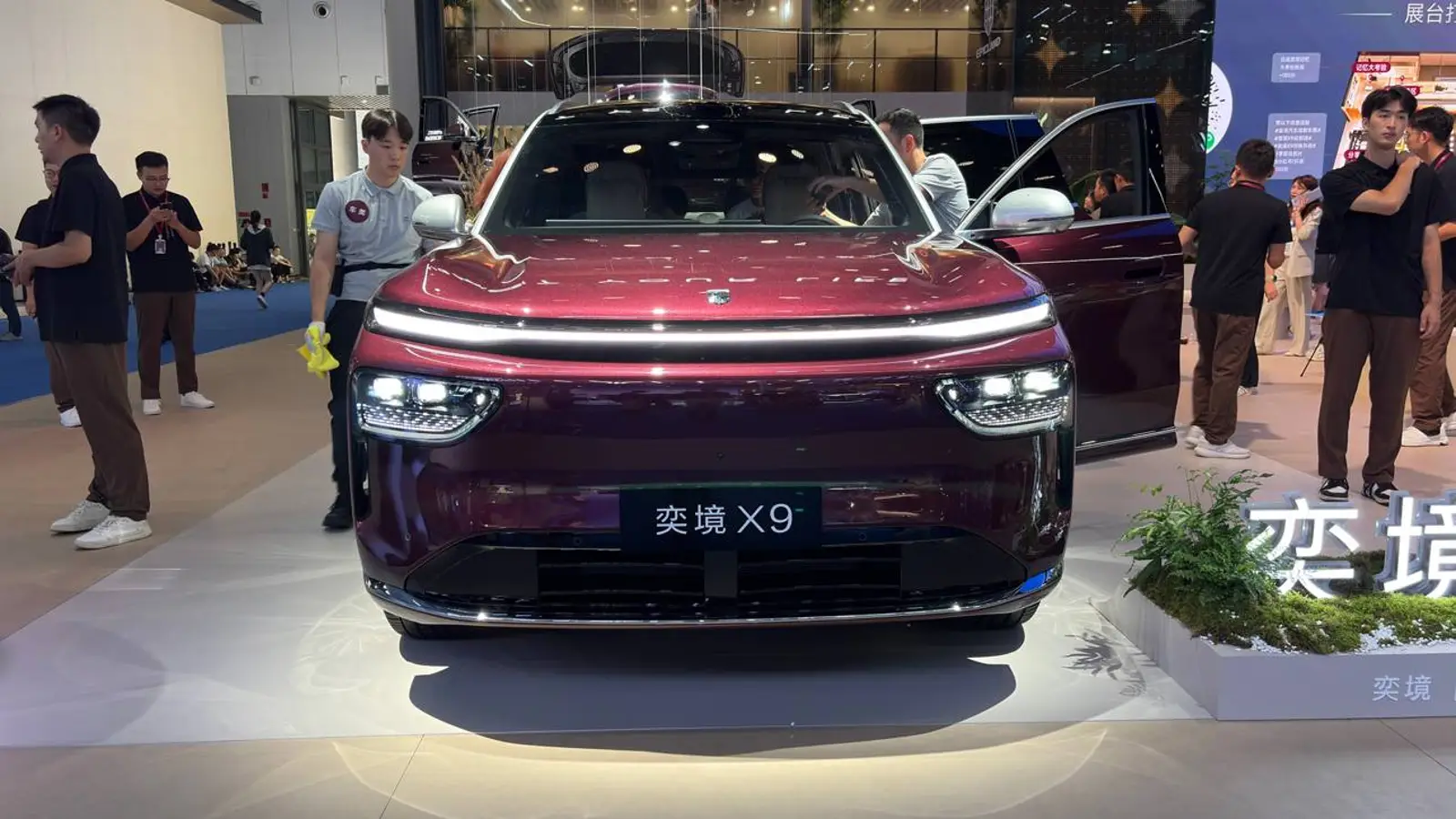 © A. Krivonosov / SPEEDME
Dongfeng and Huawei's Epicland X9 opened pre-orders in China at 299,800–379,800 yuan, with a 465 km electric range, 800V architecture and rear-wheel steering.
Author: Polina Kotikova
At the 2026 Chengdu Auto Show, an SPEEDME.RU correspondent photographed the Epicland X9 — the first production car from the new joint venture between Dongfeng and Huawei. That name will be used for international markets. The car already had its world premiere at the Beijing Auto Show, but the project is now moving from the demonstration stage to real sales: pre-orders opened in China on August 18.
The launch turned out to be a big one. The manufacturer said it received 16,217 pre-orders in the first 12 hours alone. Buyers are offered three extended-range hybrid trims priced from 299,800 to 379,800 yuan (roughly $44,100 to $55,900). The mid-range trim costs 339,800 yuan, or about $50,000.
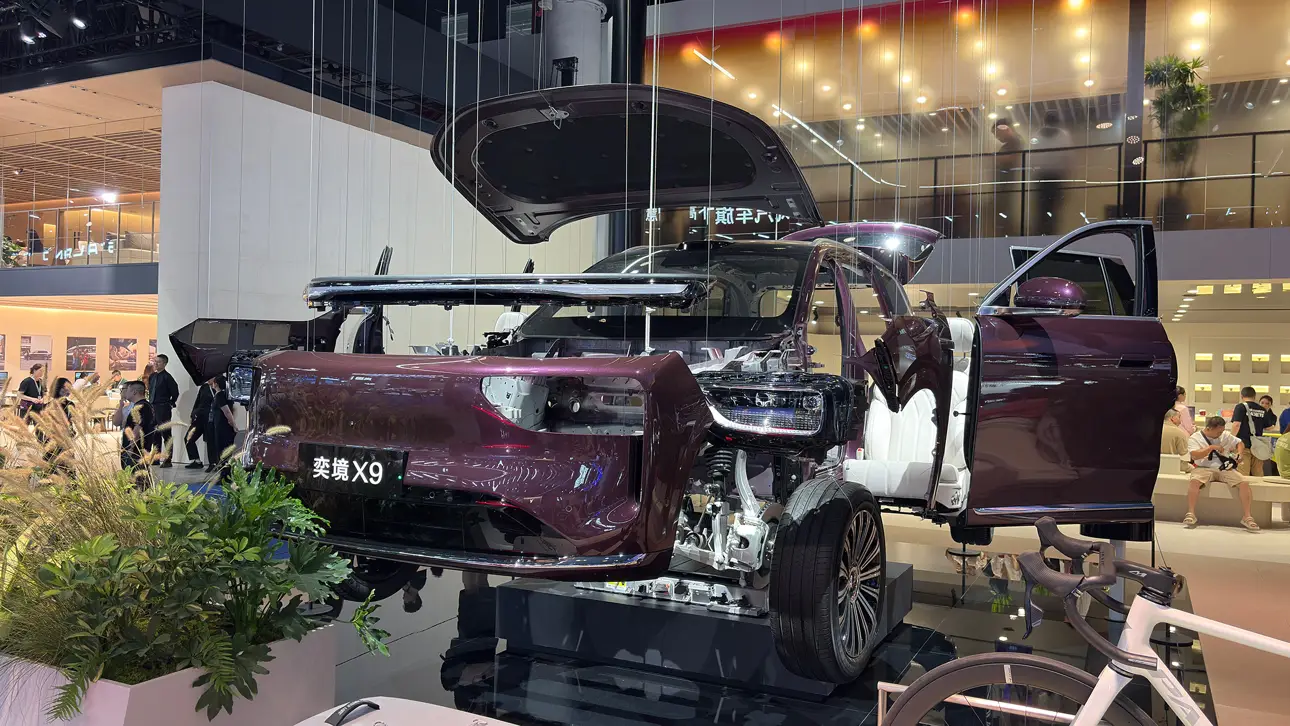
Chengdu wasn't just about finished cars. On the stand, a partially disassembled X9 had its front-end body panels and some exterior trim removed, letting visitors see the structural frame, suspension and packaging — a fairly clear way of showing the bet isn't only on huge screens and digital assistants.
The Epicland X9 is genuinely big. It measures 5,301x2,015x1,820 mm, rides on a 3,120 mm wheelbase, and seats six. With the third row folded flat, boot volume is 484 liters. Third-row cushion width reaches 1,101 mm, and the backrest reclines up to 133 degrees.
The headline technical feature is the range-extended powertrain. Under the hood sits a 1.5-liter turbo engine rated at 95 kW, but the wheels are driven by electric motors. Combined output reaches 450 kW, or roughly 612 hp, with 700 Nm of torque. The car is built on an 800-volt architecture.
The CATL traction battery has a capacity of around 74 kWh. Claimed electric-only range without the gasoline engine kicking in reaches 465 km on the CLTC cycle, while total range with a full tank exceeds 1,500 km — some official materials cite a figure of up to 1,570 km. Charging the battery from 20% to 80% takes about 10 minutes.
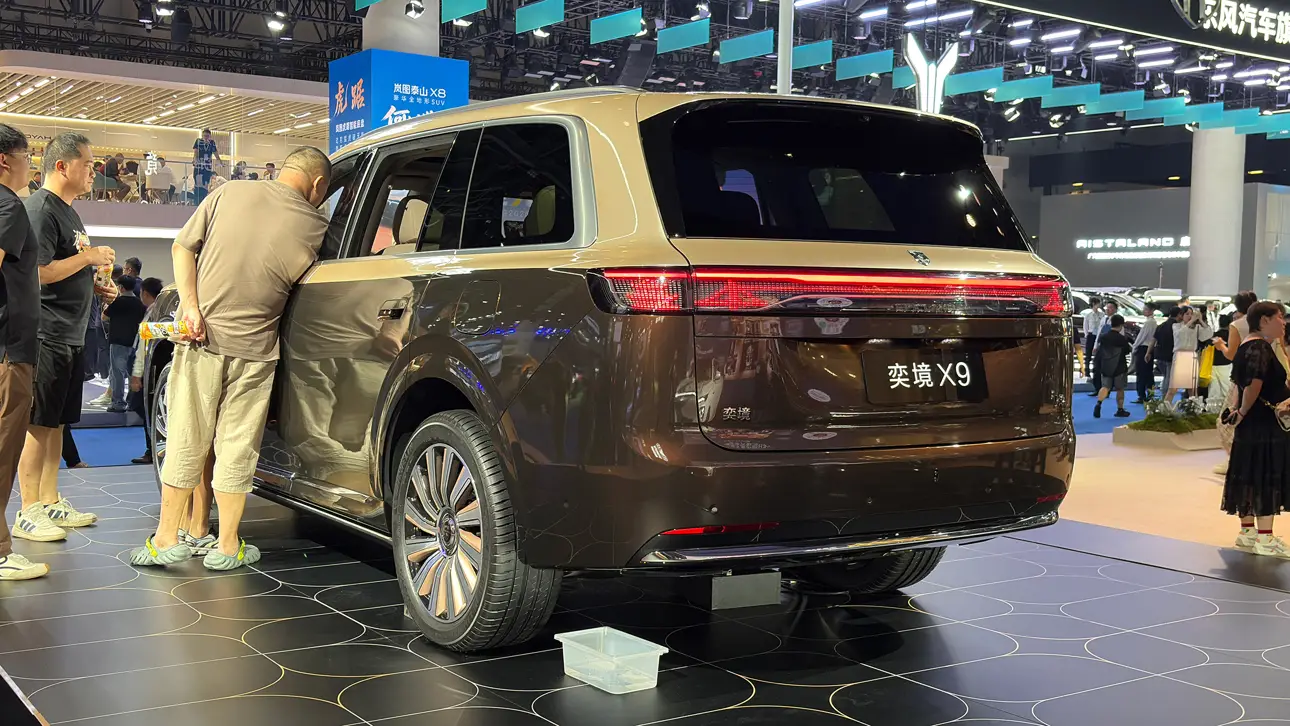
The chassis work is unusually serious for a family SUV. The structure uses 91% aluminum components, with double-wishbone front suspension and a five-link rear setup. It also gets dual-chamber air springs with up to 90 mm of ride-height adjustment and electronically controlled EDC dampers.
But something else matters more on a car that's 5.3 meters long: the rear wheels can steer up to 7 degrees. That shrinks the turning radius to 5.3 meters, meaning the huge six-seat X9 turns out to be as maneuverable as noticeably smaller cars. Control of the powertrain, brakes, steering and suspension is unified through Huawei's XMC system on the Qiankun "Chitu" platform.
Electronics are, in fact, one of the main reasons Epicland exists at all. Dongfeng handles the vehicle platform and manufacturing, while Huawei was deeply involved in designing the car's intelligent systems. The X9 gets Huawei Qiankun ADS 5, HarmonySpace 6, smart lighting, connectivity and Huawei's cloud services. This isn't just buying in a few components: Dongfeng calls the model the result of joint development from the very start of the project.
The perception suite can include as many as four lidars. The main one is an unusual 896-line dual-optical-path sensor capable of covering both wide and long-range fields of view simultaneously; three solid-state lidars monitor the surrounding space. All early cars also get the CAS 5.0 collision-avoidance suite.
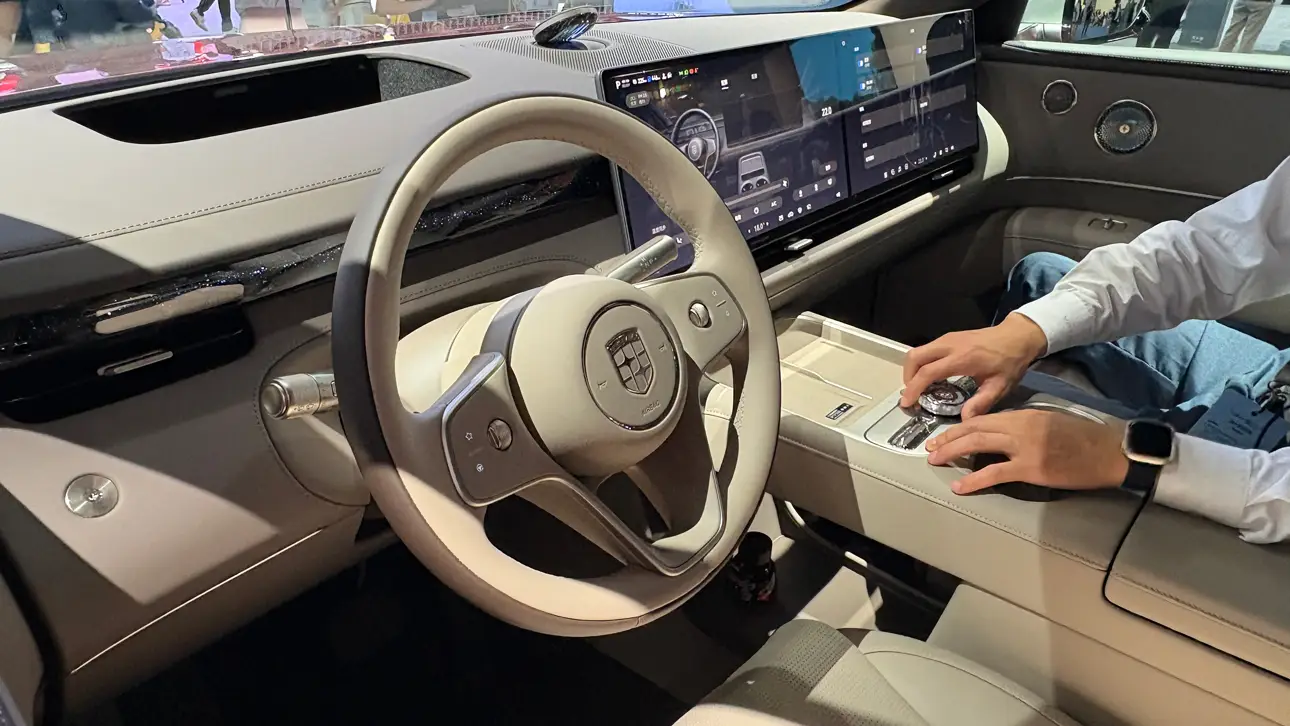
The interior is just as distinctive. Two linked 17.2-inch, 3.4K-resolution screens sit in front of the driver and front passenger. They can run independently: the driver can use navigation while the passenger streams entertainment at the same time. SPEEDME's reporters also noted the near-fully horizontal dashboard, the large center tunnel and the minimal number of traditional physical controls.
Second-row passengers get zero-gravity seats with multi-zone massage, and the cabin also includes a fridge, a HUAWEI SOUND audio system, and a HUAWEI XSCENE laser projector. The latter can work as an in-car screen or project an image outside the vehicle — useful, say, while parked or camping.
For now, there's no official word on pricing, trims or a launch date for the X9 outside China, so it's too early to talk about the model officially reaching international dealers.
Using the Chinese price purely as a reference point, the roughly $44,100 starting figure looks especially aggressive: given its size and concept, the X9 lands in the same niche as the Li Auto L9, the Aito M9 and other large six-seat hybrids. Once shipping, taxes and registration are factored in elsewhere, the real price will inevitably be higher.
All told, the Epicland X9 that SPEEDME.RU photographed in Chengdu is interesting for more than just being another giant Chinese SUV. It's the first production-scale test of a new cooperation model between Dongfeng and Huawei: the automaker supplies the platform and manufacturing, while Huawei supplies almost the entire intelligent layer of the car. Judging by more than 16,000 pre-orders in the first 12 hours, Chinese buyers have responded to that combination quite favorably.
This English edition was prepared using AI translation under editorial oversight by SpeedMe. The original reporting is by Polina Kotikova
Latest Stories