How China-market BMW, Audi, Toyota and Volkswagen models differ from global versions
 © A. Krivonosov
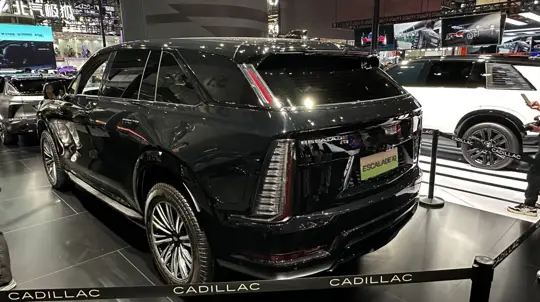
China-market cars from BMW, Audi, Toyota, Honda, Mazda and Volkswagen can use longer bodies, different batteries, software and locally developed platforms.
Author: Boris Naumkin
Only a few years ago, the phrase “Chinese BMW” could sound unusual. Today BMW, Volkswagen, Audi, Toyota, Honda and Mazda do more than assemble cars at plants in China: they create versions and even standalone models specifically for the Chinese market. That is the key distinction. A car carrying a familiar European or Japanese badge can differ substantially from the version buyers know elsewhere.
Expert Dmitry Novikov argues that the place of assembly itself is not the main reason for concern. Global manufacturers use their own production and quality-control processes in China. What matters more is the market for which a particular car was engineered and how deeply it was adapted to local customers.
A familiar model can be longer
One hallmark of the Chinese market is strong demand for extra rear-seat space. That is why long-wheelbase versions carrying an L suffix have been popular there for years.
The BMW X3 is a good example. The China-market X3 built in Shenyang has a 2,975 mm wheelbase, 110 mm longer than the global X3. BMW explicitly links the change to greater space and comfort for rear passengers.
Audi has taken the idea even further. The Chinese electric A6L e-tron has a wheelbase 132 mm longer than the global car. Along with the extra cabin room, it receives a larger 107 kWh battery, a China-specific infotainment system and driver-assistance features developed for Chinese customers.
The result is an unusual situation: a German-brand car imported from China can be roomier than its European relative while no longer being fully identical in engineering terms.
China no longer just assembles foreign cars
An even more important change is taking place. Chinese production of a global brand once often meant local assembly of a familiar worldwide model. Now local divisions and partners are increasingly involved directly in vehicle development.
The Toyota bZ3 was created for China by Toyota, FAW Toyota and BYD Toyota EV Technology. Its electric powertrain uses a BYD lithium-iron-phosphate battery.
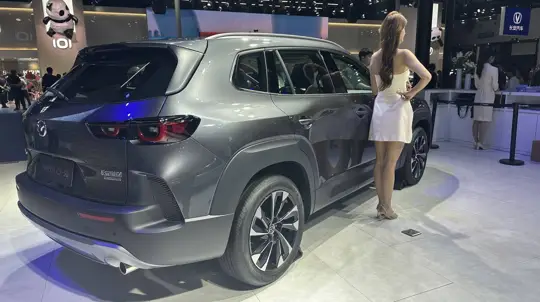
Mazda follows a similar model. The EZ-6 was developed within Changan Mazda by Mazda and Changan. Mazda contributed its design philosophy, chassis tuning and driving character, while Changan brought electrification, software and smart-cabin technologies. The European Mazda6e was later derived from the EZ-6 and further adapted for European customers.
Honda went further for China: the Ye family uses a dedicated EV platform developed in the country. Honda itself presents the series as a new direction created specifically for the Chinese market.
A modern “Japanese car from China” therefore may not be a Japanese model simply built at another factory, but a joint product of Japanese and Chinese engineering teams.
Volkswagen is developing a separate Chinese DNA
Volkswagen officially describes its strategy as “In China, for China”. The company is developing local platforms and working with Chinese technology firms including XPeng, Horizon Robotics and ThunderSoft on electric vehicles, driver assistance, infotainment and connected services.
The brand already sells vehicles intended exclusively for China. The ID. UNYX, for example, was the first vehicle in a new China-focused line and received its own digital environment with a customizable 3D avatar. It is not officially sold in Europe.
By 2026, Volkswagen’s Chinese range includes many names that sound familiar but refer to market-specific vehicles, including the Tiguan L Pro, Tayron L, Passat Pro and several models in the ID. UNYX family.
The biggest differences are increasingly in electronics, not under the hood
Software can be the most important difference for an owner. A modern vehicle depends on navigation, cloud services, voice assistants, mobile apps, over-the-air updates and driver-assistance systems. If a car was created exclusively for China, some of that infrastructure may have been designed around Chinese services from the outset.
Audi explicitly says the Q6L e-tron differs from the international version not only through its longer wheelbase but also through an infotainment system developed specifically for China. The A6L e-tron likewise receives China-specific infotainment and local driver-assistance technology.
That means checking for a large screen, cameras or adaptive cruise control is not enough. Buyers should determine which functions still work after the vehicle leaves China and whether the required languages, apps, navigation and updates remain available.
More equipment does not mean full parts interchangeability
Chinese-market adaptation also affects repairs. If a car differs only through options, many mechanical components may match the global model. But a longer wheelbase, a different body or a China-specific electronic architecture inevitably creates unique components.
The Chinese BMW X3, for example, has different body geometry because of the extra 110 mm in its wheelbase. The Audi A6L e-tron differs not only in dimensions but also in battery, infotainment and electronic systems. Ordering body parts or control units solely by model name is therefore risky.
This deserves particular attention with rare China-only models that were never officially sold in the owner’s local market.
So is it a real BMW, Volkswagen or Toyota?
Yes, if the vehicle was genuinely produced by the relevant joint venture or the manufacturer’s own plant. Chinese origin does not turn a Toyota, BMW or Volkswagen into a counterfeit, nor does it by itself prove poor build quality.
Today the better question is not “where was the car assembled?” but “for which market was it developed?”
According to expert Dmitry Novikov, two cars carrying the same badge can have different wheelbases, bodies, powertrain ranges, local infotainment systems, electronic control units and assistance features. In newer EVs the differences can run deeper still, including another manufacturer’s involvement in the battery, software or even the platform itself.
A buyer considering a global-brand car from China should therefore start with the exact model and variant code rather than the country shown on the VIN plate. The equipment list, key part numbers, multimedia and telematics capabilities, service conditions and real parts availability all need to be checked.
That is what increasingly separates a well-equipped bargain from a car whose familiar badge hides a specification that local workshops barely know.
Technical and product data for this article were checked against official materials from BMW Group, Audi, Volkswagen, Toyota, Honda and Mazda. No marketplace listings, prices or owner reviews were used for the analysis.
This English edition was prepared using AI translation under editorial oversight by SpeedMe. The original reporting is by Boris Naumkin
Latest Stories