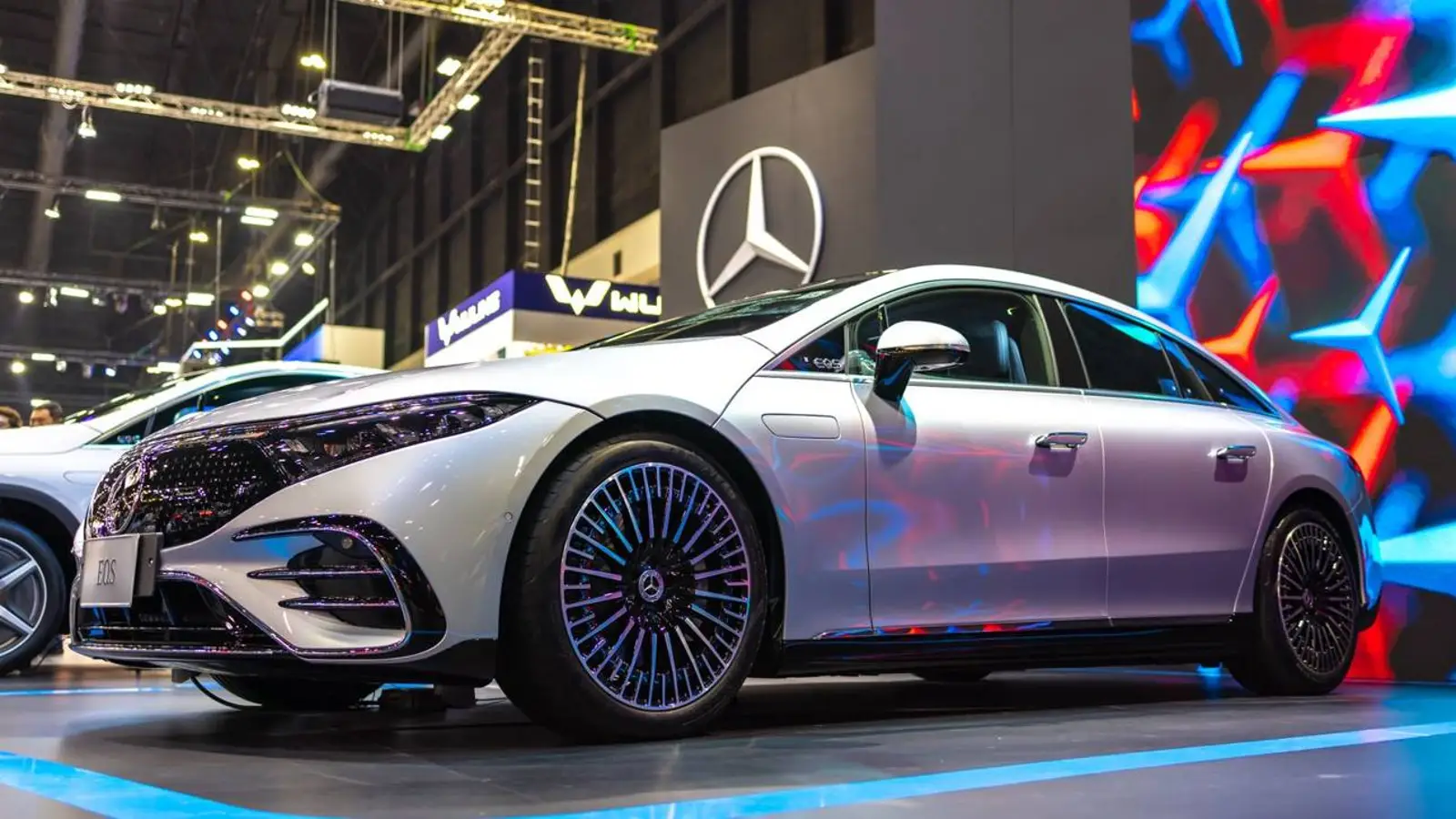
Mercedes Rescue Intelligence: vehicle and battery data sent to first responders
 © A. Krivonosov
Mercedes-Benz Rescue Intelligence could send crash and EV battery data to emergency crews before they reach the scene from 2027.
Author: Dmitry Novikov
After a serious crash, emergency crews could receive vital information from a Mercedes-Benz while still travelling to the scene. Rescue Intelligence is designed to report the number of occupants, airbag and seat-belt status, open doors and high-voltage battery information. A gradual rollout is planned from 2027, subject to vehicle equipment and emergency-service capabilities.
The system aims to reduce preparation time for rescue operations. Knowing how many people are aboard, which restraints deployed and which doors are open should help firefighters assess the situation and choose tools. Mercedes-Benz envisages a direct digital connection between crashed cars and first responders.
Battery temperature and high-voltage system status are especially valuable in electric-vehicle crashes. They can help rescuers assess hazards, but do not replace established safety procedures.
Data may include battery temperature and the condition of high-voltage equipment, airbags and seat belts. Mercedes stresses that available information depends on technology and accident circumstances. Compatible models, individual market dates and requirements for emergency-service systems have not yet been fully announced.
Mercedes presented the technology alongside a safety demonstration involving two production CLA cars, each travelling at 56 km/h. One was fully electric and the other used an electrified petrol drivetrain. The crash recreated a severe side-impact collision at an intersection.
After the test, both passenger compartments remained intact and readings from eight crash-test dummies stayed below specified biomechanical limits, according to Mercedes. The electric CLA’s high-voltage battery was undamaged. These findings apply to this test alone and cannot guarantee the result of every crash.
Mercedes-Benz conducts around 900 crash tests and 1,700 sled tests each year. For each new model, engineers perform approximately 15,000 virtual crash simulations and 150 physical crash tests. Research into real accidents also informs body structures, passenger restraints and electronic assistance systems.
The manufacturer links the work to its long-term road-safety ambitions for 2050. Even advanced driver assistance cannot eliminate all collisions, so Mercedes-Benz is improving crash prevention, occupant protection and the flow of information to rescuers after an accident.
Rescue Intelligence would complement existing safety systems by briefing emergency teams before they arrive. Its practical impact depends on integration with vehicles and rescue infrastructure. Initial deployment is planned for 2027; Mercedes-Benz has not yet identified every model and market.
This English edition was prepared using AI translation under editorial oversight by SpeedMe. The original reporting is by Dmitry Novikov
Latest Stories