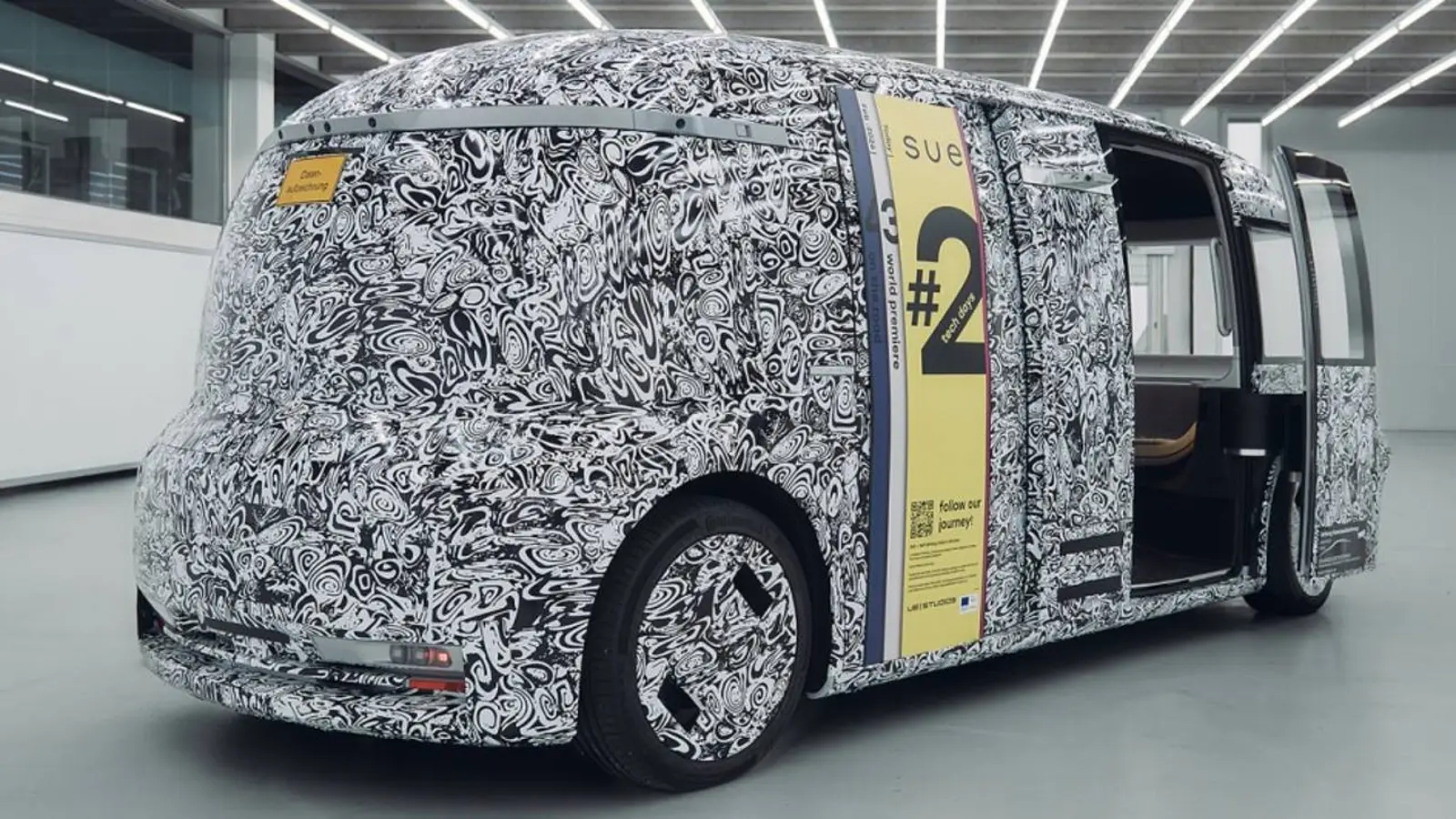
SUE autonomous electric shuttle debuts in Germany for public transit
 © Uedelhoven GmbH
Meet SUE, Germany’s eight-seat autonomous electric shuttle. Built on a 48V platform with local software, it’s ready for series deployment and launch in Kelheim.
Author: Polina Kotikova
The world premiere in the town of Gaimersheim introduced SUE, an eight-seat autonomous electric shuttle designed to underpin a new standard for public transport in Germany. The mini-bus can reach 50 km/h, noticeably quicker than most current robo-shuttles, and after four years of development it is considered fully ready for series deployment.
What sets SUE apart is its entirely German origin: from the 48-volt skateboard platform to the autonomous driving software developed under the leadership of the Technical University of Braunschweig. In the coming months, the shuttle will begin operating in the district of Kelheim as part of a broader modernization of the local transit network.
The creators are betting on a lightweight build, space-efficient packaging, and lower operating costs for municipalities. This pragmatic focus should help speed up fleet renewal amid rising mobility demands and tightening climate expectations; for local operators, that combination usually matters more than flashy specs.
The project is delivered by a consortium led by Uedelhoven GmbH. Partners include DB Regio, ElringKlinger, TÜV Nord, and research centers in Ingolstadt and Lower Saxony. The €18.9 million program is supported by Germany’s Ministry for Economic Affairs, with €11.57 million provided by the state.
The debut of SUE signals a shift for Germany’s autonomous public transport: from small-scale trials toward solutions ready for real service.
This English edition was prepared using AI translation under editorial oversight by SpeedMe. The original reporting is by Polina Kotikova
Latest Stories