EBRO’s EV leap: Barcelona shifts to CKD, Omoda 5 EV and Jaecoo 5 EV start production, first in-house BEV on the way
 © ebro.eu
EBRO nears its first BEV: Barcelona moves to CKD, building Omoda 5 EV and Jaecoo 5 EV on Chery tech, with battery assembly targeted for 2026, plus EU expansion.
Author: Polina Kotikova
Spanish brand EBRO wrapped up 2025 with the debut of its flagship s900 PHEV and is now preparing for the next chapter: moving into fully electric cars. Today the lineup covers gasoline models, hybrids, and plug-in hybrids, but there is still no pure BEV. That could change as soon as 2026, in large part thanks to the technology base of partner Chery. In a competitive segment, leaning on a proven toolkit looks like a pragmatic way to accelerate.
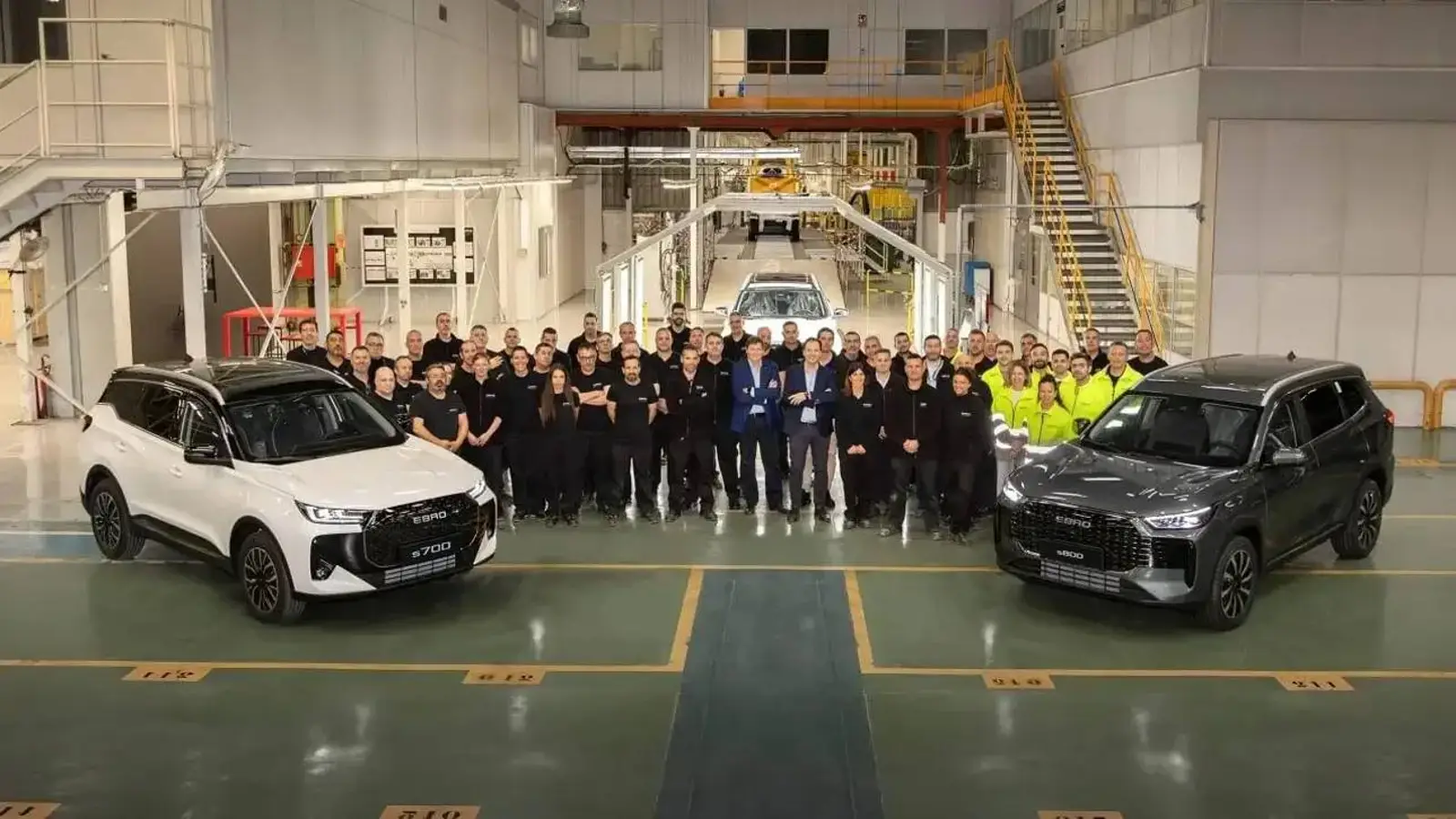
The pivotal step will be upgrading the Barcelona facility. In February–March, the EBRO Factory is set to shift from SKD kits to CKD. In practice, that brings painting, welding, and full assembly—previously handled off-site—onto the Catalonia production line, moving closer to a full-cycle setup. Such consolidation usually tightens quality control and streamlines logistics.
In parallel, the plant will begin building the Omoda 5 EV and Jaecoo 5 EV, the first pure electric vehicles to roll out from this site. Against that backdrop, the next move feels natural: EBRO has stated it aims to offer ICE, HEV, PHEV, and BEV, so an in-house electric model is only a matter of time. According to sources, the brand could unveil its first BEV this year, with the s400 or s700 seen as the most likely candidates for a zero-emission version, potentially sharing the electric hardware with the Omoda and Jaecoo EVs. Shared components would help compress development cycles and contain costs—sensible priorities at this stage.
There has also been discussion of starting battery assembly in 2026, alongside an international push into Bulgaria, Croatia, Slovenia, and Portugal. In Barcelona, the company plans to strengthen its engineering backbone with a new R&D center. A local development hub would make it easier to tailor software and calibration to regional expectations, signaling a longer-term focus on the European market.
This English edition was prepared using AI translation under editorial oversight by SpeedMe. The original reporting is by Polina Kotikova
Latest Stories