
Baidu's Apollo Go to launch robotaxis in Dubai after RTA license
 © prnewswire.com
Dubai grants Baidu's Apollo Go its first permit for fully driverless on-road tests, paving a 2026 robotaxi launch and a fleet growing from 50 to 1,000 vehicles.
Author: Diana Degtyareva
Baidu is officially bringing Apollo Go to Dubai: the platform has secured the emirate's first license to conduct on-road tests of fully driverless vehicles with no backup driver. That clears the way for a commercial robotaxi service as early as the first quarter of 2026.
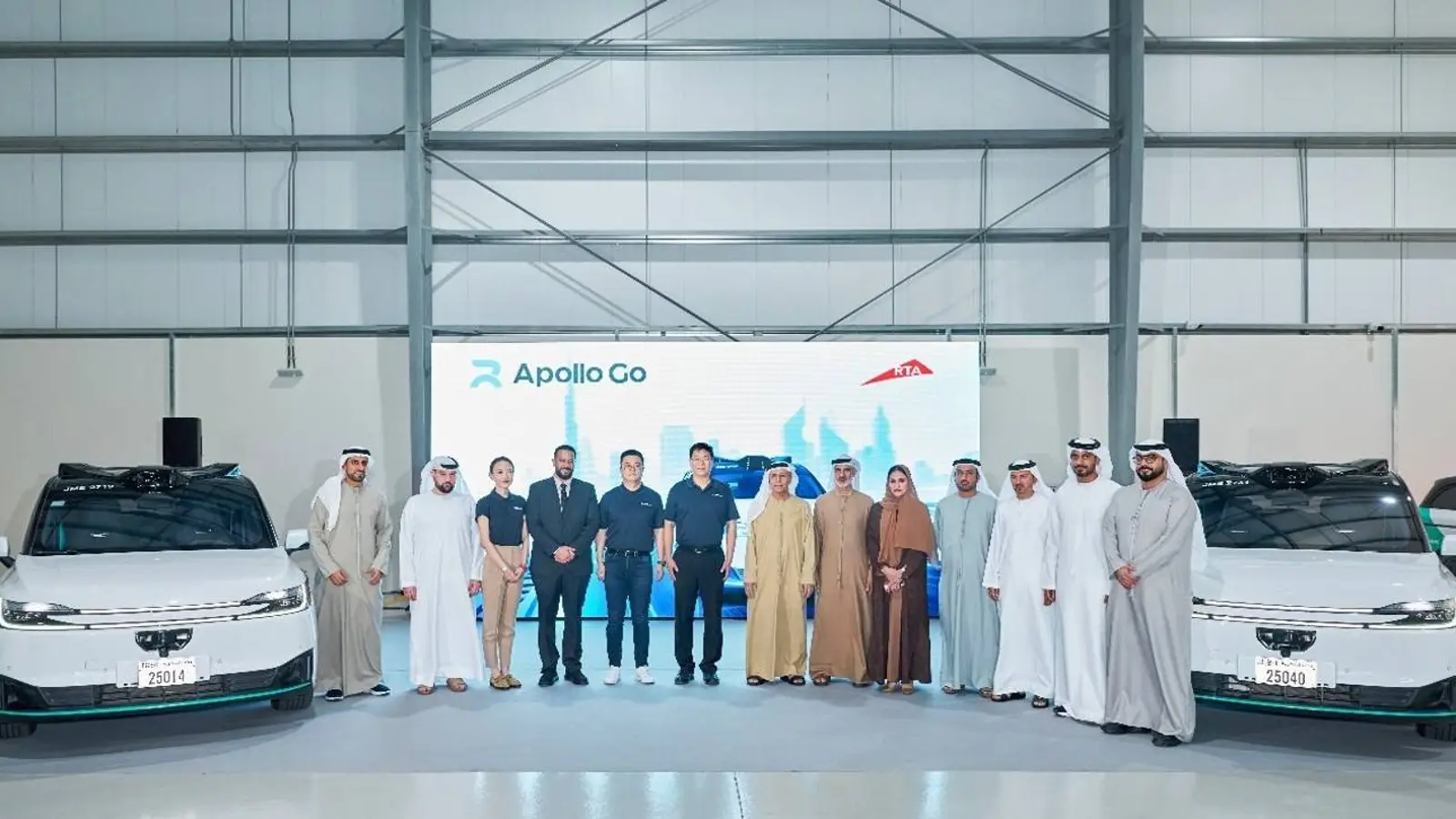
The permit was issued by the Roads and Transport Authority (RTA) at the opening of Apollo Go Park, a new 2,000-square-meter hub that becomes the service's first overseas operations center. The complex brings together V2X infrastructure, charging bays, maintenance facilities, and fleet control, with plans to grow the driverless fleet to 1,000 vehicles over time. A dedicated site of this scale signals long-term intent rather than a short trial.
For now, a 50-strong fleet of Apollo RT6 vehicles is being tested in Dubai, with trials confined to designated road sections. The RTA notes that the project is expected to boost safety, cut emissions, and improve mobility across the metropolis. Starting within set corridors keeps risk in check while the system learns the city's rhythms.
Baidu stresses that the license is a sign of Apollo Go's maturity: the platform has logged more than 240 million autonomous kilometers, including 140 million with no human driver. The service already operates in 22 cities worldwide and carries up to 250,000 passengers a week. Figures like these suggest the company is entering Dubai with momentum, not as an experiment.
The Dubai launch will be Baidu's largest international autonomous mobility effort to date and a first step toward broader robotaxi adoption in the region. If the timeline holds, it could set a marker for how large-scale deployment in the Middle East might take shape.
This English edition was prepared using AI translation under editorial oversight by SpeedMe. The original reporting is by Diana Degtyareva
Latest Stories