Modern Runabout: 469 hp, carbon fiber, limited to 25 cars
 © Bertone
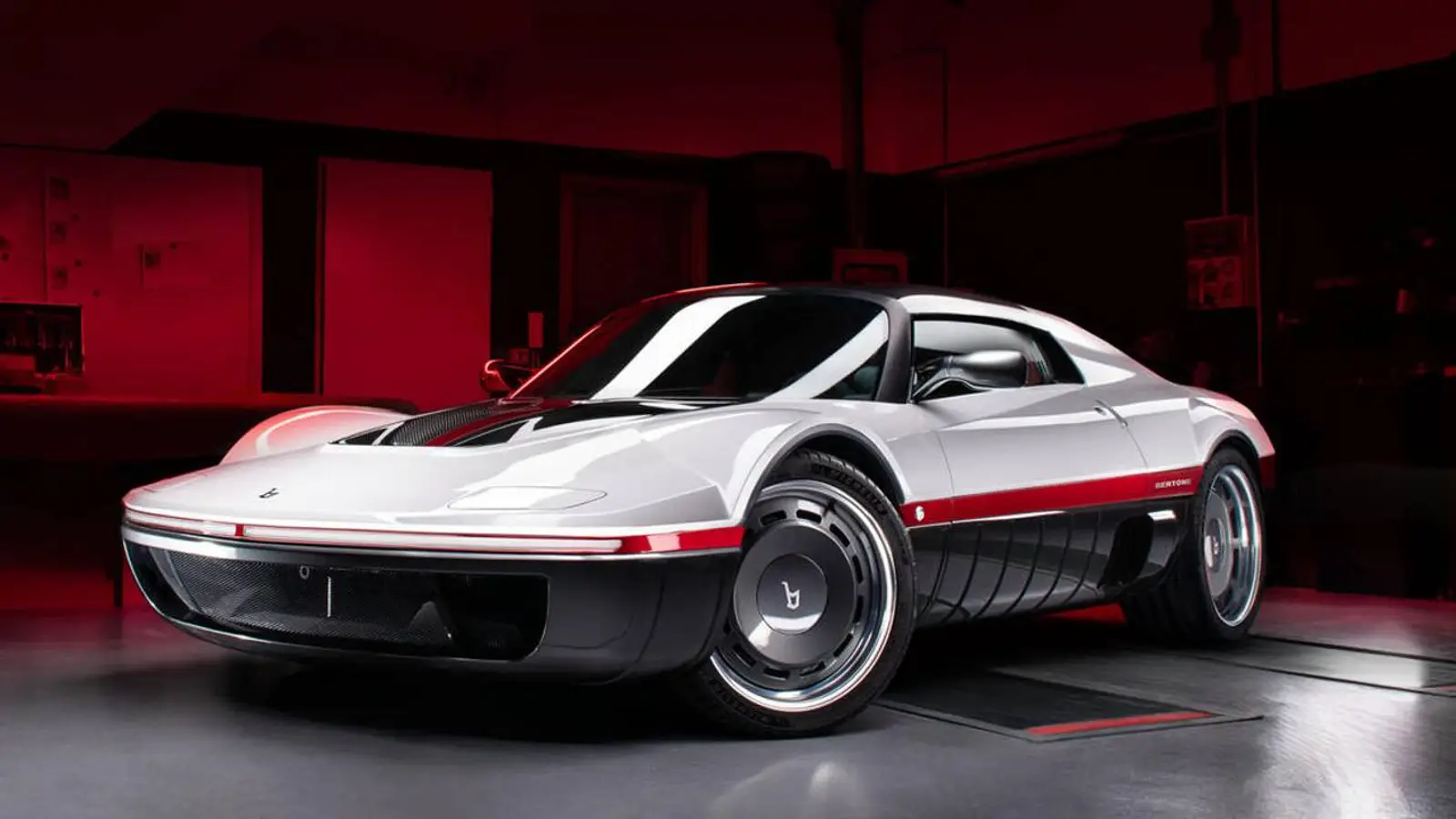
The Runabout, designed by Marcello Gandini in 1969, is now in production with 469 hp, lightweight carbon fiber, and a limited run of 25 unique cars.
Author: Polina Kotikova
The radical Runabout, designed by Marcello Gandini in 1969, has finally entered series production after half a century. This new version retains the spirit of the original but features modern technology: 469 horsepower, a lightweight chassis, carbon-fiber panels, and a limited run of just 25 cars.
Legacy of the Original Runabout Concept
The first Runabout gained fame for its wedge-shaped body, lack of a roof or doors, and a 1.1-liter Autobianchi engine. Its bold design influenced the creation of the Fiat X1/9. The modern model keeps this ideology—experimental, simple forms, and a focus on lightness—but updates it with new technical realities.
It's built on a new Exige chassis with a fresh VIN, strengthened and lightened specifically for this project.
Technical Specifications
Under the hood lies a modified supercharged 3.5-liter V6 (Toyota/Lotus), with power increased from 430 to 469 hp and torque up to 490 Nm. The body is made of carbon fiber, which, combined with the lightweight chassis, results in a total weight of just 1,180 kg. Power-to-weight ratio is 397 hp per ton. It features rear-wheel drive and a six-speed manual gearbox.
Performance-wise, it accelerates from 0 to 100 km/h in 4.1 seconds and has a top speed of 270 km/h. The aerokit includes an S-duct, pencil-style daytime running lights, pop-up headlights, and a short, truncated rear end. Thanks to the small production run, the model doesn't require homologation, which explains the extremely low nose and unconventional lighting.
Atelier, Customization, and Design Philosophy
Production is limited to 25 units, and according to the company, no two cars will be alike—each client follows a personalized configuration path through dialogue with the centro stile. Options include custom Bertone helmets and a set of luggage accessories tailored to fit the tiny trunk and glove box.
Chief designer Andrea Mocellin, who previously worked at Ferrari, Maserati, and Alfa Romeo, called the Runabout project the pinnacle of his dreams. He emphasized that the original model was bold, experimental, and simple—qualities that guided the creation of this new design.
This English edition was prepared using AI translation under editorial oversight by SpeedMe. The original reporting is by Polina Kotikova
Latest Stories