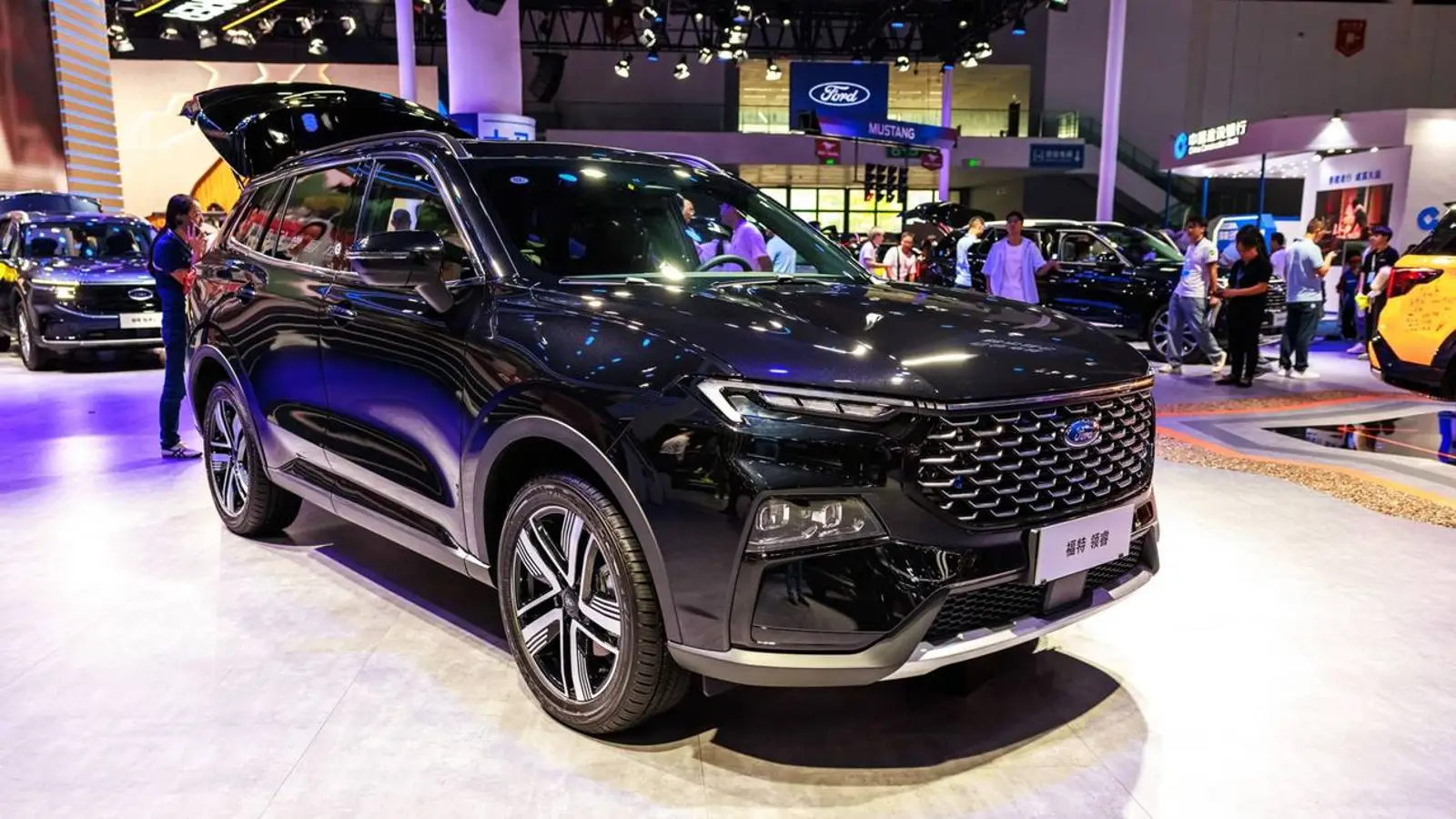
Ford proposes joint ventures to manage Chinese automaker access to US
 © A. Krivonosov
Ford suggests a joint venture model for Chinese automakers in the US, similar to China's 1990s policy, to control technology and protect domestic markets.
Author: Dmitry Novikov
Ford finds itself at the center of a potentially game-changing debate over Chinese automakers' access to the U.S. market. According to Bloomberg, Jim Farley presented the Trump administration with a concept mirroring China's 1990s practice: a foreign brand could only produce vehicles in the country through a joint venture where the local partner holds a controlling stake. This format is intended to allow the U.S. to control the technology, profits, and utilization of its own factories.
Negotiations took place in January against the backdrop of signals from Donald Trump. The president indicated a possible opening for Chinese companies, provided they build plants in the U.S. and create jobs. However, relevant government agencies received the idea rather coolly. Sources say the administration fears such a scheme would still lead to increased competition and pressure on domestic suppliers.
GM has come out strongly against the initiative, stating that admitting Chinese brands would harm the market and supply chains. Ford, in contrast, is promoting the joint venture model as a mechanism to protect the domestic market from cheap, subsidized vehicles, while also trying not to miss out on the technological agenda.
Amid these discussions, rumors persist about Ford's contacts with Xiaomi and Geely. These range from a rejected scenario for joint EV production in the U.S. to the likely use of the Valencia plant in Spain for assembling Chinese models.
In parallel, Ford is developing its own response to Chinese competitors—a universal EV platform for models costing around $30,000. This platform is slated for launch in 2027 and is designed to achieve cost parity with Chinese automakers.
This English edition was prepared using AI translation under editorial oversight by SpeedMe. The original reporting is by Dmitry Novikov
Latest Stories