Laser projection system on Chinese highways fights driver fatigue
 © Скриншот видео
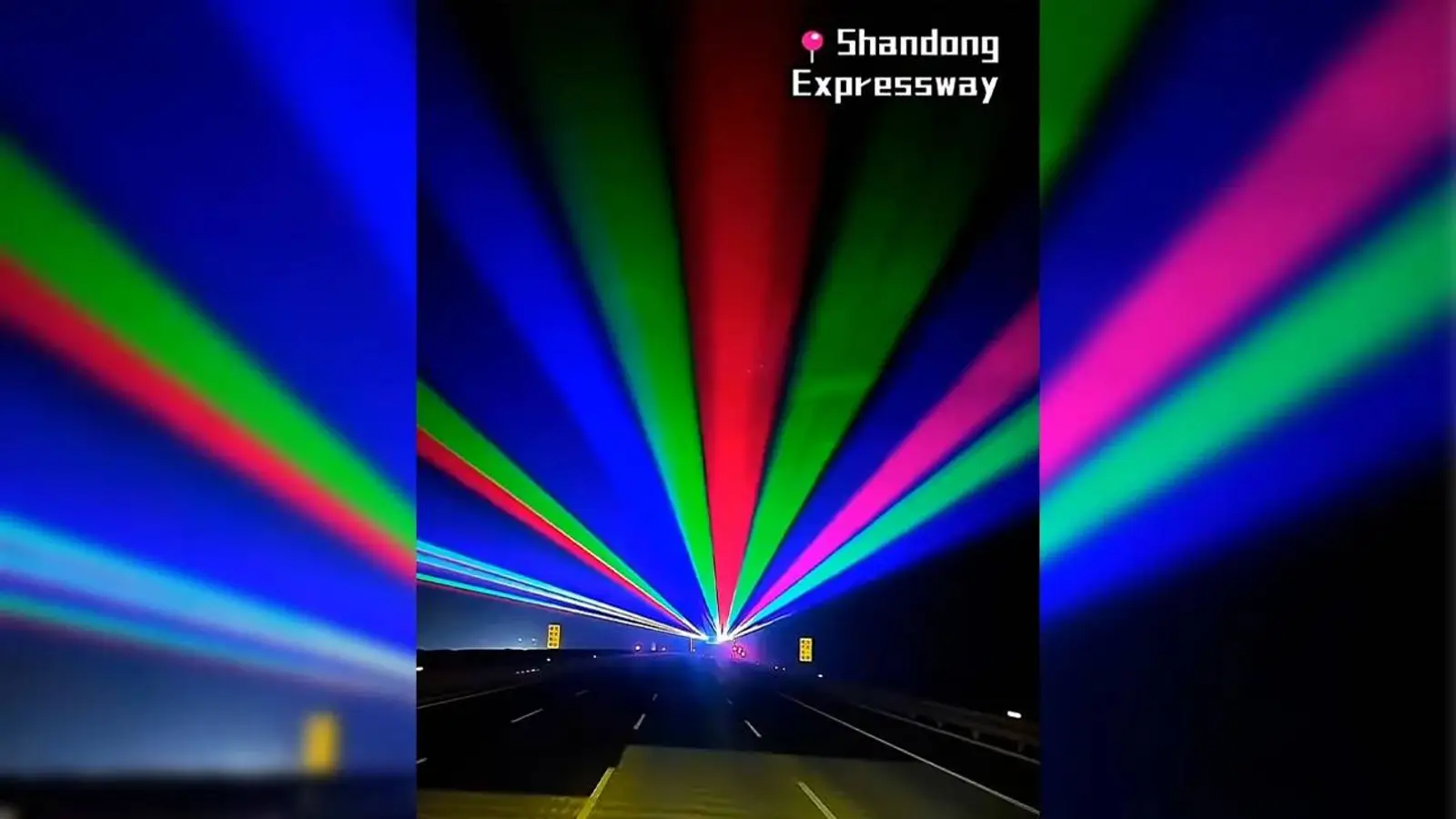
China deploys laser projection on highways in Shandong to combat driver fatigue with colored beams, aiming to cut microsleep-related accidents by 20-30% for safer night driving.
Author: Nikita Novikov
China has launched a laser projection system on highways in Shandong province to combat driver fatigue. The technology uses colored beams—red, green, and blue—to create a dynamic visual environment, helping reduce the risk of microsleep, which accounts for up to 20–30% of traffic accidents. For drivers, this could mean safer nighttime journeys, though the system's effectiveness remains an open question.
On several Chinese highways, including Shandong Expressway, laser projectors have been installed on standard road portals. They produce moving light effects designed to stimulate driver attention during monotonous driving conditions.
Pilot projects began in Hunan and Shandong regions, as well as along the Shanghai-Chongqing corridor. Based on test results, authorities are considering expanding the system to other national highways.
The system does not direct light into drivers' eyes or use strobe effects. Instead, it targets peripheral vision to keep the brain active. Developers report this reduces the likelihood of microsleep on long nighttime stretches.
Additionally, a laser signaling system is used on road shoulders: stopped vehicles can emit a powerful green beam visible from a great distance. This builds on the concept of emergency beacons and is similar to European solutions like V16.
While not tied to specific car models, the technology directly impacts road safety—a key concern for automakers and regulators. Unlike driver assistance systems (ADAS), this represents an infrastructure-based approach.
The main difference from traditional methods is its attempt to compensate for human factors rather than eliminating them through vehicle electronics. This places the system alongside next-generation road markings and intelligent highways.
This English edition was prepared using AI translation under editorial oversight by SpeedMe. The original reporting is by Nikita Novikov
Latest Stories