Volvo brings Google Gemini to older and newer Google built-in models
 © volvocars.com
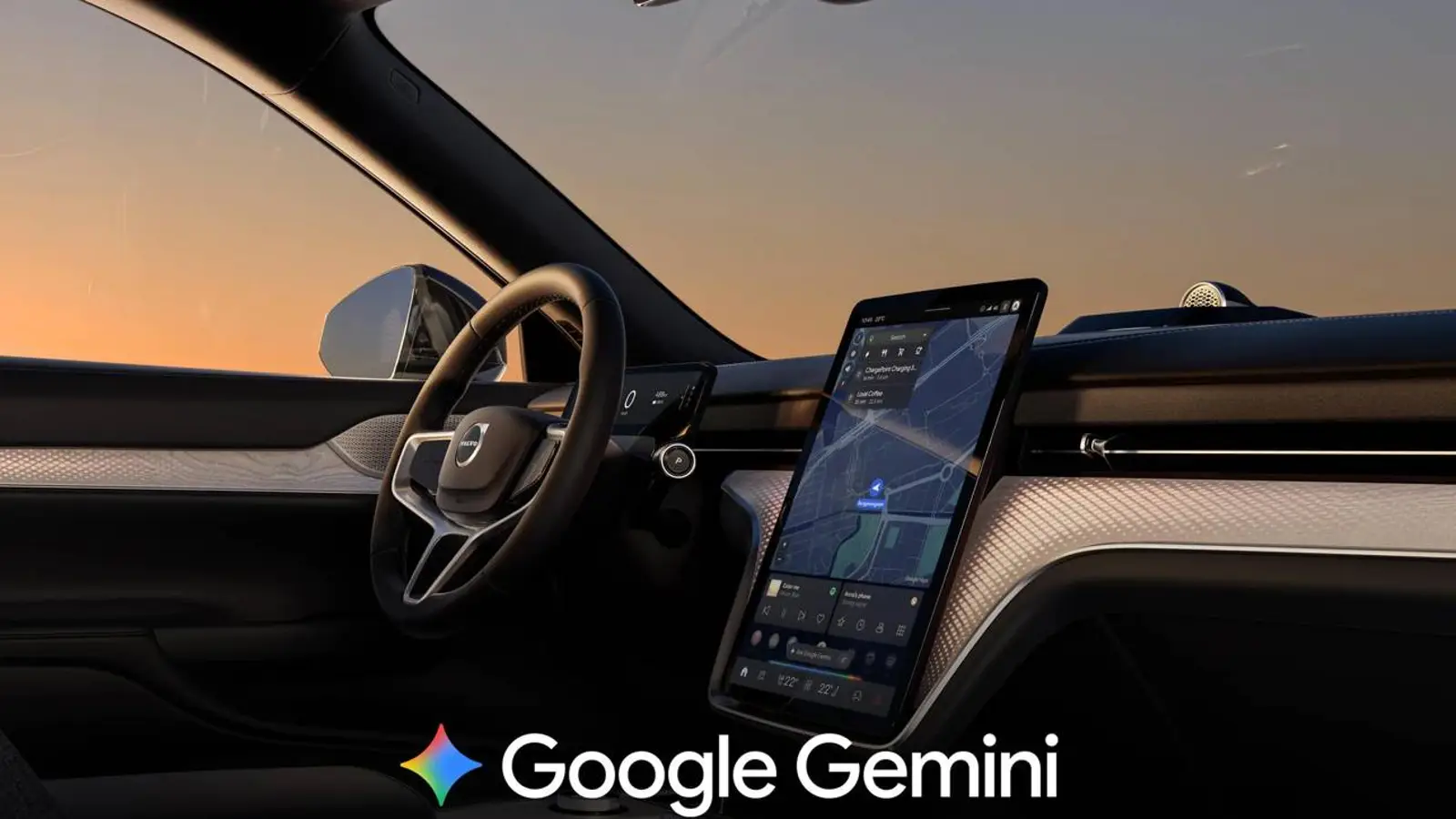
Volvo is rolling out Google Gemini to cars with Google built-in, starting in the United States before expanding to more markets.
Author: Diana Degtyareva
Volvo has begun introducing Google Gemini in cars with Google built-in produced from 2020 onward. The assistant will be able to plan trips, find stops along a route, summarize messages and help with replies in natural conversation, without short rigid commands or repeating the request each time.
The first wave will reach Volvo customers in the United States, before the rollout expands across the country and then to other markets. Gemini will not be limited to the newest models: early users will include owners of Volvo cars with Google built-in made from 2020.
The update covers Volvo models with Google built-in produced from 2020, including the XC40, XC60, XC90, S60, V60, S90, EX30, EX90 and other models. The full feature set will depend on the market, subscription and the specific vehicle version.
Gemini’s main difference from earlier voice control is that it works with intent, not only with preset commands. Volvo gives a trip-planning example: the driver can say “Hey Google, can you help us brainstorm a warm, adventurous family holiday without a long flight?” and then ask follow-up questions, refine the destination and look for family activities without starting again after every answer. Volvo detailed the function in an official release available to SPEEDME.
On the road, the idea is practical. A driver looking for a stop can ask: “Hey Google, find a place on my route that sells croissants.” They can then ask about reviews, parking or access. It is not a separate navigation command or a manual Google Maps search on the screen, but a short conversation designed to reduce distraction.
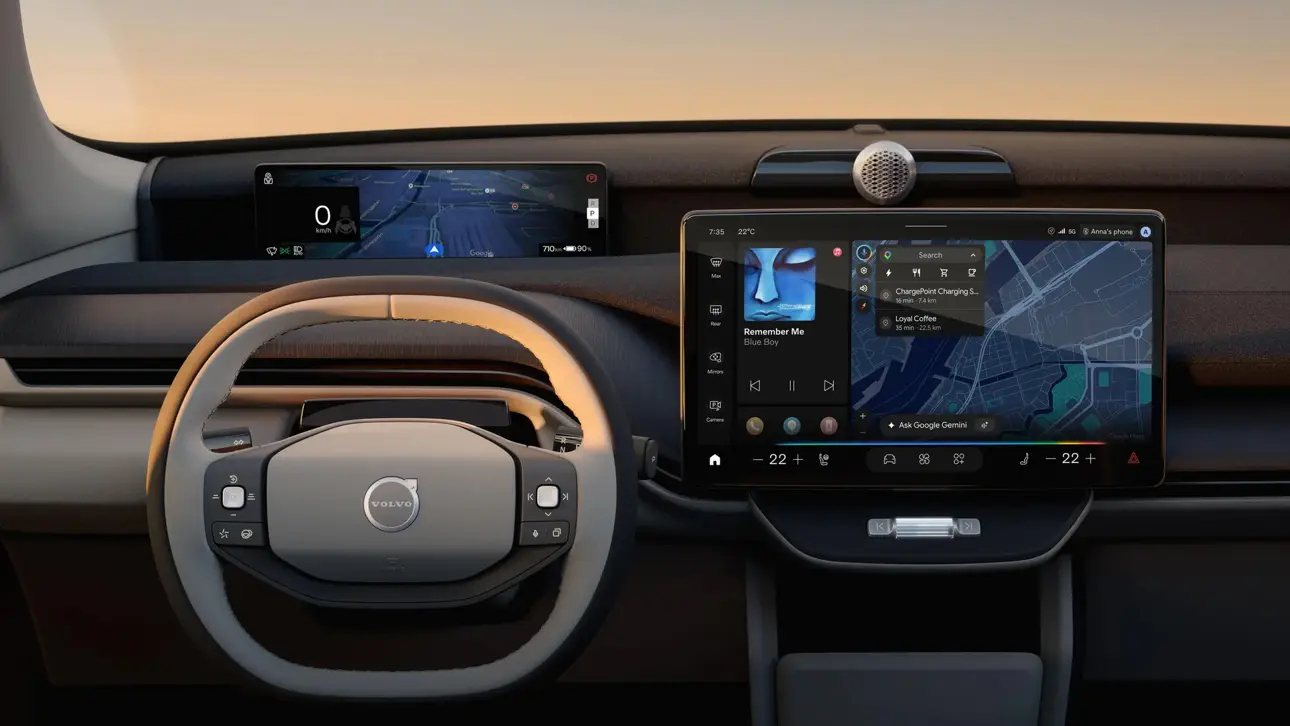
The same logic applies to messages. Gemini will be able to summarize incoming texts and help compose replies. Volvo describes a case in which the driver asks the assistant to tell Sophie they will be 10 minutes late and send it in French because she is learning the language. If the arrival time changes, the message can simply be updated with the new ETA.
There is also a more everyday use case: music. Instead of naming a specific track, the driver can say “play something calming,” and Gemini will choose a suitable option in supported streaming apps. In real driving, commands like this often define how usable the multimedia system feels without extra touches on the screen.
Patrick Brady, vice president of Android for Cars at Google, says drivers will get AI that reduces complexity, keeps attention where it is needed and makes every journey a little easier.
For Volvo, this continues its shift toward over-the-air updates. In March 2026, the company began rolling out Volvo Car UX, a major interface update for millions of cars worldwide. Gemini follows the same logic: a car does not have to age at the same pace as its multimedia system if the software can be meaningfully improved after purchase.
For years, carmakers have added more screens and menus to cabins. Volvo and Google are trying the opposite approach: if Gemini really teaches Volvo cars to understand natural speech, some of the familiar wandering through menus may disappear, and that could matter more than yet another large screen inside the car.
This English edition was prepared using AI translation under editorial oversight by SpeedMe. The original reporting is by Diana Degtyareva
Latest Stories