607 km on a single charge and a price below many crossovers: why the C-HR+ quickly won fans
 © global.toyota
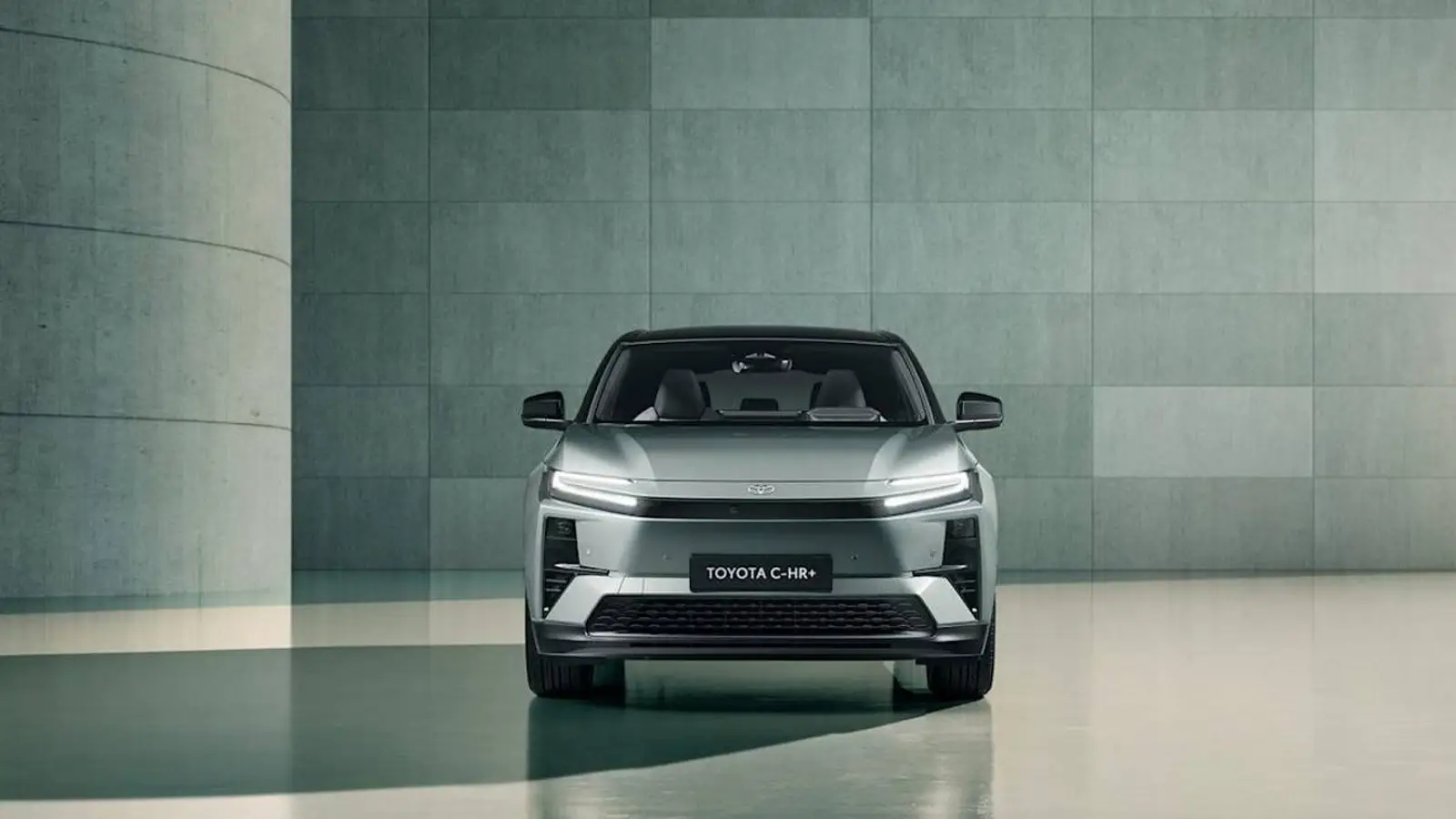
Toyota C-HR+ became Spain's best-selling electric passenger car in April with 812 registrations. Up to 607 km of WLTP range, prices from EUR 35,375, and a strong subsidy boost.
Author: Diana Degtyareva
Toyota C-HR+ began sales in Spain the way new EVs rarely do: in April it immediately became the country's best-selling electric passenger car. The month brought 812 registrations, of which 668 went to private buyers rather than corporate fleets.
The result stands out against the competition. Second was the BYD Dolphin Surf with 533 registrations, followed by the Kia EV3 with 421, the Renault 5 with 371, the Deepal S05 with 326 and the Skoda Elroq with 279. The top ten also included the BYD Atto 2, Citroën e-C3, Kia EV2 and BYD Atto 3. In other words, the C-HR+ didn't just have a strong start — it leapfrogged both Chinese models and European newcomers that had already secured a foothold in the segment.
The reason for the demand is clear from the spec sheet. The base Toyota C-HR+ Electric 250 Advance has front-wheel drive, a 77 kWh battery and up to 607 km of WLTP range. The price in Spain starts at EUR 35,375. The top Electric 350 AWD-i Spirit version, with all-wheel drive, uses the same battery, covers up to 501 km and starts at EUR 42,425. Power outputs are 224 hp for the front-driver and 343 hp for the AWD; 0-100 km/h takes 7.3 and 5.2 seconds respectively.
With the government subsidy factored in, the price falls to EUR 32,000 for the front-drive version and EUR 39,500 for the AWD. For Spain that's a strong argument: an electric C-SUV ends up at the level of, or below, many comparable petrol and hybrid crossovers. For comparison, the Corolla Cross in Spain starts at EUR 36,500 and the hybrid C-HR at EUR 30,750.
At the brand level, April's EV leader remained BYD with 1,533 registrations. Toyota took second place with 944 cars, followed by Kia, Renault, Mercedes-Benz, Hyundai and Volkswagen. Tesla landed only twelfth with 293 registrations — though a weak quarter opener in Europe is fairly typical for the brand.
In all, Spain registered 9,854 electric passenger cars in April. That's more than the 7,052 a year earlier, but down on March's 12,123. The launch of the Plan Auto+ subsidy programme could give the market an extra boost, but the Toyota example shows: an «electric» badge alone is no longer enough for buyers. They want a clear price, a long range and trust in the brand.
The C-HR+ hits exactly that spot: not the cheapest EV, but one of those where the numbers look convincing before you even take it for a test drive.
This English edition was prepared using AI translation under editorial oversight by SpeedMe. The original reporting is by Diana Degtyareva
Latest Stories