AUTO BILD 100,000 km endurance test 2026: ranking, fault points and the most reliable cars
 © www.bmw-m.com
AUTO BILD has refreshed its endurance ranking: 97 cars taken apart by DEKRA since 2014, and only two perfect scores. How the fault points work and which models joined the leading group.
Author: Polina Kotikova
The German magazine AUTO BILD has updated its endurance-test ranking and named the 50 cars that came through 100,000 km best over the past twelve years. The top spot is shared by the Audi A3 Sportback g-tron of the 8V generation and the BMW M3 in G80 guise: both finished the marathon with zero fault points and are the only models in the ranking to score a 1+.
The test is about far more than ordinary driving. For roughly two years the editorial team logs every breakdown, every unscheduled workshop visit and every other complaint, and some cars cover twice the distance. Once the mileage is done the car is stripped completely and a DEKRA expert inspects the engine, the gearbox, the suspension, the body and hidden corrosion spots. Anything found during the teardown feeds into the final grade.
Fault points follow a fixed scale. Being stranded on the road and a blown engine or gearbox cost 15 points each, a failed drivetrain component 5, an unscheduled workshop visit from 3, and a trifle such as a burnt-out bulb 1. After the teardown the body, engine, gearbox, exhaust, suspension and electrics are each rated at up to 5 points, with up to 10 more coming from the logbook entries. Zero points means a 1+, one to four points a straight 1, five to eight a 1 minus, nine to twelve a 2 plus. Around half of all the cars tested landed between 1+ and 2+.
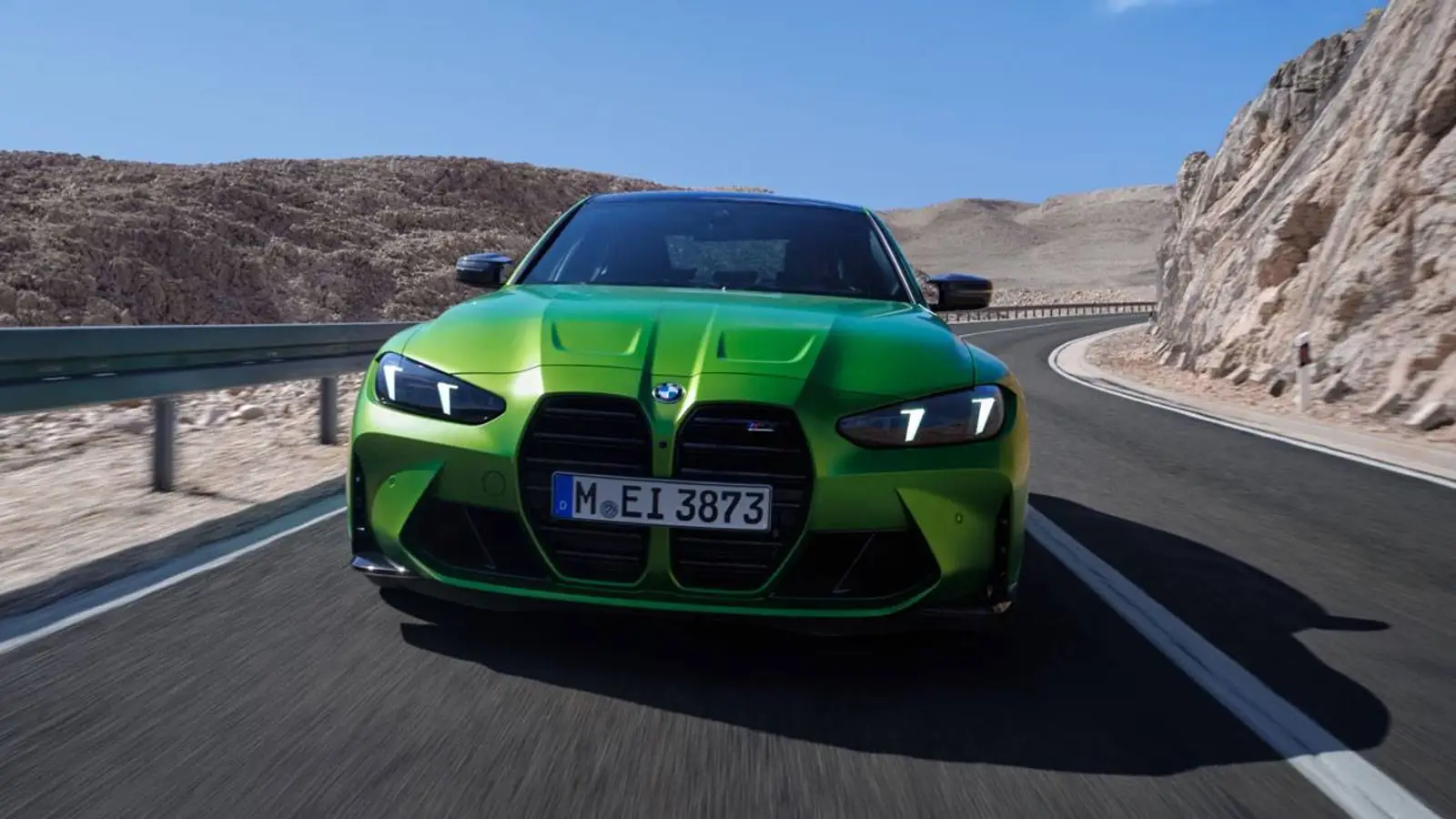
The BMW M3 ran with the 3.0-litre turbo six making 480 hp, rear-wheel drive and a manual gearbox — the simplest version of the family, without Competition badging or all-wheel drive. The same manual, rear-drive combination went into the M3 CS Handschalter that closes out the G80 era. The heavily optioned test car cost the magazine 111,640 euros and joined the fleet in the summer of 2021. After 100,000 km the editors had not handed it a single fault point.
The final teardown found nothing that would have spoilt the result either: the engine burned no oil, the cylinder coating was free of scoring, wear on the timing chain guides was minimal, and the clutch, the experts reckoned, was good for another 30,000 km. Average consumption over the test was 10.2 litres per 100 km, and the power runs taken at the start and at 98,950 km returned identical figures. In AUTO BILD’s own words, in 30 years of endurance testing none of its nearly 200 cars had covered the distance so cleanly. After the teardown BMW put the M3 back together and sent it out for a second 100,000 km.
The Audi A3 g-tron earned the same grade earlier — back in 2017, six years before the M3. The hatchback, with a 1.4-litre 110 hp engine running on natural gas and petrol, needed no repairs for breakdowns, and the post-teardown inspection turned up nothing notable: its gas tanks are made of composite, so corrosion was never a threat. Its practical drawbacks — a cramped rear bench and a boot 100 litres smaller because of those tanks — did not translate into the technical reliability score.
The next group, on two points and a grade of 1, is made up of the Audi A4 Avant 2.0 TFSI, Audi A6 Avant 40 TDI, BMW iX3 M Sport, BMW Z4 sDrive 30i, Seat Ateca 1.4 and Volkswagen T-Cross 1.0 TSI. The A6 racked up almost 115,000 km, while the Ateca result is provisional: it has not been stripped after its 100,000 km yet because the test was extended. Three points went to the BMW 320d Touring, Mazda CX-5 Skyactiv-D 184 and Suzuki Swift Sport — the Suzuki missed a 1+ only because of early rust in the side members. The only electric car in the whole fifty is that iX3.
In total the AUTO BILD ranking lists 97 cars that have been through the test since 2014, as of July 2026. For scale: the table is propped up by the Ford Fiesta 1.0 EcoBoost with 52 fault points and a grade of 5 — its engine let go shortly before the finish after a bolt worked loose on the timing belt tensioner. Second from bottom, the Subaru XV 2.0D collected 44 points: an early worn clutch, melting on two pistons and corrosion on suspension parts.
Still, the result of a single editorial car cannot be transferred automatically to every example of the same model. When choosing a used car, the specific engine, the model year, the service history and the way it has been driven all matter. The ranking shows how one car stood up to a controlled marathon; it does not replace mass fault statistics.
This English edition was prepared using AI translation under editorial oversight by SpeedMe. The original reporting is by Polina Kotikova
Latest Stories