Hyundai NOVA Lab and the wire-car: how vehicle electronics are validated before a prototype
 © www.hyundai.com
At the Namyang research centre Hyundai and Kia wire up 300 to 500 controllers with no body at all and catch 150 to 200 issues per programme before the first prototype exists.
Author: Polina Kotikova
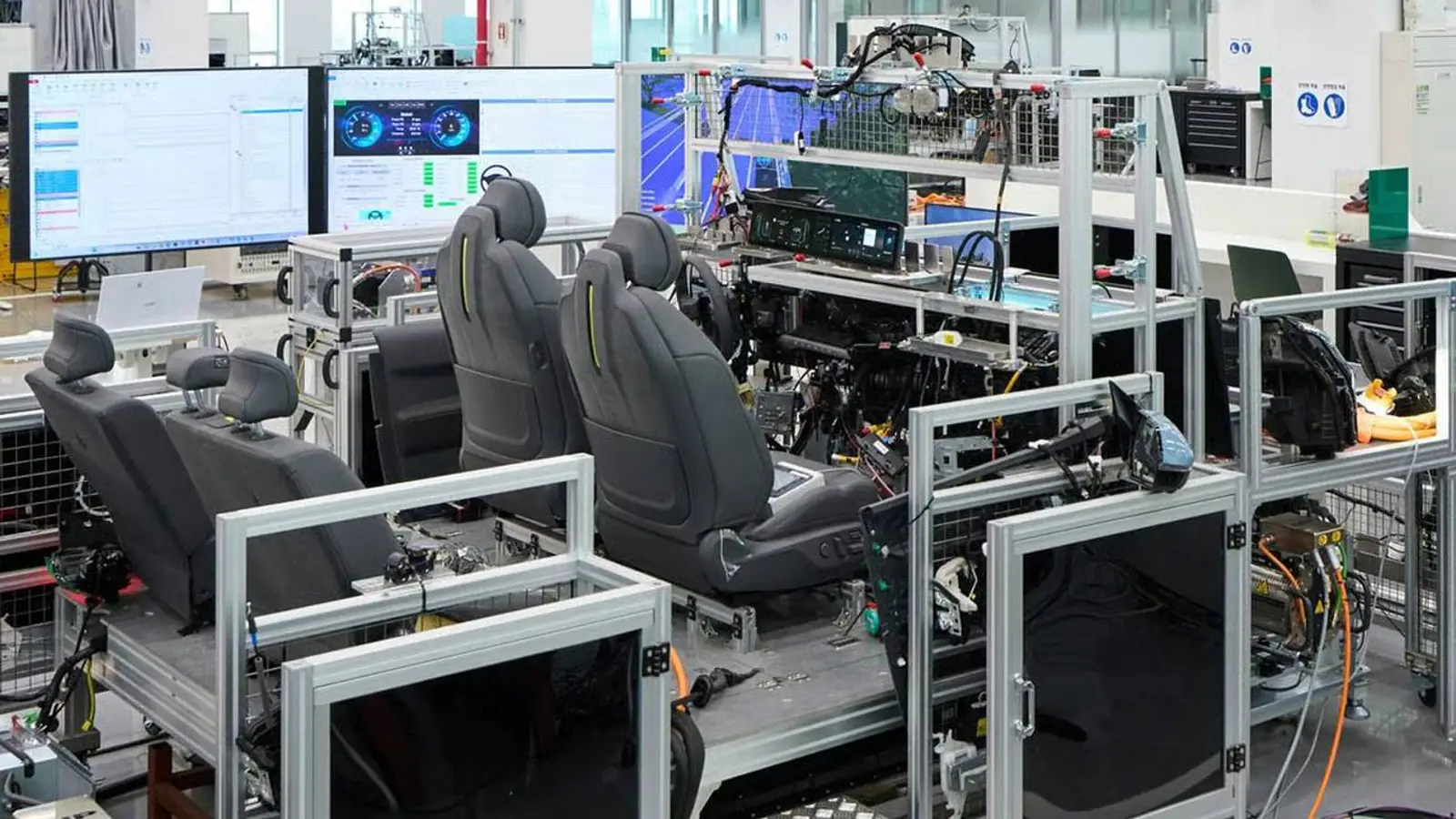
Hyundai and Kia can spot up to 200 electronics problems before a car exists as a full prototype. At NOVA Lab — short for Next-generation Open Validation & Automation — inside the Namyang research centre, engineers assemble what they call a wire-car: controllers, harnesses and electronic components are connected exactly as they would be in the finished vehicle, only there is no body and no interior. On average, Hyundai Motor Group uncovers from 150 to 200 issues at this stage.
The point of the exercise becomes clearer as the amount of electronics grows. A single control unit may behave perfectly on its own, yet the moment it starts talking to the rest of the systems, data exchange errors, logic conflicts or abnormal power draw show up. Hyundai and Kia have used wire-cars since 2019, and today’s NOVA Lab runs 14 such test benches.
On large programmes the bench takes anywhere from 300 to 500 controllers and other electronic components, with roughly 500 wiring connectors.
Without a body, engineers can still imitate motion. A compact dynamometer reproduces acceleration and deceleration, while ADAS cameras and radars are fed a virtual road and synthetic targets. That makes it possible to check adaptive cruise control, lane keeping and other electronic functions in advance.
NOVA Lab is already being prepared for the next generation of cars: it supports high-speed Ethernet, 48-volt systems, OTA updates and validation of redundant control paths for robotaxis. The next step is still being explored — Hyundai wants to use artificial intelligence to hunt for anomalies automatically in the data it collects continuously.
So the “up to 200 issues” figure says less about the quality of future Hyundai and Kia models than about how many potential conflicts the carmaker tries to remove before a car is even sent out for its first road tests.
This English edition was prepared using AI translation under editorial oversight by SpeedMe. The original reporting is by Polina Kotikova
Latest Stories