Archer Halo Cargo VTOL 2027: Range, Payload and Launch Partner Explained
 © archer.com
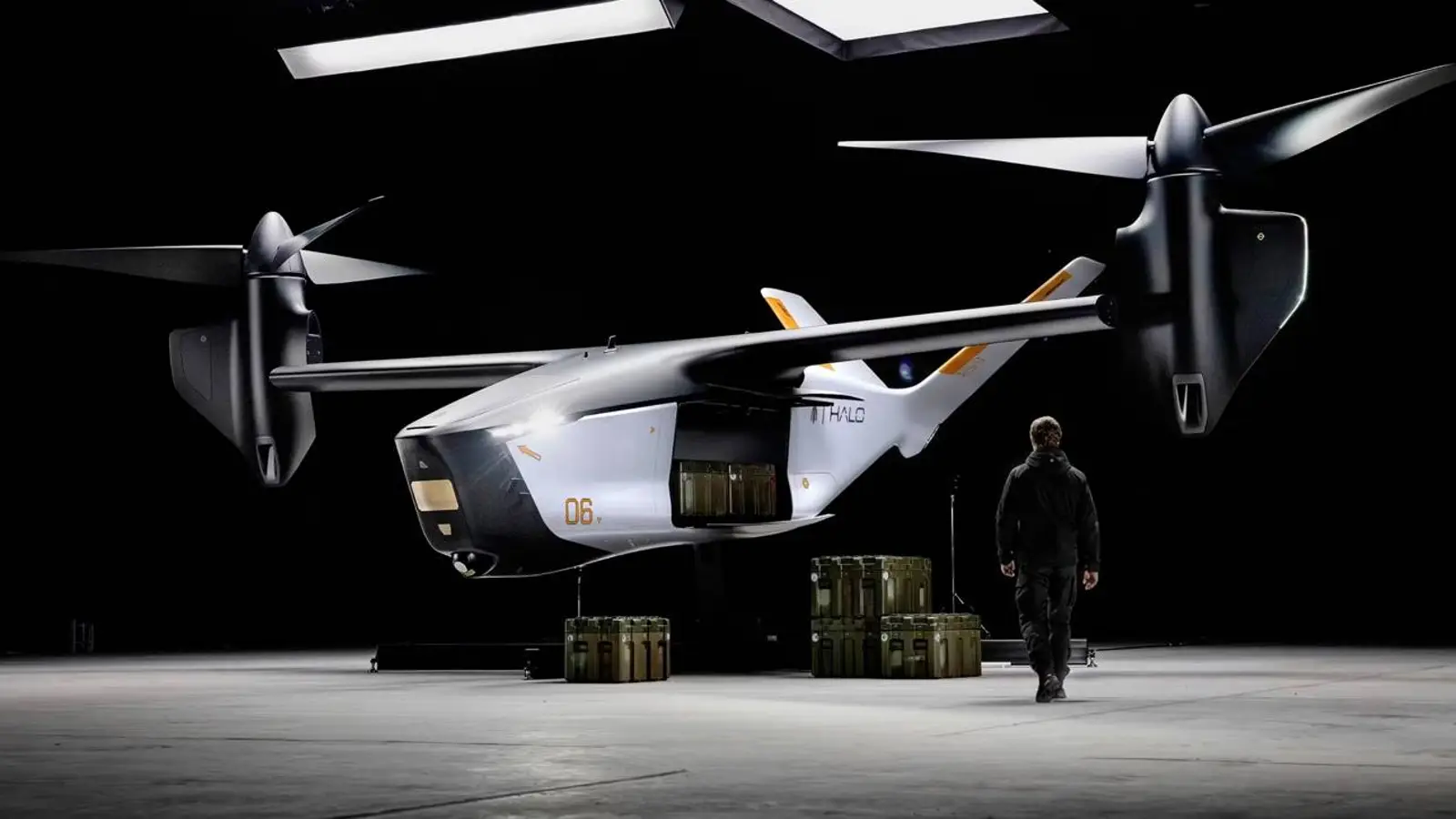
Archer's Halo shares its airframe, hybrid powertrain and core systems with Anduril's military Thunder — but the company still hasn't published the numbers that would prove it's cheaper than a helicopter.
Author: Yulia Ivanchik
Archer wants to turn Anduril's military Thunder program into Halo, a commercial cargo aircraft. The two aircraft share the same airframe, series hybrid-electric powertrain and core systems, but the project's central promise — hauling cargo cheaper than a helicopter — can't be verified yet: the company hasn't disclosed range, speed or payload capacity.
Halo uses two tiltrotors with variable rotor speed. Vertical takeoff means it doesn't need a runway, and in cruise mode the wing and hybrid powertrain are meant to cut energy and fuel use. There's no pilot on board.
Archer is eyeing cargo runs to offshore platforms, transport between ports and logistics hubs, medical flights and disaster-relief supply missions. Japan's Marubeni Aerospace became the first strategic partner, though the agreement currently covers market research, identifying use cases and preparing for future deployment — not an order for a set number of aircraft.
On the same platform, Anduril built the military Thunder. The companies have already flown several full-scale test aircraft, and Thunder's own first flight is set for 2027. Archer hasn't named a timeline for the commercial Halo.
The segment is already edging toward real certification: China's Xpeng X3-F, for instance, recently cleared a new step, as SPEEDME.RU reported earlier.
What makes Halo interesting is the chance to carry military-grade autonomy into civilian logistics. But until range, payload and cost per flight are published, the claim of a cheaper alternative to helicopters remains a goal for the developers, not a proven advantage.
This English edition was prepared using AI translation under editorial oversight by SpeedMe. The original reporting is by Yulia Ivanchik
Latest Stories