Hyundai Parking Robot Pilot 2026: Where It's Tested, How It Works and What Capacity Gain to Expect
 © hyundaimotorgroup.com
Hyundai Motor Group starts a parking-robot pilot at a Siheung apartment complex, testing whether the system can boost underground parking capacity by up to 50%.
Author: Polina Kotikova
Hyundai Motor Group is moving its parking robots out of demo zones and into a regular apartment complex. On August 10, the group announced a trial at Hillstate The Wave City in Siheung: a dedicated underground parking zone with 53 spots will host two sets of Hyundai WIA robots. The goal is to check whether the setup can actually boost capacity on the same floor area by 20–50%.
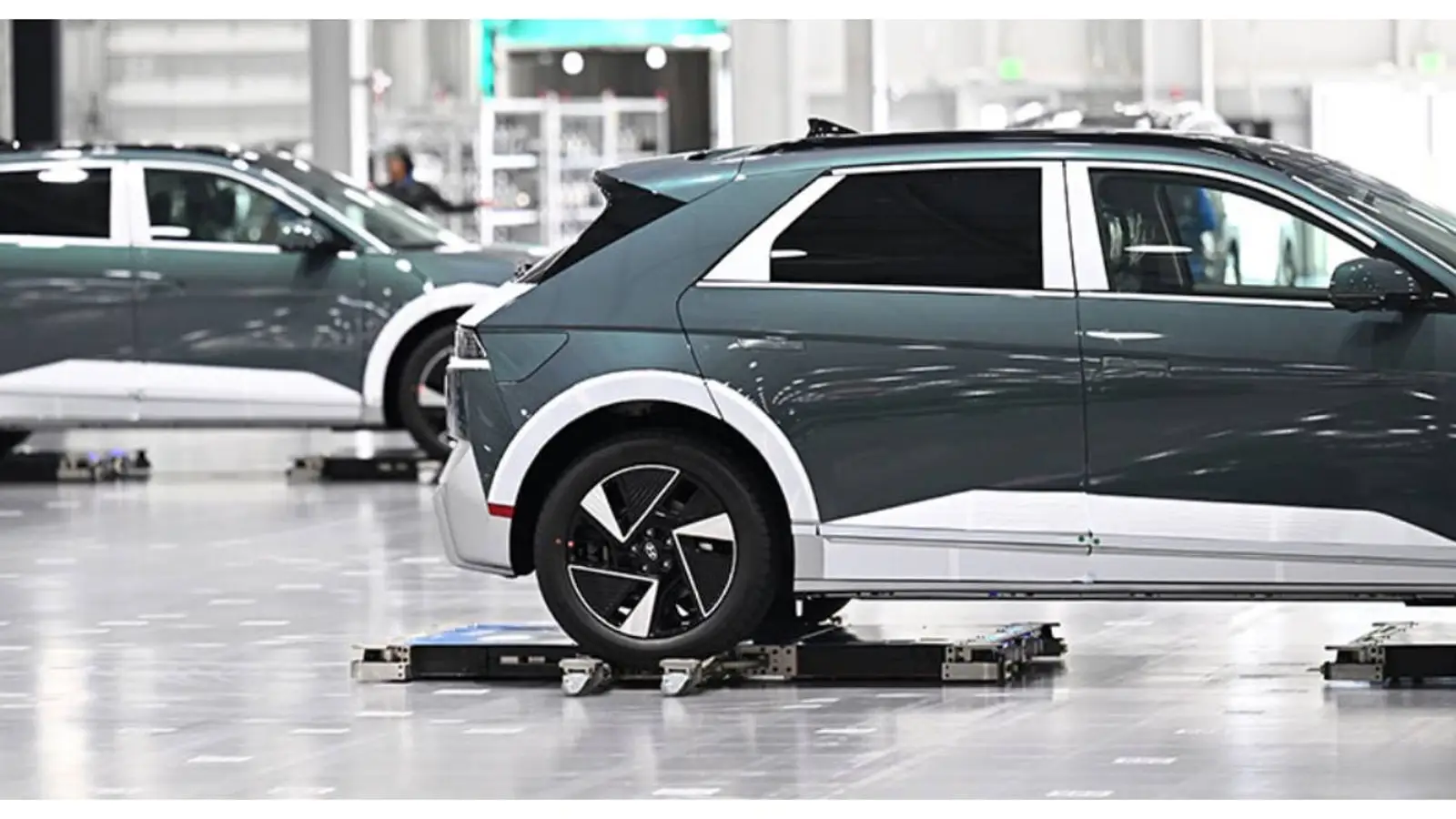
Each unit consists of a pair of flat platforms just 110 mm tall. They slide under the car, detect the wheel positions, lift them and carry the vehicle to an open spot. Top speed reaches 1.2 m/s, and the maximum vehicle weight is 3.4 tonnes — figures Hyundai already confirmed when it showed the H-Motion concept at CES 2026.
The hardware has clearly grown more capable. When Hyundai first deployed a parking robot at Factorial Seongsu in Seoul back in 2024, the limit was 2.2 tonnes at the same 1.2 m/s. Now the system is rated for heavy SUVs and EVs as well — and alongside the parking robots, the company is also expanding its fleet of Atlas humanoid robots at its Georgia plant.
At the apartment complex, drivers will leave their car in a marked zone, then the robot will get a command from a kiosk or an in-home control panel, lift the vehicle and drive it to an open spot on its own. During the trial, Hyundai plans to measure pickup and drop-off times, actual user wait times, parking success rate, robot uptime, monthly throughput and the change in space efficiency.
There’s an important caveat here. The new announcement pegs the capacity gain at 20–50%, while Hyundai WIA’s current product page lists “up to 30%” for the parking robot. So the 50% figure is better read as the upper target of the experiment rather than an established result.
A Hyundai Motor Group representative said: “This parking robot pilot in a multi-family residential complex is a significant step that goes beyond a simple technology check and aims to shape a new parking paradigm for the smart-city era. We plan to comprehensively test the operational stability, efficiency and user convenience of the parking robot in a real residential environment, then develop a standard model that can be rolled out to various urban spaces in Korea and abroad.”
The next number worth watching isn’t the robot’s load capacity anymore — it’s the actual number of cars that fit into those 53 spots without adding any floor space.
This English edition was prepared using AI translation under editorial oversight by SpeedMe. The original reporting is by Polina Kotikova
Latest Stories