Li Auto MEGA 2026 facelift: price, range and what's new
 © A. Krivonosov / SPEEDME
The updated Li Auto MEGA debuted at Chengdu with four lidar sensors, a rear-steering axle and 413 kW of combined power, while keeping its signature bullet-train silhouette.
Author: Nikita Novikov
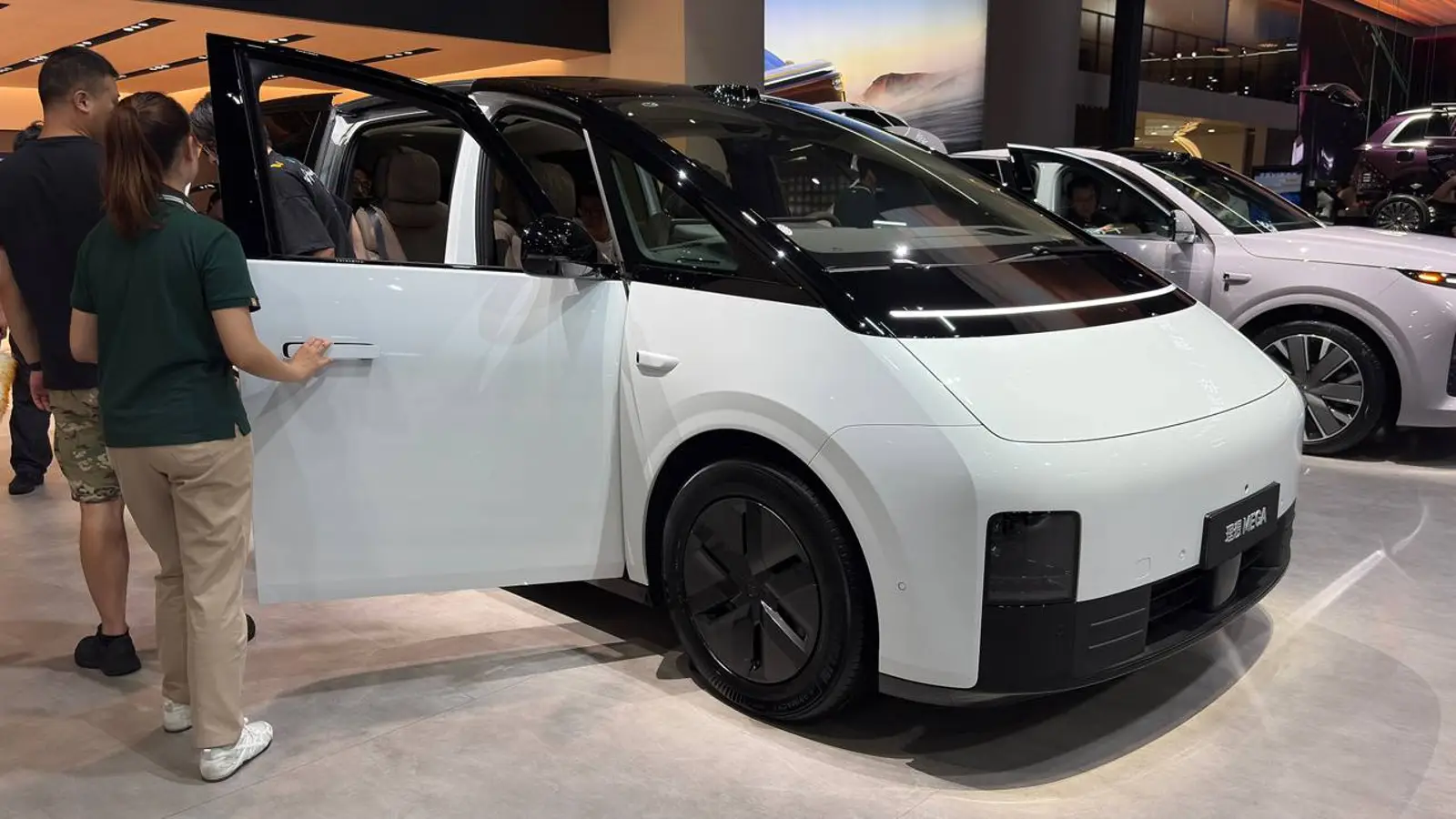
At the Chengdu Auto Show, a SPEEDME.RU correspondent photographed the updated Li Auto MEGA — a significantly reworked version of the brand's most unusual vehicle. The famous “bullet train” look has barely changed, but the facelift runs far deeper under the skin: four lidar units, a rear-steering axle, a new interior and a more powerful drivetrain.
Before the show, the car had already surfaced in China's Ministry of Industry and Information Technology database and in a handful of pre-production photos, so Chengdu can't be called the model's world premiere. Even so, this is the first time the updated MEGA has been seen up close in full show trim. SPEEDME's photos clearly show new dark, nearly closed-off wheel designs, semi-flush door handles, a revised front bumper and a reworked rear end.
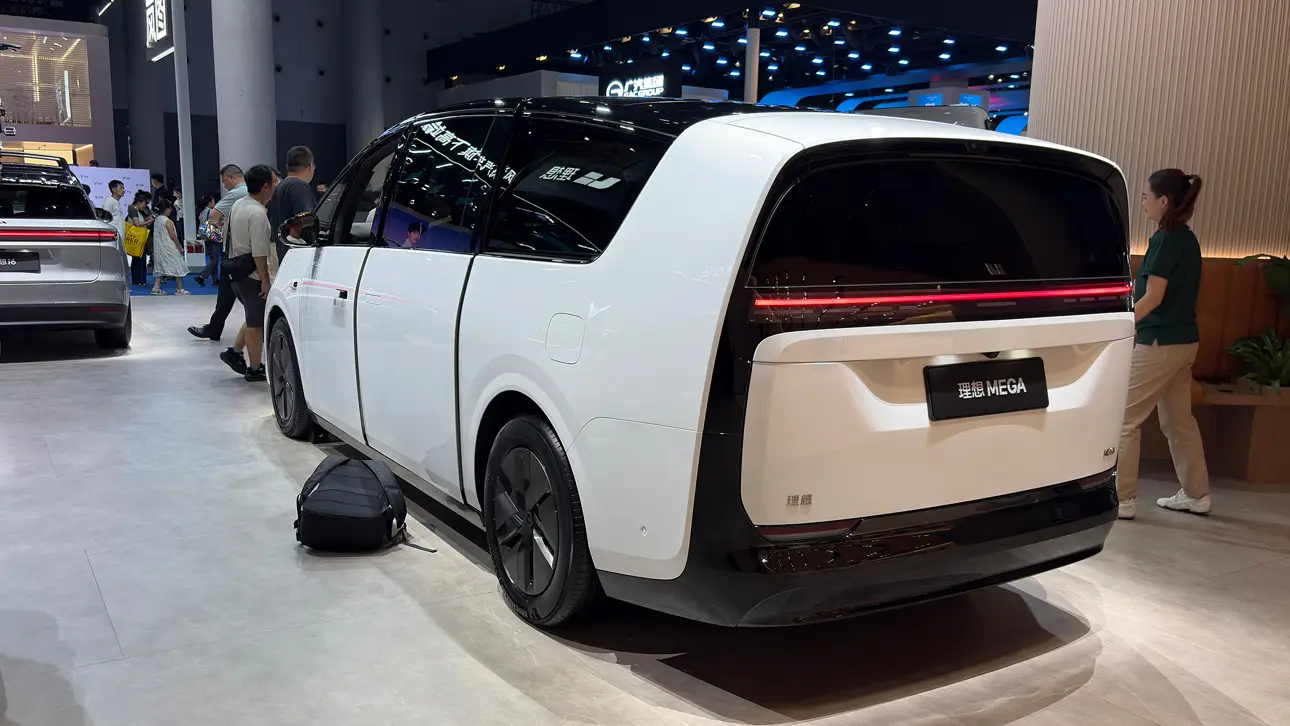
The dimensions have changed only slightly. Length grows by 5 mm to 5,355 mm, width is 1,965 mm, and height is 1,850 mm. The wheelbase stays at a generous 3,300 mm. The cabin keeps its seven-seat 2+2+3 layout.
Far more important is the arrival of rear-wheel steering. It matters a lot for the MEGA: at over 5.3 meters long, the current car is roomy, but maneuverability in tight courtyards and parking lots has never been its strong suit. The new system should noticeably shrink the turning radius while also improving stability during high-speed lane changes.
Another major change is the electronic driver-assist suite. Instead of a single front lidar, the updated car gets four laser sensors, including side- and rear-facing units. That all but eliminates blind spots around the vehicle and brings the MEGA's hardware in line with the latest-generation L8 and L9.
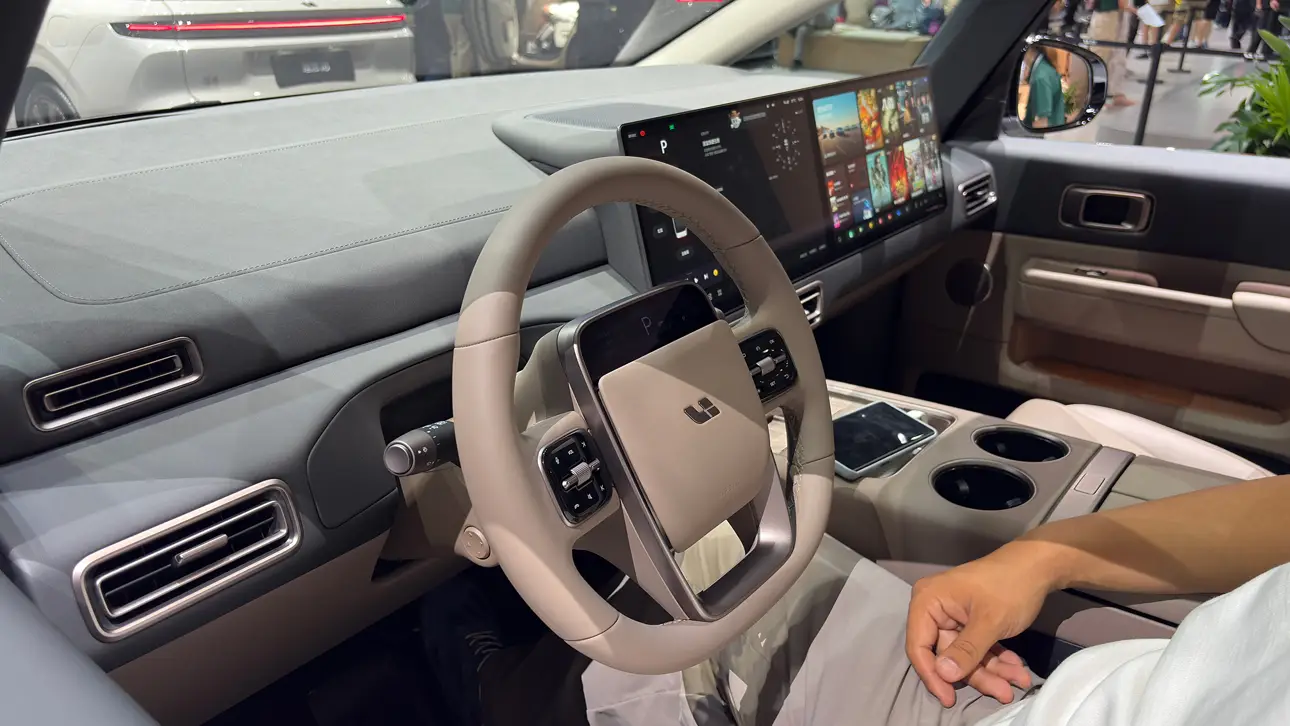
The cabin has changed too. SPEEDME's team notes a new dashboard layout built around one large panoramic display instead of the previous set of separate screens. Earlier certification filings also pointed to a bigger rear-seat control screen and reworked second-row seats. The third row can now fold and tip fully forward by 85 degrees, growing usable cargo length from 680 to 1,066 mm.
The electric drivetrain gained power too. The front motor still makes 155 kW, while the rear unit's output climbs from 245 to 258 kW. Combined, that's 413 kW, or roughly 562 hp, up from the previous 544 hp. Top speed rises to 200 km/h. Li Auto hasn't yet released official acceleration figures for the updated car.
The new MEGA gets a traction battery of around 108 kWh, though the claimed range stays at 710 km CLTC. For comparison, the current production car uses a 102.7 kWh CATL battery. Its 800-volt architecture and 5C charging technology allow up to 500 km of extra range in roughly 10–12 minutes at a suitable station.
The body shape has barely changed, and there's sound engineering logic behind that. The current MEGA has a drag coefficient of just 0.215 Cd — an exceptional figure for a seven-seat MPV measuring 5.35 meters. So instead of a radical redesign, Li Auto focused on the chassis, electronics, ergonomics and cabin.
Pricing for the updated version hasn't been announced yet. The current MEGA sells in China for 529,800–559,800 yuan, or roughly $78,800–$83,200 at current exchange rates. Those figures should be treated only as a benchmark: the new car packs enough extra equipment that pricing could shift.
In the end, the MEGA's update turns out to be far more substantial than it looks from the outside. Li Auto left the recognizable body largely untouched, yet fixed the giant minivan's key everyday shortcoming — maneuverability — while also updating the powertrain, interior and autonomous-driving suite. For a car that barely changed on the outside, there's an unexpectedly large amount of new engineering underneath.
This English edition was prepared using AI translation under editorial oversight by SpeedMe. The original reporting is by Nikita Novikov
Latest Stories