Dodge Charger SIXPACK: power, acceleration and AWD compared with the HEMI V8
 © Stellantis / media.stellantis.com
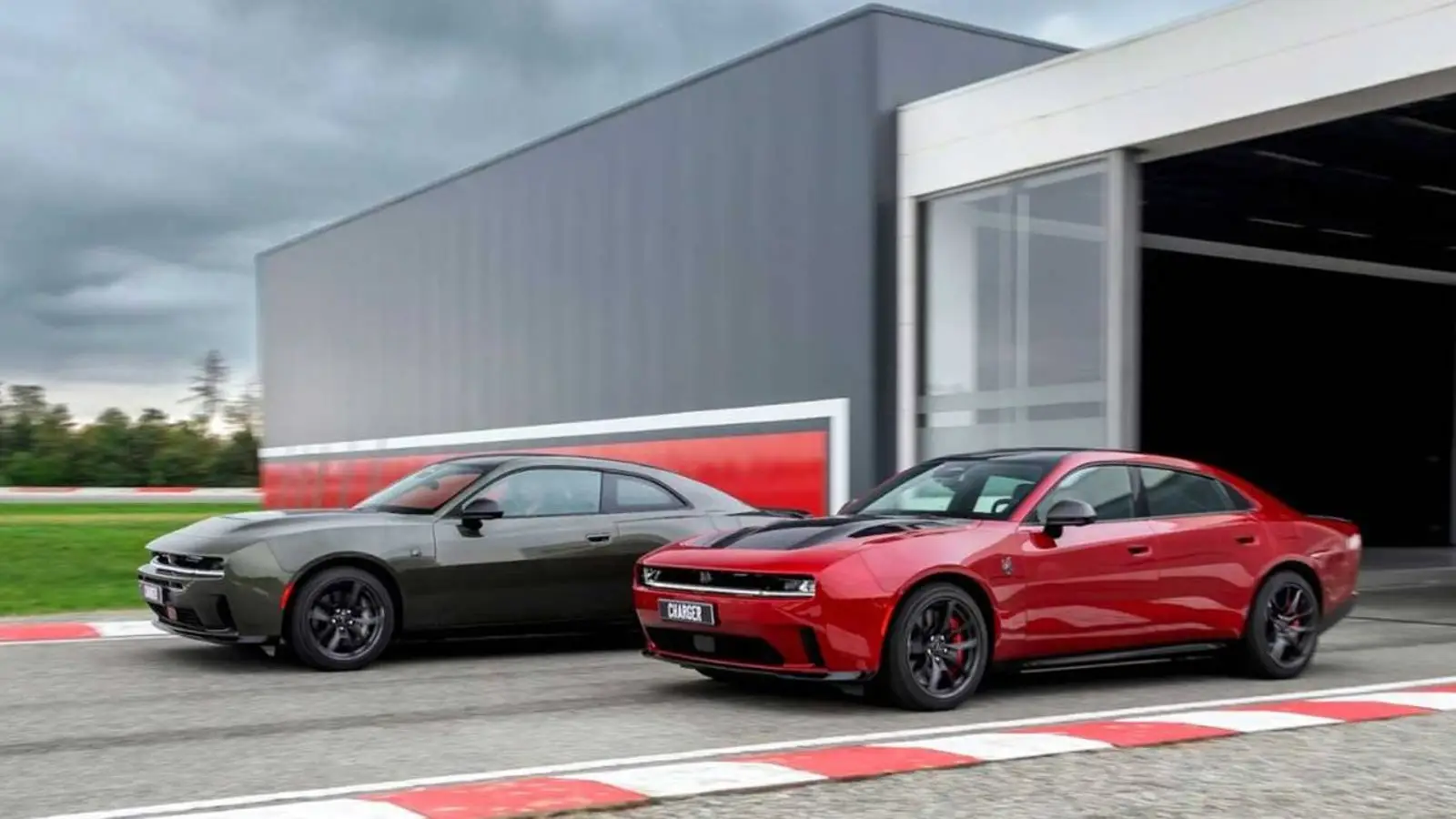
The new gasoline Dodge Charger R/T and Scat Pack use a twin-turbo 3.0-liter Hurricane SIXPACK, standard AWD and stronger acceleration than their HEMI V8 predecessors.
Author: Dmitry Novikov
Ditching the HEMI V8 has not made the new Dodge Charger slower. On the contrary, the gasoline R/T and Scat Pack with the 3.0-liter Hurricane SIXPACK inline-six outperform their eight-cylinder predecessors in power, torque and acceleration. Turbocharging is only part of the reason: the new generation also gets all-wheel drive to help put the power down off the line, while a driver-selectable mode can turn the car into a rear-wheel-drive machine.
The Charger R/T now makes 420 hp and about 635 Nm, compared with 370 hp and 536 Nm from the old 5.7-liter HEMI V8. The 0-60 mph time, roughly equivalent to 0-97 km/h, drops from 5.1 to 4.6 seconds, while the quarter mile falls from 13.5 to 12.9 seconds.
The gain is even clearer with the Charger Scat Pack. The previous 6.4-liter naturally aspirated HEMI V8 produced 485 hp and about 644 Nm, while the new SIXPACK H.O. delivers 550 hp and 720 Nm. The new Scat Pack reaches 60 mph in 3.9 seconds versus 4.3 seconds for the previous Charger Scat Pack Widebody, and runs the quarter mile in 12.2 rather than 12.4 seconds.
The SIXPACK's secret is not just its two turbochargers. The H.O. version already has 88% of peak torque available at 2500 rpm and maintains more than 90% from 3000 to 6000 rpm. Two 54-mm Garrett GT2054 turbochargers rotate in opposite directions, while direct-injection pressure reaches 350 bar. The result is strong pulling power across a broad rev range rather than only near the engine's power peak.
The second major difference is the driveline. The R/T and Scat Pack come with standard all-wheel drive and an eight-speed TorqueFlite 880RE automatic. The AWD system uses a multi-plate clutch, and the driver can engage rear-wheel-drive mode to send 100% of torque to the rear wheels. On normal roads AWD provides extra traction, while RWD mode preserves the traditional muscle-car feel. The front axle can also disconnect automatically when all-wheel drive is not required, reducing driveline losses.
The Scat Pack also has Line Lock: the electronics hold the front brakes, open the AWD clutches and let the driver warm the rear tires. AWD can then be re-engaged for the launch to use the grip of all four wheels. The combination of greater output, a broad torque plateau and all-wheel drive helps the six-cylinder SIXPACK accelerate harder than the old naturally aspirated V8.
The electric Charger Daytona Scat Pack is quicker still: its powertrain produces 670 hp and reaches 60 mph in 3.3 seconds. But among gasoline Chargers, the 550-hp SIXPACK shows how radically the formula has changed. Instead of relying on displacement and eight cylinders, the result now comes from turbocharging, a wide spread of torque and the ability to use all-wheel drive right from the launch.
This English edition was prepared using AI translation under editorial oversight by SpeedMe. The original reporting is by Dmitry Novikov
Latest Stories