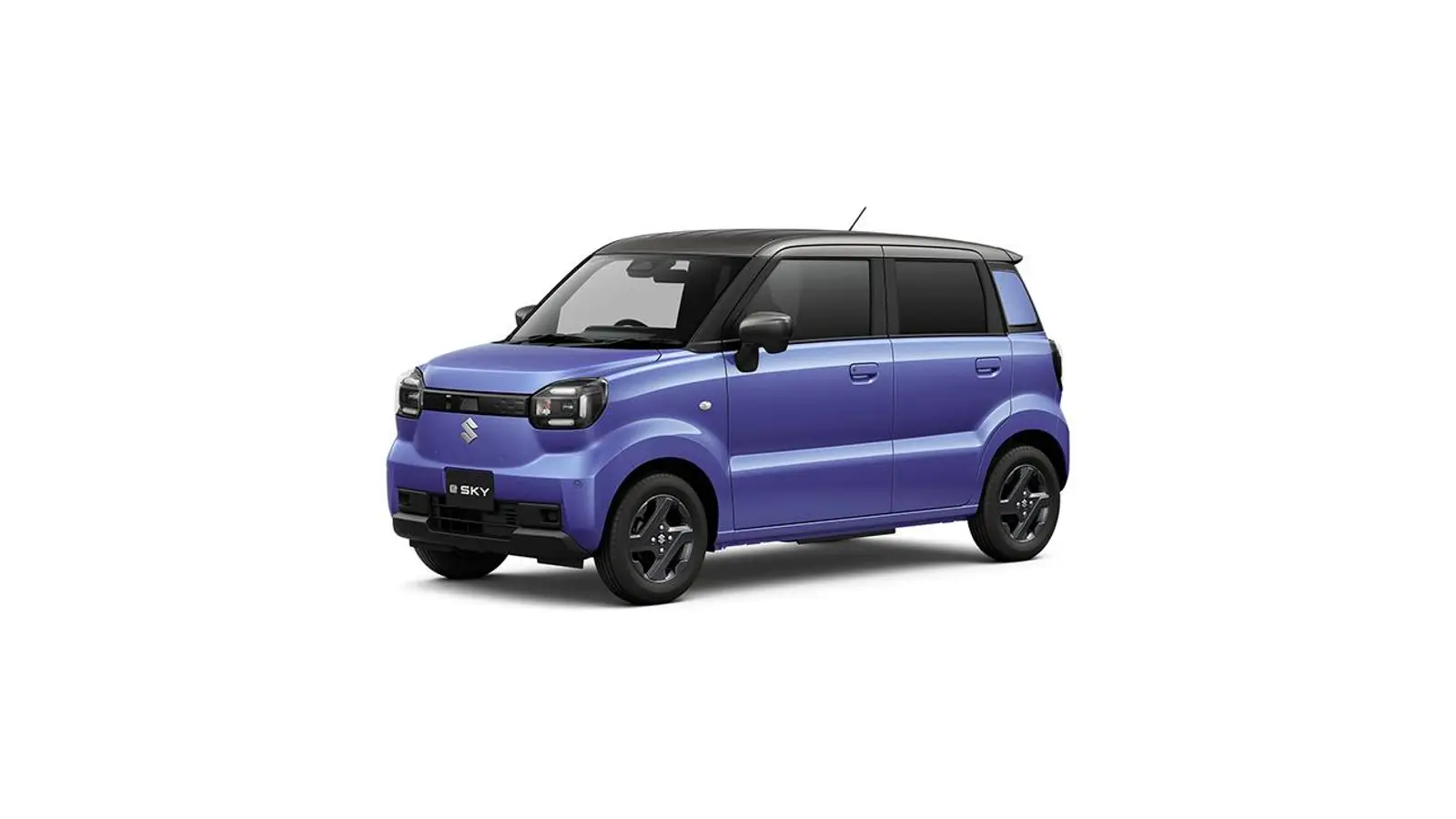
Suzuki e SKY 2026: price, 310 km WLTC range and charging
 © suzuki.co.jp
Suzuki's first electric passenger kei car gets a 26 kWh LFP battery, 310 km WLTC range and prices from ¥2.12 million in Japan.
Author: Polina Kotikova
Suzuki has unveiled the production e SKY — its first electric passenger kei car. Sales in Japan begin on November 16, 2026. The entry-level A version costs 2.12 million yen, while G and X are priced at 2.39 million and 2.79 million yen respectively.
Japan's CEV subsidy for the e SKY is currently 568,000 yen. With the full subsidy, the calculated cost of the base version falls to 1.552 million yen. Suzuki lists this support amount for vehicles registered from October 6 through December 31, 2026; eligibility depends on the program rules and available budget.
The main technical bet is efficiency rather than a large battery. The LFP pack has a capacity of just 26 kWh, yet certified range reaches 310 km WLTC. Energy consumption is 97 Wh/km, which Suzuki calls the best result in the light electric kei-car class. The motor produces 47 kW, or 64 hp, and 133 Nm.
The cheapest trim has an important caveat. The A version is made to order and its rear-door windows are fixed. A 50 kW fast-charging function is offered on G and X: the battery can reach 80% in about 25 minutes. A full charge takes around 4.5 hours at 6 kW and about eight hours at 3 kW.
The comparison with the BYD RACCO is especially revealing. It entered the Japanese market on July 28. The base RACCO 200 costs 2.145 million yen and has a 210 km range. That makes the entry e SKY 25,000 yen cheaper while offering 100 km more certified range. BYD counters with sliding doors, while the 320 km RACCO 300Plus costs 2.398 million yen — almost the same as the e SKY G at 2.39 million.
The Honda N-ONE e: is noticeably more expensive. Its G version costs 2.6994 million yen, covers 295 km and consumes 105 Wh/km. The Suzuki is therefore 579,400 yen cheaper, adds 15 km of certified range and uses less energy per kilometer.
The e SKY also shows why a small battery does not necessarily mean short range. Low energy consumption can materially reduce everyday running costs, especially for drivers who charge at home.
Suzuki expects to sell 1000 e SKY units per month in Japan. If that target is met, the model will test two ideas at once: whether buyers are ready to move from gasoline kei cars to EVs, and whether a small, highly efficient battery matters more than headline capacity.
This English edition was prepared using AI translation under editorial oversight by SpeedMe. The original reporting is by Polina Kotikova
Latest Stories