Changan and CATL target 75 GWh while Golden Bell solid-state batteries remain in validation
 © B. Naumkin
Changan and CATL plan 75 GWh of battery capacity while solid-state and sodium-ion programs move on separate timelines.
Author: Dmitry Novikov
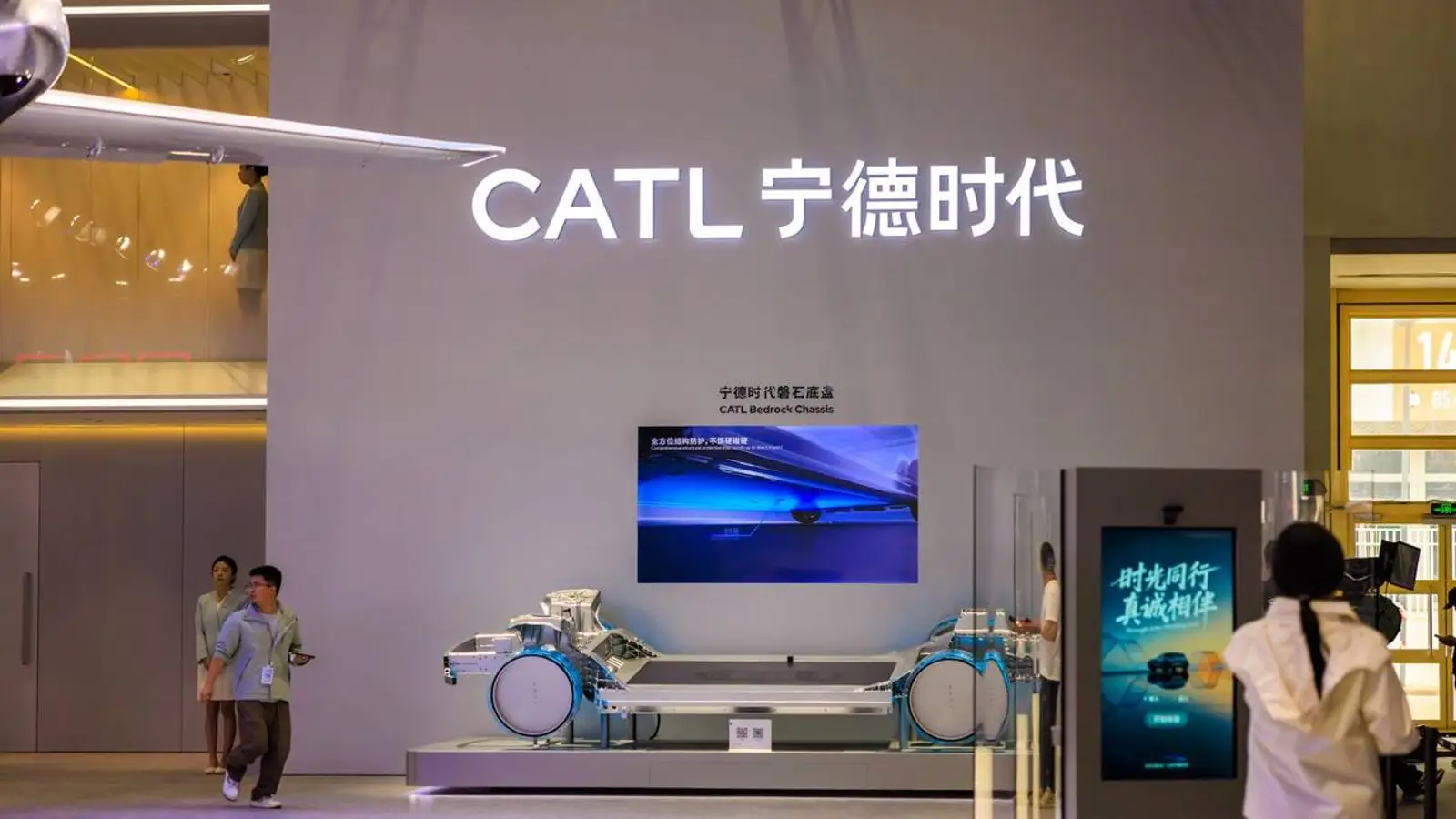
Changan and CATL are continuing to expand joint battery production toward 75 GWh a year. An additional 25 GWh plant is due to start operating in the second half of 2027 and reach design output within the following three years. At the same time, the companies are cooperating on next-generation battery technologies. The claimed range of more than 1,500 km, however, still refers to Changan’s developing solid-state technology rather than a production EV.
Changan reconfirmed these directions on October 12 through the Shenzhen Stock Exchange investor-interaction platform. The total 75 GWh capacity had already appeared in the manufacturer’s 2025 annual report. Changan and CATL also signed a five-year memorandum in January 2026 to deepen strategic cooperation, so the latest statement develops an existing program rather than announcing a sudden new project.
The expansion is tied to the CATL-Changan joint venture established in 2023. The new production project adds another 25 GWh a year and is expected to require about 5.5 billion yuan of investment. The site will cover about 1,000 mu, or roughly 667,000 square metres. Its batteries are intended for Avatr, Deepal and Nevo EVs. Once full capacity is reached, annual output value is expected to be around 10 billion yuan.
A separate track is Changan’s solid-state battery program. The company aims to raise cell energy density to 400 Wh/kg and says this could potentially enable more than 1,500 km of EV range. The specific vehicle, battery size and test cycle have not been disclosed. Changan’s annual report also says a 400 Wh/kg solid-state prototype cell was validated with Talent New Energy, so that figure should not be directly attributed to the CATL joint venture.
Within the Golden Bell battery family, Changan has also cited a life of more than 5,000 cycles, little noticeable performance degradation over as much as 600,000 km, and 6C charging that can raise state of charge from 30% to 80% in about nine minutes. Available material does not establish that all of those figures belong to the same 400 Wh/kg solid-state cell.
Vehicle validation of Changan solid-state batteries is scheduled for 2026, with gradual series introduction from 2027. The current figures should therefore be treated as targets for a developing technology rather than the final specification of a battery already in mass production.
At the same time, Changan and CATL’s sodium-ion cooperation has already reached the production-vehicle stage. In February 2026 the partners presented what they described as the first mass-production passenger car using CATL Naxtra batteries. CATL quotes energy density of up to 175 Wh/kg, more than 400 km of range and strong low-temperature performance for the technology.
The two tracks should therefore not be conflated. The CATL-Changan expansion to 75 GWh has defined industrial projects and timelines, while the 400 Wh/kg solid-state technology is still moving through validation and preparation for series use. The 75 GWh joint-production figure does not mean all of that capacity will be devoted to solid-state batteries.
This English edition was prepared using AI translation under editorial oversight by SpeedMe. The original reporting is by Dmitry Novikov
Latest Stories