Smart #1 2026: 800V platform, charging time, range and China launch date
 © MIIT
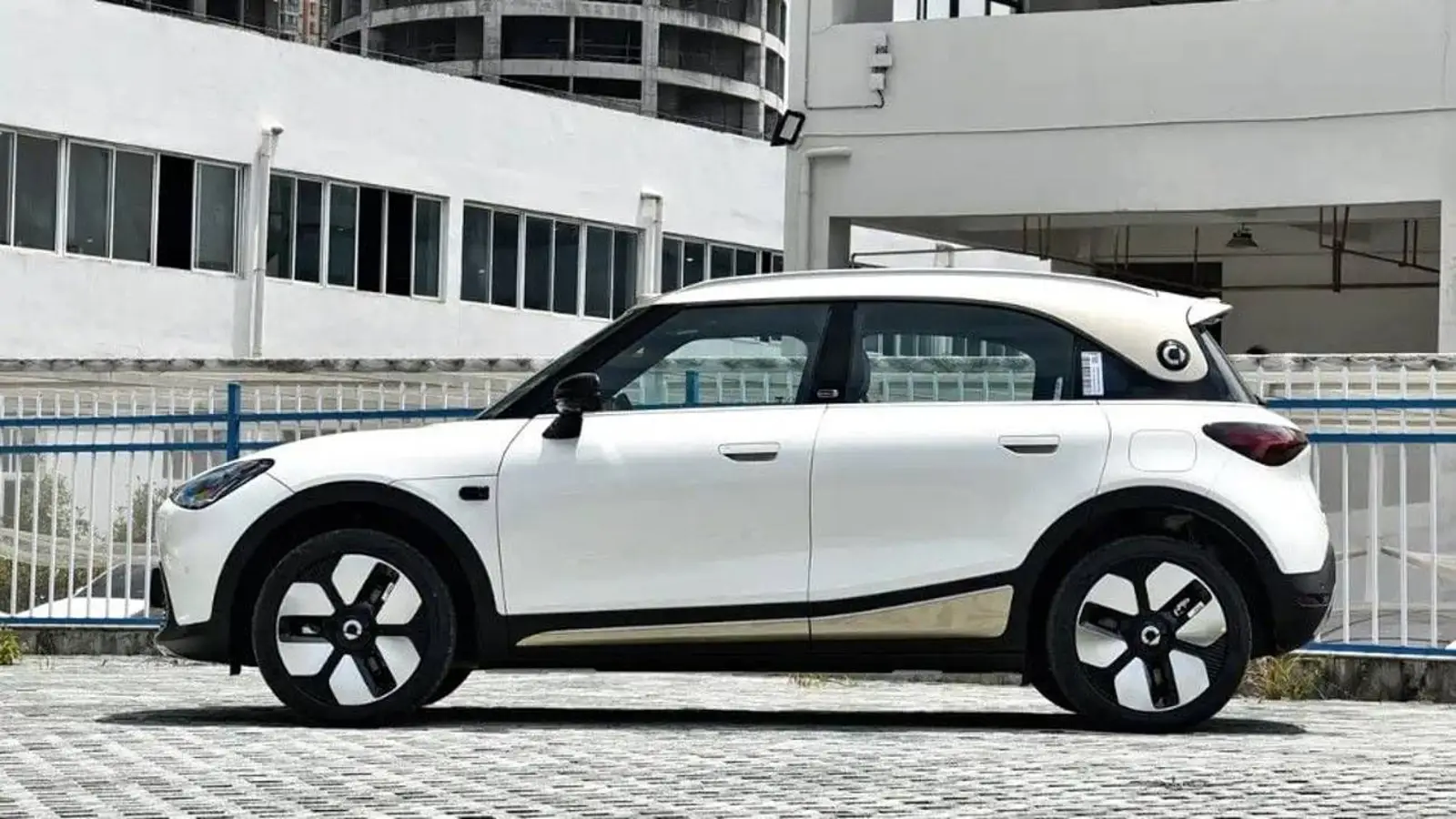
Smart has revealed the new-generation #1 for China: an 800-volt architecture, a 61.52 kWh battery with 6C charging and 535 km of CLTC range. It launches on 6 August, and the European version is still unconfirmed.
Author: Dmitry Novikov
Smart calls the updated #1 a new generation, even though the body dimensions and the core styling are unchanged. The car is 4270 mm long with a 2750 mm wheelbase. The real work happened underneath: the company claims more than 200 changes to the electronics, the charging system, the powertrain, the infotainment and the driver aids. The premiere is set for 6 August 2026, a date confirmed by the brand’s Chinese division.
800 volts and a 12-minute charge: what changed under the skin
The crossover moves to an 800-volt architecture with silicon-carbide power electronics and gains a 16-in-1 integrated drive unit. The rear motor delivers 245 kW, or around 333 hp, and the claimed drivetrain efficiency on the CLTC cycle reaches 93.8%. The 61.52 kWh battery supports 6C charging: the stated time from 10 to 80% is 12 minutes. That speed did not come for free — the current car uses a larger 66 kWh pack. The new one is rated for 3500 full cycles, and the entire electrical side moves to the EEA 4.0 architecture, where centralised controllers replace a scattering of separate modules.
535 km on the CLTC cycle: what that leaves in WLTP terms
Range stands at 535 km on the CLTC cycle, against 570 km for the current Smart #1: the smaller battery shows up exactly here. The 460 km WLTP figure doing the rounds has not been confirmed by anyone, because a Chinese result cannot be converted into a European one with a single fixed formula. The current Smart #1 Premium is officially rated at up to 440 km WLTP and the Pro+ at up to 420 km, while charging from 10 to 80% takes around 30 minutes.
A roof lidar and 31 sensors: what the new electronics can do
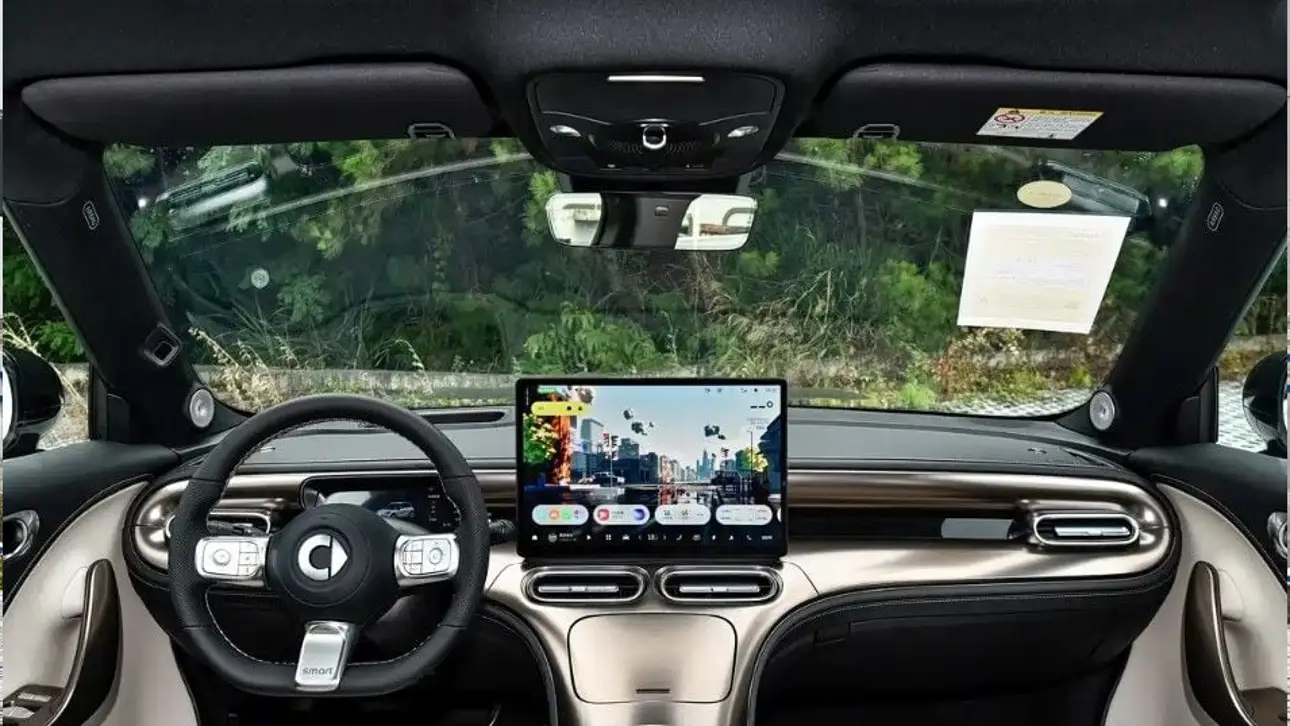
A lidar has appeared on the roof and extra cameras sit on the front wings. The Qianli Haohan H5 suite runs on an Nvidia Orin Y processor rated at 200 TOPS and works with 31 sensors in total. This is an advanced driver assistance system with automated parking, not a confirmed autopilot that would let the driver stop watching the road. One important caveat: the lidar and the full set of 31 sensors are announced for the Chinese market only, and nothing has been said about what the European version will get.
Inside there is a 15.4-inch display with 2.5K resolution, a four-nanometre Longying 6P processor and Smart OS built on Flyme Auto. Exterior changes are limited to new colours, driver-assistance sensors and semi-concealed door handles. Those handles are not a designer’s whim: China’s new GB 48001-2026 safety standard requires guaranteed mechanical access from outside, because fully flush handles left rescuers unable to open the doors of a car that had lost power.
When the updated Smart #1 reaches Europe and what it will cost
The launch date for the European version, its battery, its charging power and its WLTP figures have not been announced. On top of that, Smart has already warned that Chinese and export cars may differ. The price of the new model has not been disclosed either, but back on 1 June the brand’s Chinese division warned of an increase driven by rising costs, and temporarily cut the current version to 142,900 yuan.
Another electric car built around an 800-volt system is the new Hyundai IONIQ V. In parallel, Smart is preparing a return to the brand’s original format: the compact two-seat Smart #2 that will replace the Fortwo.
In the scale of its technical changes the Smart #1 really has come close to a generation change, but European buyers care more about three confirmations: the launch date, the WLTP result and the charging power actually available at local stations.
This English edition was prepared using AI translation under editorial oversight by SpeedMe. The original reporting is by Dmitry Novikov
Latest Stories