Hongqi 12C battery: charging time, test results and when it reaches production
 © A. Krivonosov
FAW and Lishen tested a Hongqi cell that goes from 10 to 70% in 3 minutes 41 seconds at 25 °C. Capacity, peak power and the first production model have not been named.
Author: Polina Kotikova
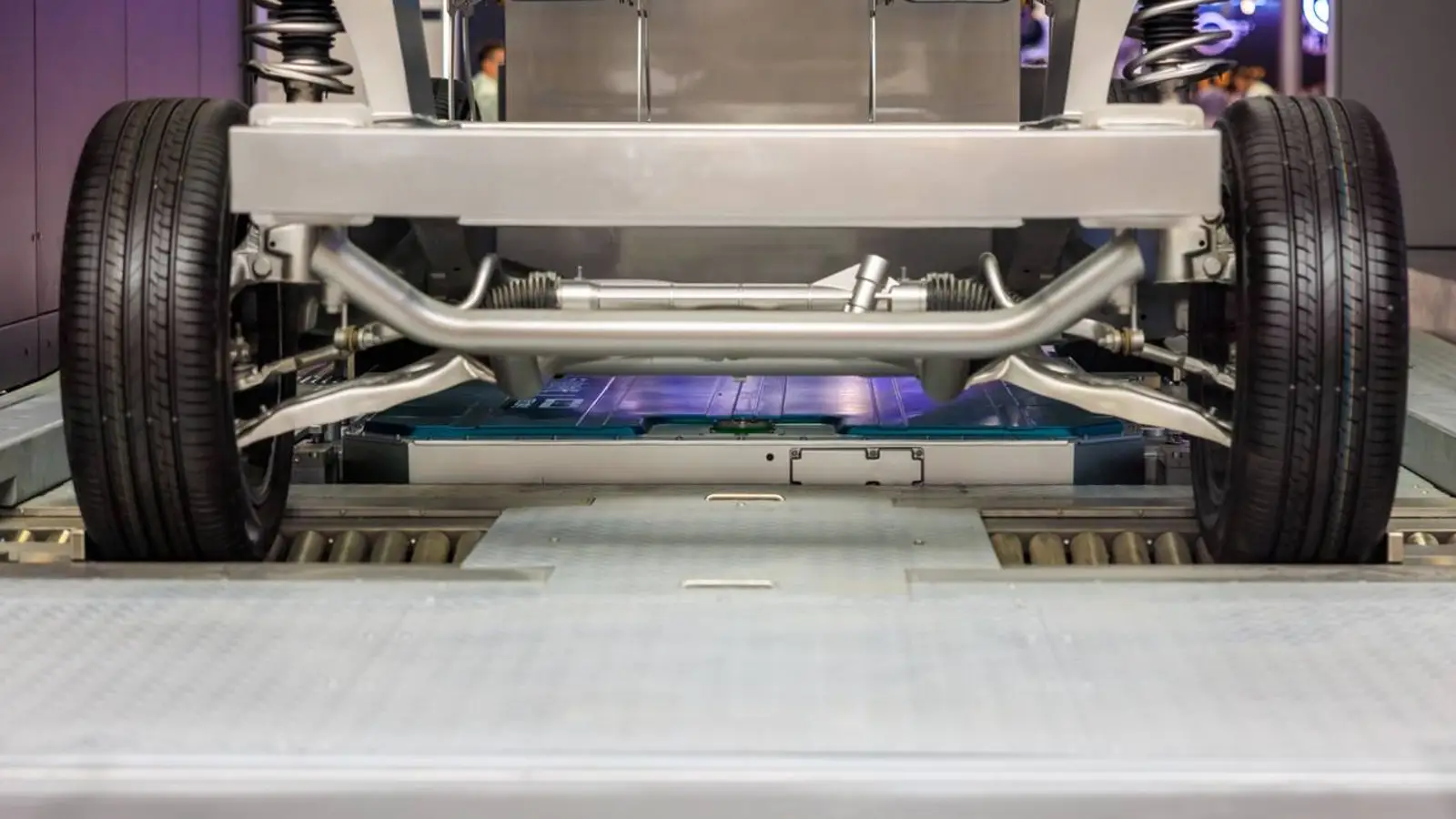
FAW, Lishen and the group’s battery arm CNET have tested a Hongqi cell with a peak charging rate of 12C. At 25 °C the pack went from 10 to 70% in 3 minutes 41 seconds and reached 97% in 8 minutes 3 seconds. Capacity, peak power in kilowatts and the first production model have not been disclosed.
A 12C rating means that at its peak the pack accepts power equal to twelve times its nominal capacity. For a hypothetical 100 kWh battery that works out to 1.2 MW. The rate does not hold across the whole curve, though: as the cells fill up the electronics cut the current, so the theoretical five minutes to a full charge stay out of reach even in a laboratory cycle.
The engineers combined an ultra-fast charging anode with an in-house electrolyte that lowers desolvation energy and makes it easier for lithium ions to move. A composite carbon coating and bulk doping cut internal resistance by 15% compared with comparable cells. Liquid cooling kept the temperature spread inside the pack within 3 degrees.
The management system constantly watches voltage, heat build-up and available capacity, reshaping the charging curve as the pack approaches its safety limits. That matters most above 70–80%: on the final stretch the risk of local overheating and lithium plating grows, while charging power in most EVs drops sharply.
The new pack is markedly quicker than the production 800-volt system Hongqi already sells, which needs 12 minutes to go from 10 to 80%. That one powers the Tiangong 05 and Tiangong 06 with a 75 kWh battery, whereas the 12C technology has so far passed a standalone test and has no launch date.
Hongqi has not set an outright record, either. CATL has already shown the third-generation Shenxing at 10–80% in 3 minutes 44 seconds and 98% in 6 minutes 27 seconds, while the second-generation BYD Blade goes from 10 to 70% in five minutes and to 97% in nine. Direct comparisons are tricky: the companies use different capacities, temperatures and final states of charge.
The ultra-fast project is also separate from the solid-state battery Hongqi is testing in the Tiangong 06. That programme, rated at 380 Wh/kg, is built around energy density and safety, with small-series production promised for late 2027, starting with the brand’s flagship sedan and crossover. The charging pack exists for one reason: to cut minutes.
The main barrier now sits outside the battery. Using 12C in a car would require a megawatt charging station, a high-voltage architecture, a liquid-cooled cable and a grid able to deliver enormous power in short bursts. FAW has said it is developing a 1000-volt architecture that charges to 80% in five minutes, but it has never confirmed a link between that project and the new cell. Until a model and an infrastructure plan are named, eight minutes remain a test result rather than a feature a buyer can use.
This English edition was prepared using AI translation under editorial oversight by SpeedMe. The original reporting is by Polina Kotikova
Latest Stories