Li Auto L8, L9 and Xiaomi Skynomad oil change interval: what the 30,000 km really mean
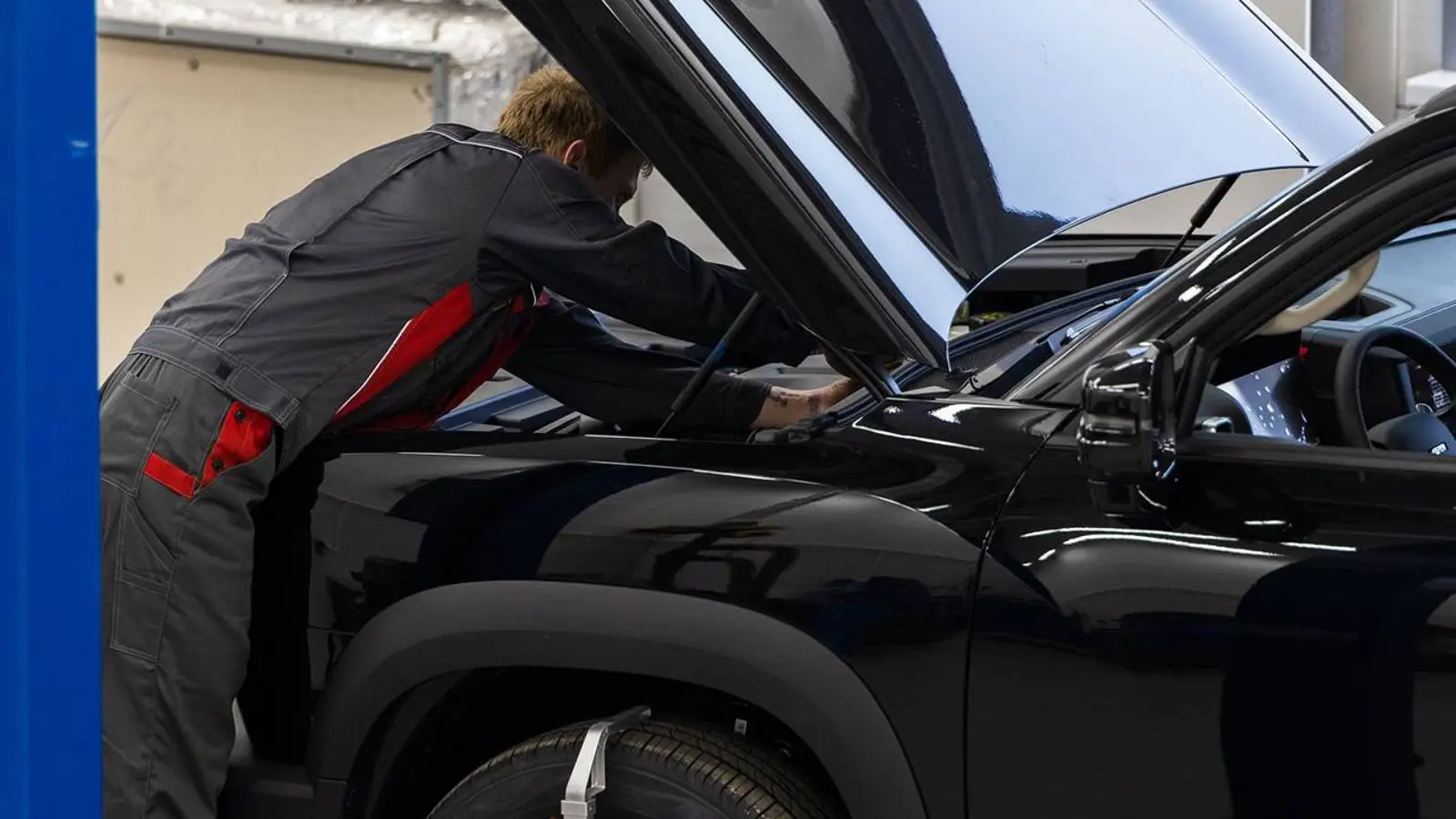 © A. Krivonosov
Li Auto's new L8 and L9 and Xiaomi's Skynomad share a three-year oil change interval, but the 30,000 km count only the distance driven on the range extender. An official oil change costs 1,180 yuan.
Author: Nikita Novikov
Li Auto now lets owners of the new L8 and L9 in China change the engine oil once every three years or every 30,000 km — and those kilometres are not the ones on the odometer, but the distance covered with the range extender running. Xiaomi has announced the same headline interval for its upcoming Skynomad crossovers, bringing them close to pure EVs in terms of servicing frequency.
According to CarNewsChina, citing the Chinese outlet Electric Planet, Li Auto has even dropped the mandatory first service after the break-in period: the cars carry an intelligent oil life monitoring system, and Shell has developed a bespoke ultra-low-viscosity, long-life formulation for the range extender. Previously the L-series had to be serviced once a year or every 10,000 km of generator running, and a minor service cost 799 yuan. An oil change at an official service centre now costs 1,180 yuan — around $174 — while Tmall Car Care, part of the Alibaba ecosystem, quotes about 600 yuan for four litres of Shell 0W-16, almost half as much. Brand staff, however, warn through Electric Planet that even with oil of the same grade and standard, servicing outside the official network will “highly likely” affect the warranty.
Xiaomi, which is only now moving onto the turf of Li Auto, is being a little more cautious. The Skynomad is due for its first service after a year or 10,000 km, and from then on the same principle applies: the three years are counted on the calendar from that first service, because oil ages on its own, while the 30,000 km build up only when the generator is actually moving the car. The company stresses that this concerns servicing of the range extender itself rather than the whole vehicle: cabin filter, brake fluid, chassis inspection and electrical diagnostics stay on their own schedule. The 1.5-litre turbocharged M15DRE engine, developed together with Harbin Dongan, takes Shell API SQ 0W-16, and the warranty on the range extender and the entire electric side — battery, motor and power electronics — runs to 8 years or 160,000 km. The N90 Max and N70 Max themselves are being shown on 30 July at the technical presentation of the Kunlun architecture, with prices promised later, at a separate sales launch.
A combustion engine in a hybrid cannot be treated as almost eternal: infrequent starts, oil that never warms up properly and moisture build-up all accelerate its ageing. That is precisely why both companies measure the service life not by the odometer but by the real working time of the generator, while monitoring the condition of the oil in real time.
Whether the same schedule will be offered outside China remains unclear. Li Auto is pushing into Central Asian and Middle Eastern markets, where climate, road conditions and driving habits differ — and may well call for a different servicing strategy.
So 30,000 km here does not mean 30,000 km on the odometer, and the extended interval itself should for now be read as a feature of the new Chinese versions rather than blanket permission to service any range-extender SUV three times less often.
This English edition was prepared using AI translation under editorial oversight by SpeedMe. The original reporting is by Nikita Novikov
Latest Stories