Hyundai Ioniq 6 N vs Ioniq 5 N 2026: track test, lap times and handling differences
 © hyundainews.com
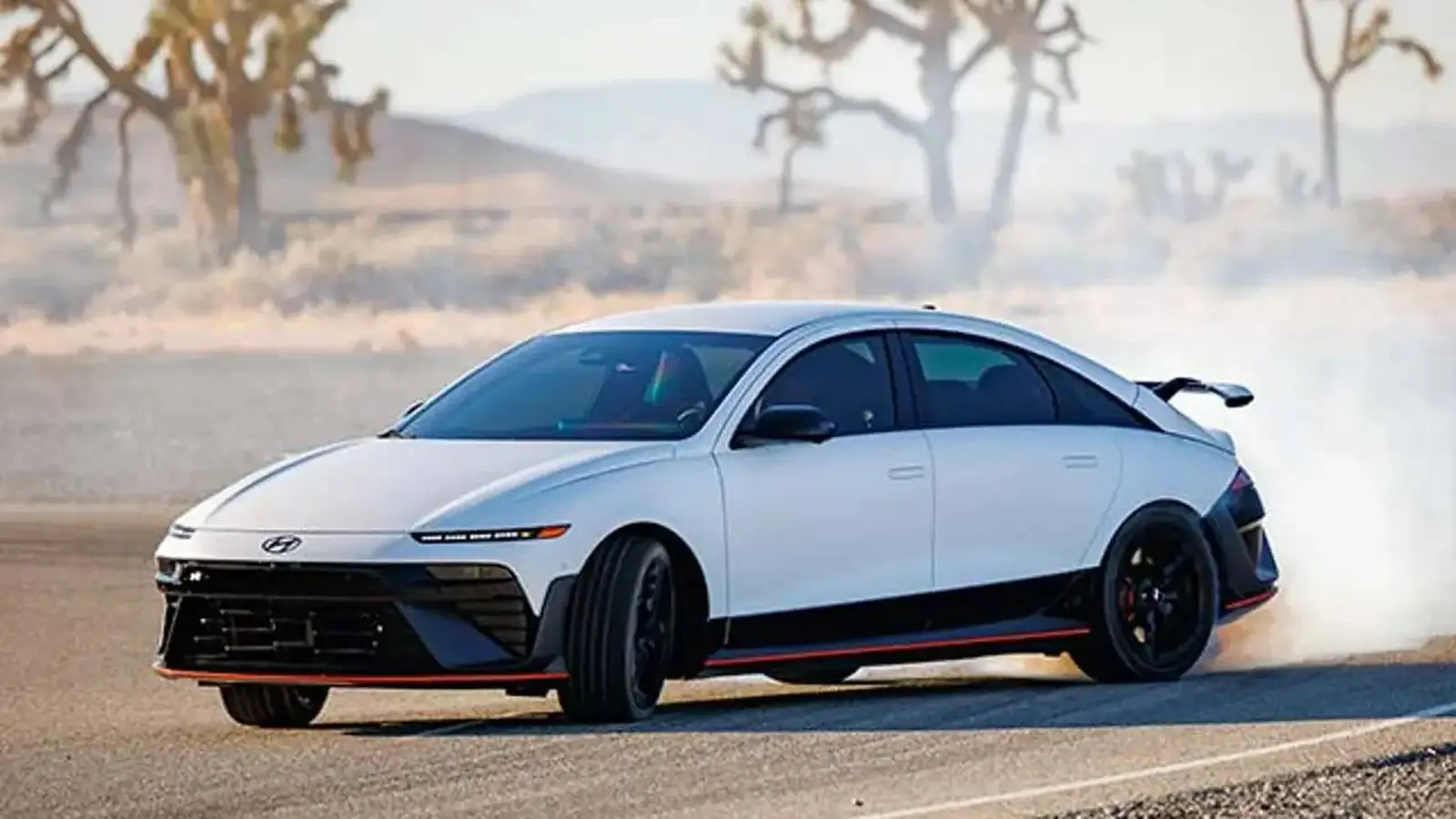
Hyundai Ioniq 6 N beat the Ioniq 5 N by 0.29 seconds on track, but the win took a much sharper driving style to unlock.
Author: Daria Kashirina
The Hyundai Ioniq 6 N turned out to be just 0.29 seconds faster than its sibling, the Ioniq 5 N — but getting that edge took noticeably more work from a professional driver. In a Driven+ comparison, the sedan lapped the short circuit in 49.52 seconds, while the taller crossover posted 49.81. That is the result of one short track, not a universal verdict.
Both cars share an 84 kWh battery and dual-motor all-wheel drive. With N Grin Boost engaged, output reaches 650 hp and 770 Nm. The Ioniq 6 N sprints to 100 km/h in 3.2 seconds with Launch Control, while the Ioniq 5 N needs 3.4 seconds. The gap doesn’t come from extra power.
The sedan sits lower, has a wheelbase shortened from 3,000 to 2,965 mm, and weighs roughly 30–60 kg less depending on trim. Hyundai gave it different suspension geometry with a lower roll center, new electronically controlled dampers, and 20-inch Pirelli tires instead of the Ioniq 5 N’s 21-inch wheels.
Driver Sam Maher-Loughnan described the Ioniq 6 N’s behavior as “knife-edge”: the car changes direction faster, rotates more eagerly on trailing throttle, and demands more precise brake and accelerator inputs. The Ioniq 5 N let him approach the limit faster and felt more predictable. That’s one driver’s subjective take, not a flaw or fault Hyundai has acknowledged in the sedan.
Software tuning reshapes the character too: torque distribution between the axles, stability control behavior, the rear electronic limited-slip differential, and the N Pedal function. So identical on-paper 650 hp figures produce different results — the Ioniq 5 N is easier to use right away, while the Ioniq 6 N offers a higher ceiling for drivers willing to work up to it.
SPEEDME.RU previously reported that the Hyundai IONIQ 6 N won the World Performance Car 2026 award.
This English edition was prepared using AI translation under editorial oversight by SpeedMe. The original reporting is by Daria Kashirina
Latest Stories