Hyundai Bayon 2027: size, hybrid engine and expected price
 © hyundainews.com
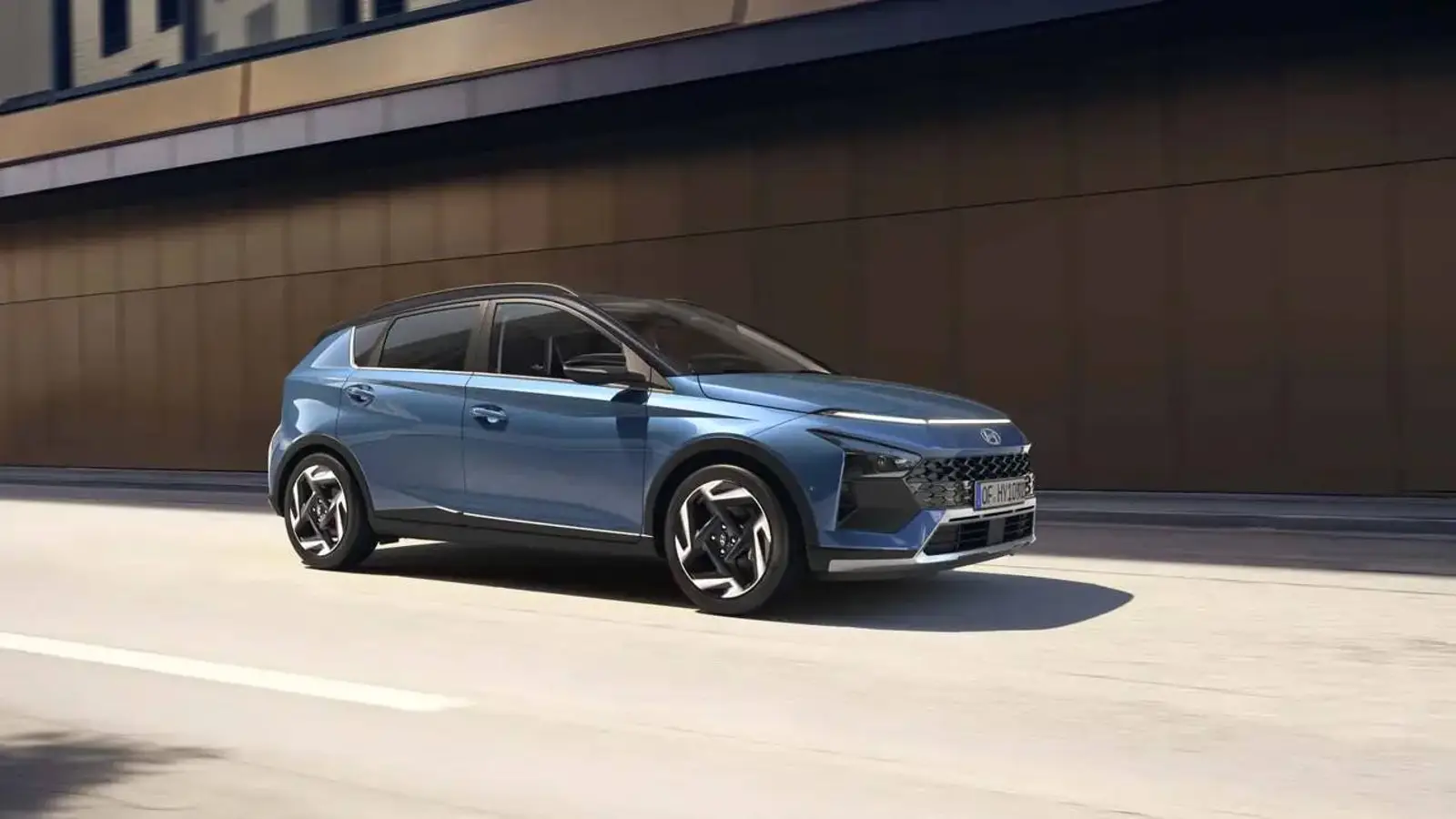
Hyundai's second-generation Bayon has been caught testing in Southern Europe ahead of a 2027 launch, with reports pointing to a bigger body and, for the first time, a full self-charging hybrid alongside the familiar 48-volt mild-hybrid setup.
Author: Polina Kotikova
Hyundai has taken the second-generation Bayon out for summer testing in Southern Europe. The prototype is noticeably larger than the current 4,180 mm crossover, with order books expected to open in the first half of 2027. Exact dimensions haven’t been revealed yet, so it’s too early to talk about a specific size increase. Hyundai officially quotes a 411-liter boot for the current Bayon — a bigger body gives it a shot at growing that figure too.
This won’t just be another facelift on the outside. Under the heavy camouflage, the front and rear ends have already been completely reworked, with new lighting graphics and chunkier proportions. The Bayon is expected to move closer to the Kona in feel, while still holding its position as the smaller B-SUV. That direction fits into Hyundai’s broader model-range overhaul heading into 2027.
The biggest shift is expected under the hood. Motor.es reports that gasoline engines will stick around, along with the return of 48-volt MHEV tech and the first-ever full self-charging HEV hybrid for the Bayon. One caveat matters here: Hyundai hasn’t published a technical spec for the second generation yet. The company only officially confirms the broader strategy — by 2027, an electrified version should be available across every model in its European lineup.
A hybrid would put the Bayon in direct competition with the Toyota Yaris Cross, Renault Captur and MG ZS Hybrid+. Toyota, for its part, keeps developing its own compact SUV too: the Yaris Cross recently got another update, so a low price alone won’t be enough for Hyundai.
The current Bayon in Spain has a base list price of €24,557, though the going offer starts at €18,057. That’s for the existing car with the 90-hp 1.0 T-GDi engine, not the future hybrid.
If the HEV information holds up, the powertrain will end up being the most significant difference between the second-generation Bayon and the current model. Final engines, dimensions and pricing should surface closer to the official reveal; until then, the hybrid details are best treated as testing and industry-source information, not Hyundai’s final specification.
This English edition was prepared using AI translation under editorial oversight by SpeedMe. The original reporting is by Polina Kotikova
Latest Stories