Next MINI Cooper 2030s: rear-wheel drive, BMW Gen6 platform and what changes
 © A. Krivonosov / SPEEDME
MINI design chief Holger Hampf confirms work on the next Cooper has begun, with BMW's rear-biased Gen6 architecture on the table for the first time since 1959.
Author: Nikita Novikov
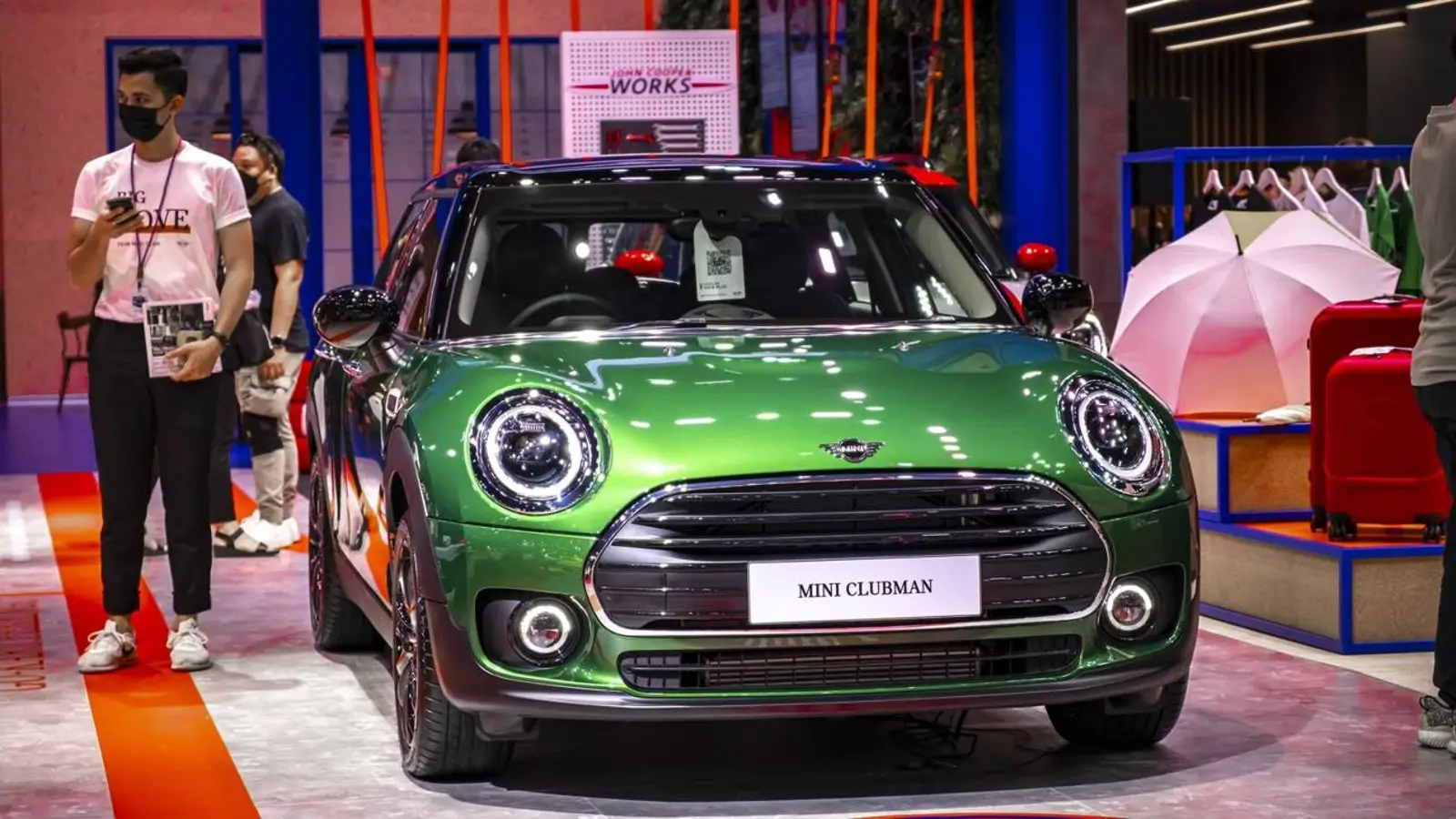
The next MINI Cooper could break a rule the brand has followed since 1959: front-wheel drive is no longer guaranteed. MINI design chief Holger Hampf confirmed to Autocar that work on the new generation has already begun. The electric Cooper is being considered for BMW’s Gen6 architecture, where the main electric motor sits at the rear by design — the first time this has opened the door to rear-wheel drive for Cooper.
The technical premise is real. BMW officially describes Gen6 as a system built around a synchronous EESM motor mounted above the rear axle; a compact asynchronous motor sits up front only on all-wheel-drive versions. The company promises roughly 30% faster charging and at least 30% more range for Gen6 compared with the previous generation of technology. But MINI has not yet confirmed that the production Cooper will actually get this architecture or RWD.
Right now the situation is the opposite. The electric Cooper is built at the Spotlight Automotive joint venture between BMW and Great Wall Motor in China, while the petrol Cooper technically remains a separate car. BMW Group confirms Chinese production of the electric Cooper since 2024. That means a move to Gen6 could split the electric and petrol lineups even further apart: Autocar expects the combustion version to keep front-wheel drive and potentially survive into the 2030s.
Visually, MINI is looking to its past. Hampf told Autocar: “A lot of people don’t actually remember the classic Mini anymore, but they do remember one of the MINIs we’ve made over the last 25 years under BMW. I will definitely link the future with that past. That doesn’t mean we’ll go vintage, not at all. It’s a modern interpretation of what we’ve already done: smart use of space, or details in the car that make you smile. And, of course, a bit of British character.”
That reference point lines up neatly with the brand’s own official position: in 2026, MINI itself named 2001 as the start of the brand’s modern era, and stresses that the traits of its BMW-era cars have already become part of its heritage in their own right. That’s primarily about the R50 — the first production MINI of the new era.
Hampf isn’t planning to change the basic proportions: “You can ask a Brit, a German or an Italian, you can ask a five-year-old — they’ll recognise a Mini by the proportions of the car. Especially with the three-door hatch: it’s a very short car, wheels at the corners, short overhangs, and there are signature elements like the facial expression at the front. For me, the most important thing is the combination of round headlights and grille.”
He added: “Every five-year-old should understand that this is a Mini. My job is to treat that with respect.” Preserving the proportions is, in the designer’s words, his “number one priority” and “non-negotiable.”
In parallel, MINI is already exploring a return to genuinely compact dimensions, including a project for a car around 3.6 m shorter than today’s Cooper. Hampf leaves room for manoeuvre here too: “We discuss every day whether Mini should get smaller, bigger, and so on.”
According to the designer, having a bigger Countryman is what lets the Cooper stay compact. As he puts it: “This might be my personal belief, but a Mini always had to let you drive to the market in the morning, take the kids to school, and go to the opera in the evening. I’m not saying downsizing is impossible, but the car has to match today’s lifestyle too.”
The three-door Cooper will meanwhile remain the brand’s central model. Hampf called it “a product we always care about as much as we possibly can,” adding: “It will always be our backbone.”
Before the generation change, MINI will still update the current lineup. Hampf’s work on a more compact model and upcoming Cooper updates has already reached the news, while the current electric hatchback is separately being linked to possible new battery technology. The next checkpoint for the new generation is official confirmation of the platform — that will show whether Cooper becomes the first-ever production rear-wheel-drive MINI, or whether the brand finds a way to keep its familiar layout.
This English edition was prepared using AI translation under editorial oversight by SpeedMe. The original reporting is by Nikita Novikov
Latest Stories