Stelato G9 and V8 2026: prices, specs and range explained
 © A. Krivonosov / SPEEDME
Huawei and BAIC brought two very different Stelato models to the Chengdu Auto Show — a rugged G9 SUV already on sale from $60,300, and the all-new V8 minivan with up to 830 km of range.
Author: Nikita Novikov
The stand of Stelato — the joint automotive project of Huawei and BAIC — at the Chengdu Auto Show brought together two fundamentally different cars. A journalist examined the huge, boxy G9 and the brand-new V8, which made its public debut right there at the show. While the G9 tries to combine a premium SUV with off-road capability, the V8 targets the family segment of large electric MPVs.
The headline debut is the Stelato V8. It’s the brand’s first minivan: length comes in at 5,335 mm, width at 2,005 mm, height at 1,805–1,825 mm depending on the version, and the wheelbase is a substantial 3,250 mm. The car seats seven and gets power-sliding side doors. The styling is noticeably less “bus-like” than most Chinese MPVs: a steeply raked windshield, a smooth roofline and thin, continuous light strips make the V8 look closer to a large estate car.
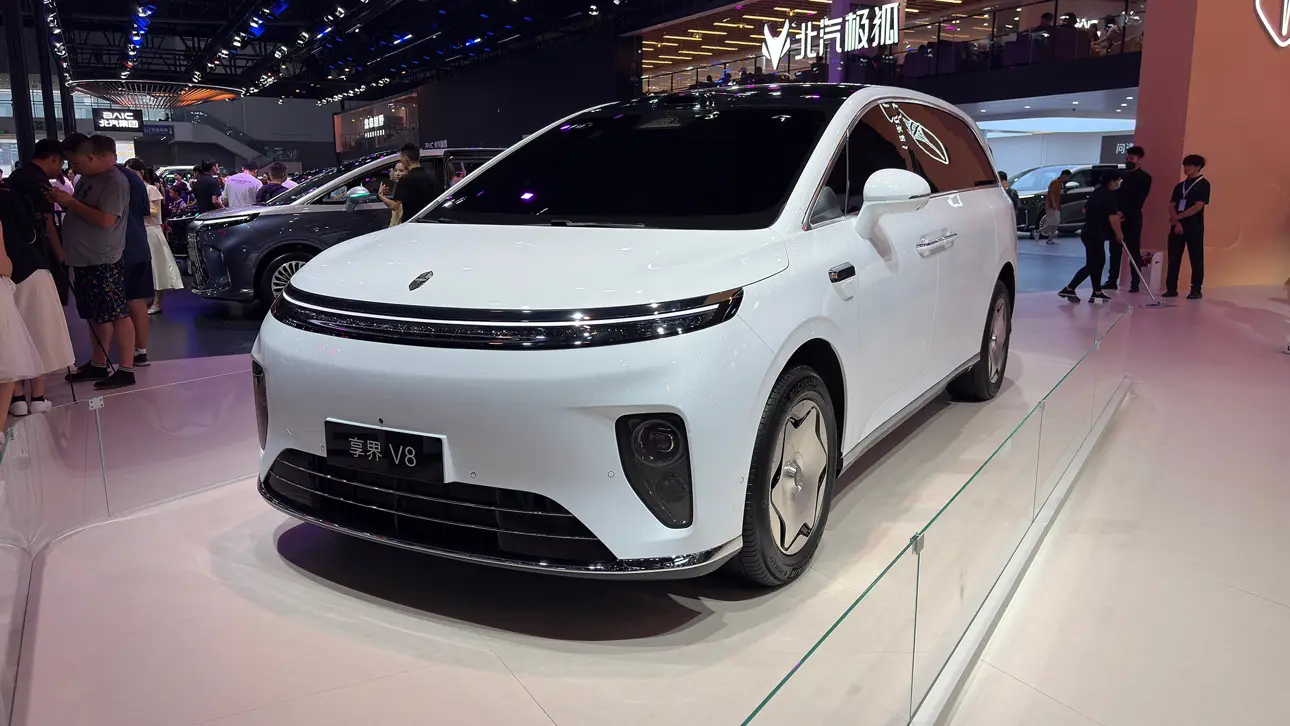
The engineering is more serious than the design. The V8 will be offered both as a pure EV and as a series hybrid. The base electric motor produces 227 kW — roughly 309 hp — while the all-wheel-drive version adds a second motor rated at 160 kW. Combined, that’s 387 kW, or about 526 hp. The pure-electric version gets a 120 kWh battery good for up to 830 km on the CLTC cycle. The hybrid uses 56 or 75.4 kWh packs, with an electric-only range of up to 339 km before the gasoline generator kicks in.
A separate emphasis has been placed on electronics. The V8 gets an 800-volt architecture, Huawei’s Qiankun suite and a multi-lidar setup, including the newest 896-line sensors. In essence, BAIC supplies the automotive foundation while Huawei handles a substantial share of the digital ecosystem, power electronics and driver-assistance systems.
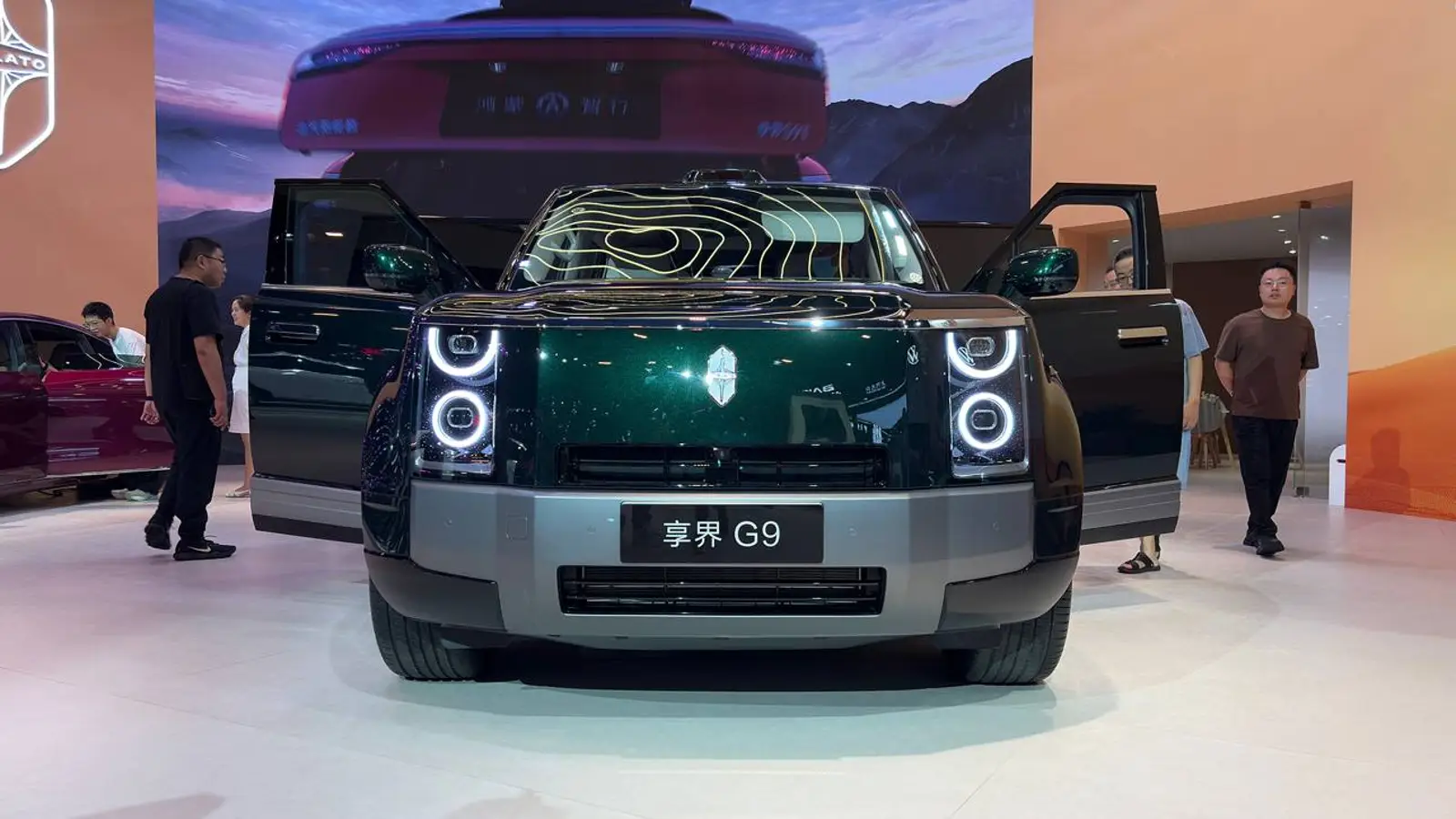
Standing nearby is a completely different animal, the Stelato G9. Its base length is 5,206 mm, but with the rear-mounted external case it stretches to 5,377 mm. Width is 2,050 mm, height 1,897 mm, and the wheelbase measures 3,160 mm. Five- and six-seat layouts are offered. Despite weighing nearly three tonnes and wearing a boxy body, it’s a unibody car, not a classic body-on-frame off-roader.
Even so, the G9’s technical arsenal is nearly off-road-grade. Both powertrain types use two electric motors — 160 kW up front and 277 kW at the rear. Combined output is 437 kW, or about 594 hp. There’s an adaptive mechanical rear differential lock, dual-chamber air suspension, adjustable dampers and rear-wheel steering with up to 12 degrees of angle. Higher trims add an active anti-roll bar that can decouple off-road.
The electric G9 carries a 120 kWh battery good for up to 728 km on the CLTC cycle, depending on trim. The series hybrid uses a 1.5-litre turbo engine as a generator, with a battery of up to 75.4 kWh. Electric-only range is up to 405 km, and total range reaches up to 1,366 km.
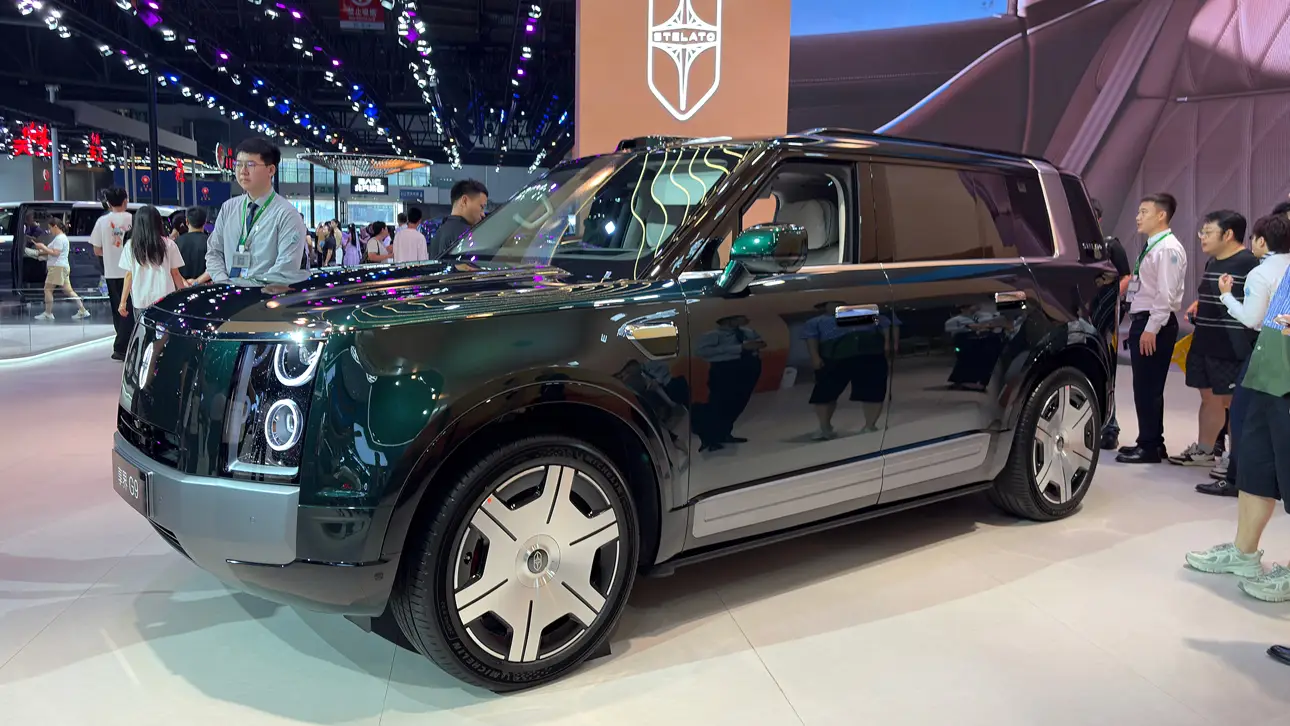
The G9 has already gone on sale in China. After its official launch on August 20, prices ranged from 429,800 to 549,800 yuan — roughly $60,300 to $77,100 at current exchange rates.
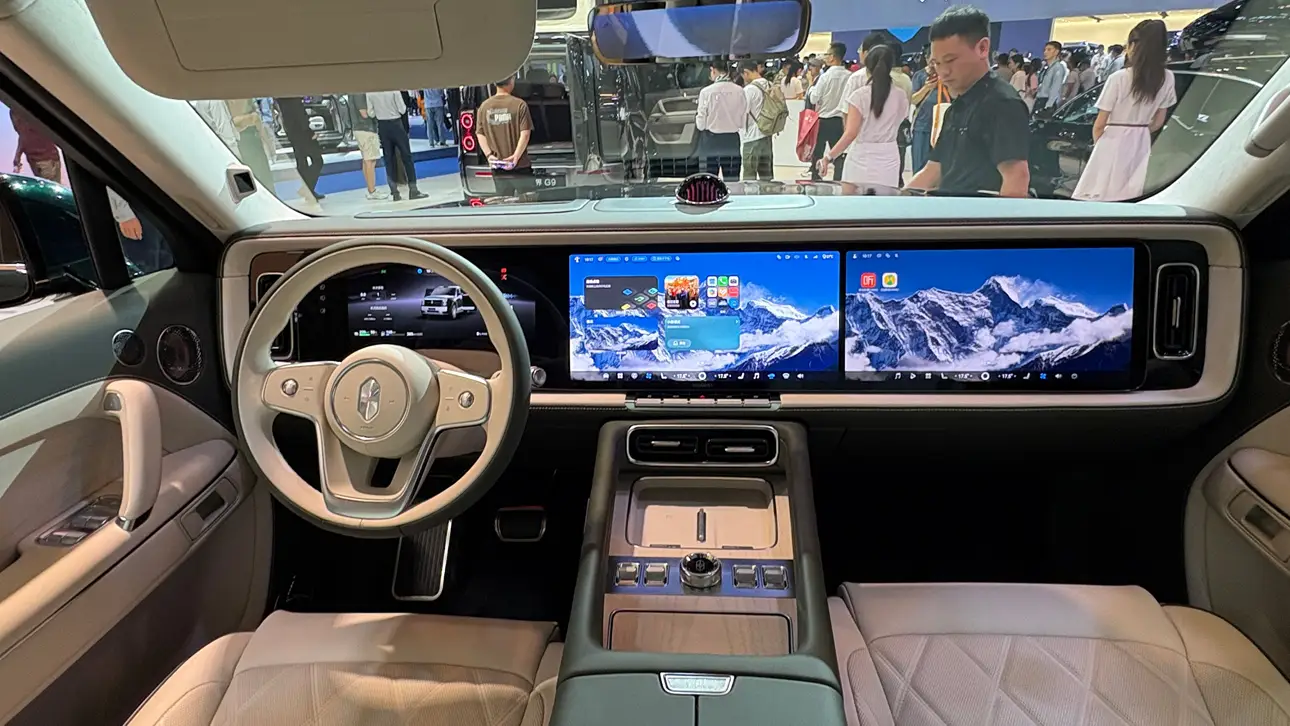
The show is a good illustration of where Chinese luxury is headed. In the G9, the dashboard in front of the driver is essentially one continuous digital panel across several screens, though some physical controls remain. The V8 leans even harder into passenger comfort: a wide multimedia zone, a light-toned cabin, an upgraded sound system and seven full-size seats turn the car into something closer to a mobile lounge.
That said, treat the V8’s pricing with some caution for now. Preliminary figures are already circulating in Chinese media, but at the time of writing the model had not yet appeared on Harmony Intelligent Mobility’s official price list for Stelato. So the numbers floating around shouldn’t be taken as final. What’s officially confirmed is the V8’s debut itself, its dimensions, powertrains and battery specifications.
For Stelato, these two cars effectively open up two new segments at once. The G9 becomes the brand’s technology flagship among large SUVs, while the V8 is set to compete with the Denza D9, Voyah Dream and other pricey Chinese MPVs. Judging by what was on the stand in Chengdu, Huawei and BAIC are no longer limiting themselves to premium sedans — they’re building out a full lineup spanning flagship saloons, off-roaders and family minivans.
This English edition was prepared using AI translation under editorial oversight by SpeedMe. The original reporting is by Nikita Novikov
Latest Stories