China EV door handle recall 2026: which models are affected and what happens next
 © A. Krivonosov
Tesla, Xiaomi, Xpeng and six other automakers are recalling nearly 4.28 million vehicles in China after regulators found emergency door releases too hard to find in a crash.
Author: Polina Kotikova
Nine automakers have launched recall campaigns in China over the design of their emergency door releases. According to China's State Administration for Market Regulation (SAMR), the campaigns cover a combined 4,275,743 vehicles — from the Xiaomi SU7 and Tesla Model Y to the Zeekr 007, Xpeng G6 and Leapmotor C11.
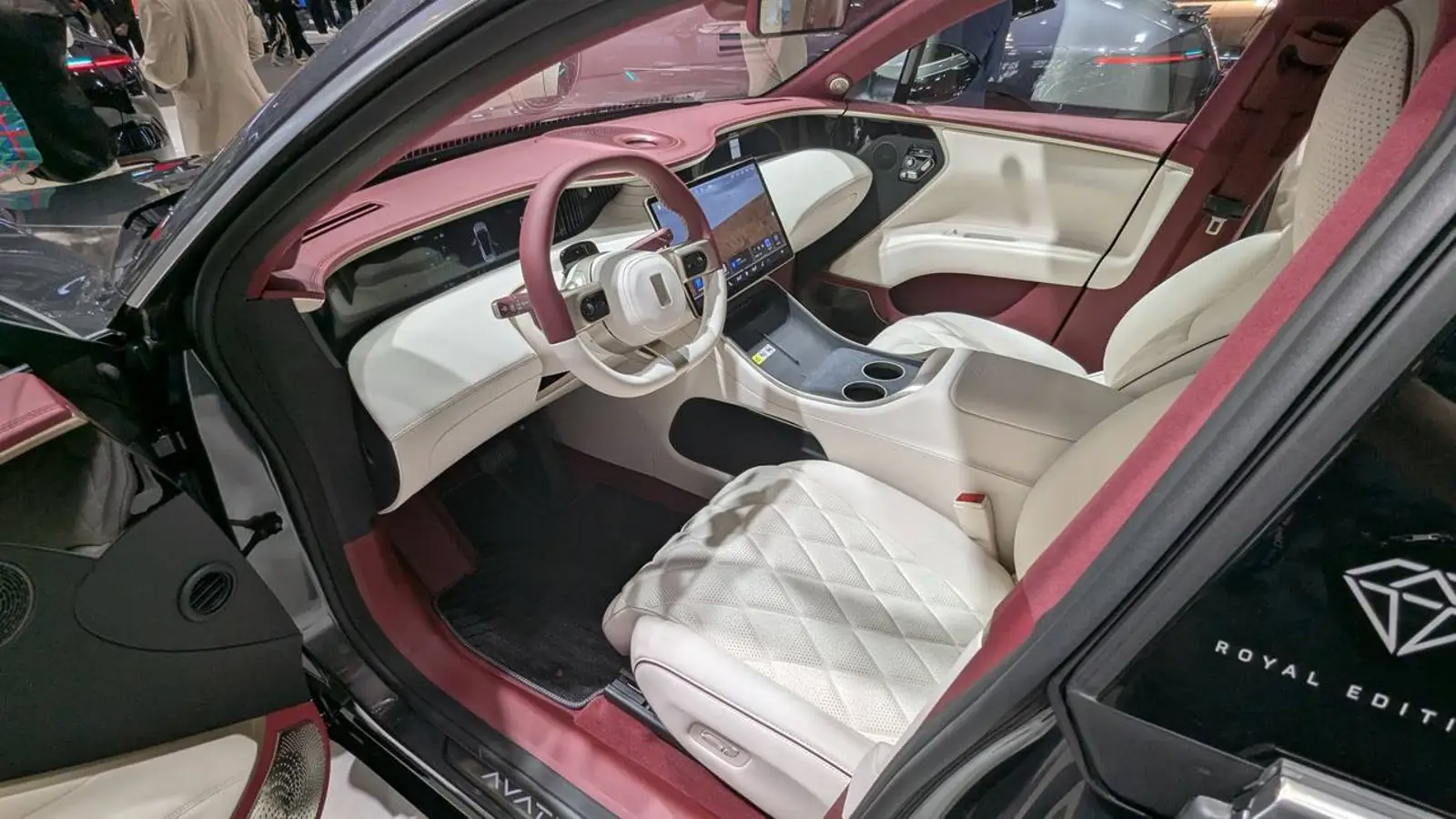
This isn’t a case of a regular door handle breaking or failing. The problem shows up specifically in an emergency: the mechanical lever used to open the door from inside the cabin is finished in a color close to the interior trim, making it hard to spot and use quickly. If a severe crash knocks out the vehicle’s low-voltage electrical system, that can slow down occupants trying to escape and hinder rescuers trying to get in.
The largest campaign belongs to Tesla — 2,975,910 vehicles, nearly 70% of the total volume. It covers China-built Model 3 and Model Y cars, as well as imported Model 3, Model S and Model X units. The automaker will add warning labels and update the window-control software, adding a new algorithm that lowers the windows after a crash. This recall shouldn’t be confused with Tesla’s other simultaneous action: a separate recall of 2.74 million Model 3 and Model Y vehicles over driver-attention monitoring software, unrelated to door handles.
Xiaomi is next with 390,435 SU7 units. Leapmotor is recalling 371,200 C01 and C11 vehicles, and Xpeng is recalling 264,842 G6, P7+ and X9 units. Zeekr’s campaign covers 92,658 units of the 007 and X, Chery is recalling 68,488 iCAR 03 and Fulwin X3 vehicles, and Dongfeng is recalling 53,452 units of the Nano 06, Aeolus L8, eπ007 and eπ008. A further 46,850 Arcfox Koala vehicles are affected by a similar issue with the emergency release on the right rear sliding door, while FAW is recalling 11,908 Hongqi EH7 and Tiangong 08 units.
The fix, in most cases, turned out to be fairly simple. Automakers will add more visible markings near the mechanical releases, and some vehicles will get an OTA software update with a new post-crash window-lowering algorithm. Chery will additionally replace the emergency-release cover, while Arcfox will replace the sliding-door release mechanism cover with a version that has clear text labeling.
The wave of recalls is especially notable against the backdrop of China’s new standard, GB 48001-2026, “Safety Requirements for Automotive Door Handles.” It was published on January 28, 2026, and becomes mandatory starting January 1, 2027. The standard requires a mechanical way to open every side door, both from outside and inside, with the emergency interior handle required to be clearly visible to passengers and the exterior handle required to offer enough space for a hand to grip it.
In effect, China has started fixing older-generation vehicles even before the new requirements fully take effect. And the current campaign doesn’t target a single flawed model — it spans an entire generation of electric vehicles where, in pursuit of a minimalist interior and electronic controls, the traditional mechanical door hardware was made too easy to overlook.
According to SAMR, the recall campaigns are filed under the following numbers: Tesla — S2026M0098V and S2026M0099V (effective September 25, 2026), Xiaomi — S2026M0096V and S2026M0097V (effective immediately), Leapmotor — S2026M0100V (effective immediately), Xpeng — S2026M0101V (effective August 22), Zeekr — S2026M0102V (effective August 24), Chery — S2026M0103V (effective September 18), Dongfeng — S2026M0105V (effective immediately), Arcfox — S2026M0104V (effective August 22), FAW — S2026M0106V (effective immediately). The fix is free of charge in every case: owners won’t pay for either the warning labels or the software updates.
This English edition was prepared using AI translation under editorial oversight by SpeedMe. The original reporting is by Polina Kotikova
Latest Stories