Rivian R2 DC Fast Charging Issue: What Owners Need to Know
 © rivian.com
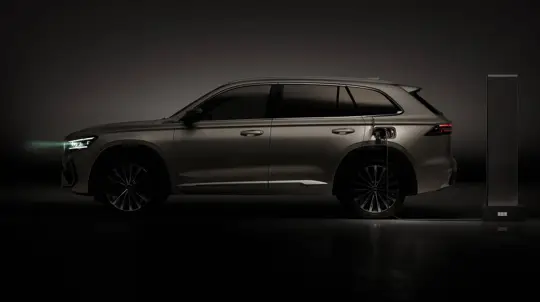
Rivian is contacting select R2 owners about a possible fault in the high-voltage charging connector and asking them to hold off on DC fast charging until inspected.
Author: Polina Kotikova
Some owners of the newly launched Rivian R2 have been advised to temporarily stop using DC fast charging and bring their vehicle in for inspection. The reason is a possible fault in the high-voltage distribution system. One owner said Rivian reached out to him directly after detecting a potential issue and scheduled an appointment.
Technicians are inspecting the joint between the fast-charging connector and the DCFC Header Assembly, checking for gaps and abnormal heat. If the joint comes back faulty, both the header and the connector assembly are replaced. The issue has been passed to Rivian engineers for investigation, but no public recall of the R2 or filing with NHTSA has been announced so far. The scope of the potentially affected batch is unknown.
This case should be kept separate from July’s reports about overheating adapters. In that instance, an external CCS1-to-NACS adapter overheated during high-current testing on an R2; the vehicle itself was not identified as the cause. In this new case, it’s the connections inside the car that are being inspected.
A fault like this matters more for the R2 than for most EVs: Rivian advertises a 10–80% charge in under 30 minutes, and independent tests have shown peak power around 225–229 kW. The crossover is already in customers’ hands and recently received new features over the air, including Launch Mode, as part of the R2 Performance update. Earlier this year the company was aiming to quickly ramp up R2 production to tens of thousands of units, positioning it as its entry into the mass market.
For now, the recommendation applies only to vehicles whose owners Rivian is directly reaching out to for inspection. There is no basis to extend it to the entire R2 fleet, and no formal recall of the model has been announced at this time.
This English edition was prepared using AI translation under editorial oversight by SpeedMe. The original reporting is by Polina Kotikova
Latest Stories