Mercedes EQS steer-by-wire 2026: how it works and is it safe
 © www.mbusa.com
Mercedes-Benz has revealed how the new steer-by-wire system on the facelifted EQS works, from safety redundancy to the reshaped steering wheel.
Author: Polina Kotikova
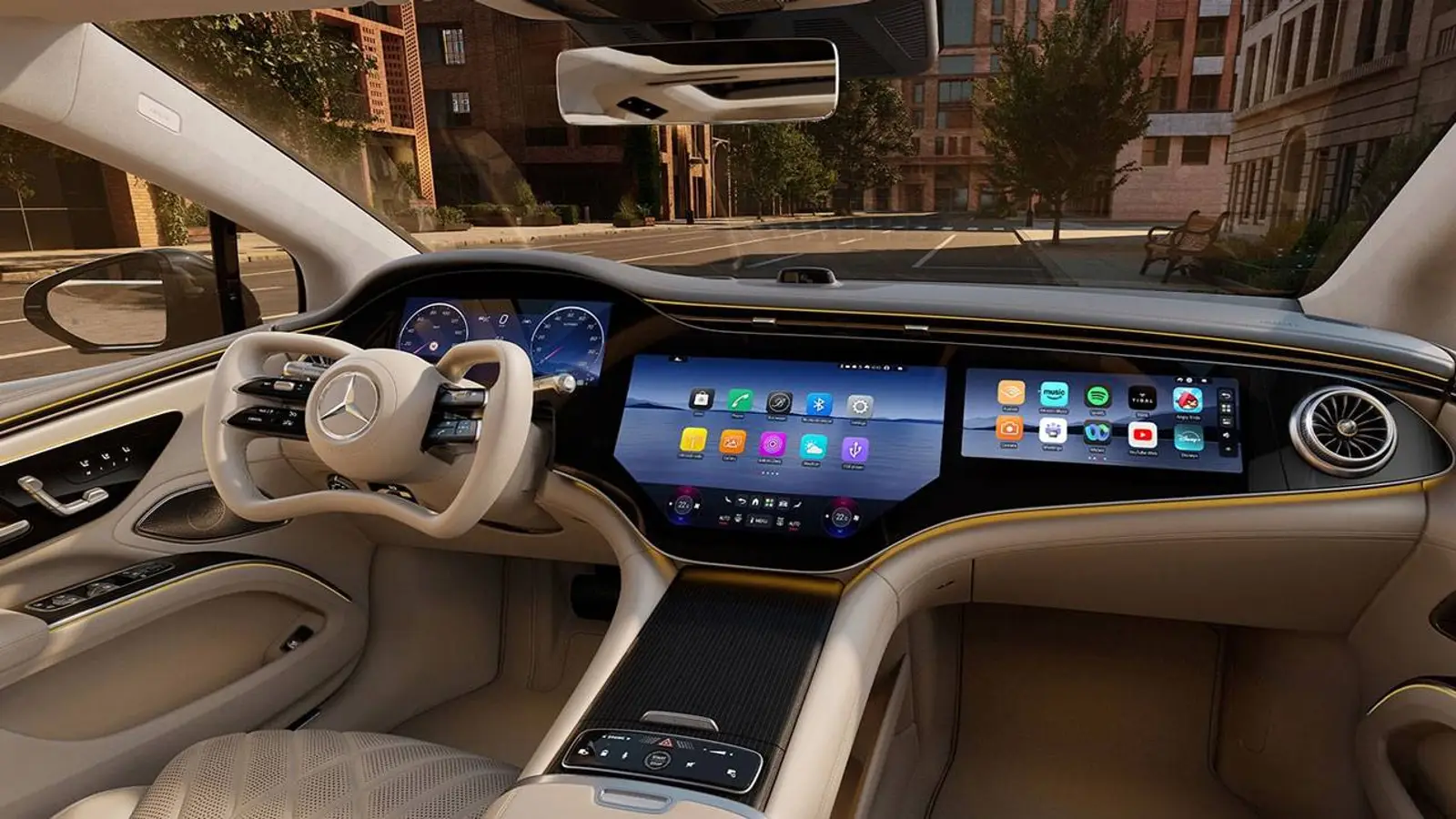
Mercedes-Benz has radically changed one of the most familiar details of the updated EQS. The optional Steer-by-Wire system works with no mechanical link between the steering wheel and the front wheels, and the traditional round rim has given way to a compact, flattened “yoke.” Conventional electromechanical steering remains available as well.
The real story here isn’t the shape of the wheel. Steering inputs are transmitted electronically, and the steering ratio can change depending on the situation. When parking or making a U-turn, a small hand movement is enough to achieve a large wheel angle, so drivers no longer need to hand-over-hand the wheel. Mercedes also links the new shape to a clearer view of the instrument cluster and easier entry and exit.
Removing the mechanical link naturally raises safety questions. The automaker cites two independent signal paths and more than a million test kilometers. Even in the highly unlikely event of a complete electronics failure, lateral control should still be possible through the rear-axle steering and individual wheel braking via ESP. Steer-by-Wire comes paired with rear wheels that can turn up to 10 degrees.
Wheel controls have changed too. According to MBPassion, a physical scroll wheel is back for volume, and DISTRONIC gets a rocker switch instead of a fully touch-based control. Mercedes has officially explained similar returns to mechanical controls on other new models as a response to customer requests.
Owners won’t be forced to choose the unusual wheel: Steer-by-Wire remains optional on the EQS. So the real innovation here isn’t the “yoke” itself, but the ability to completely change the link between a driver’s hand movements and the angle of the front wheels.
This English edition was prepared using AI translation under editorial oversight by SpeedMe. The original reporting is by Polina Kotikova
Latest Stories