Ferrari Active Aero Taillight Patent 2026: How It Works and What It Means
 © uspto.gov
A new Ferrari patent turns the taillight into an active aerodynamic device that can shift to change downforce, even on one side of the car only.
Author: Nikita Novikov
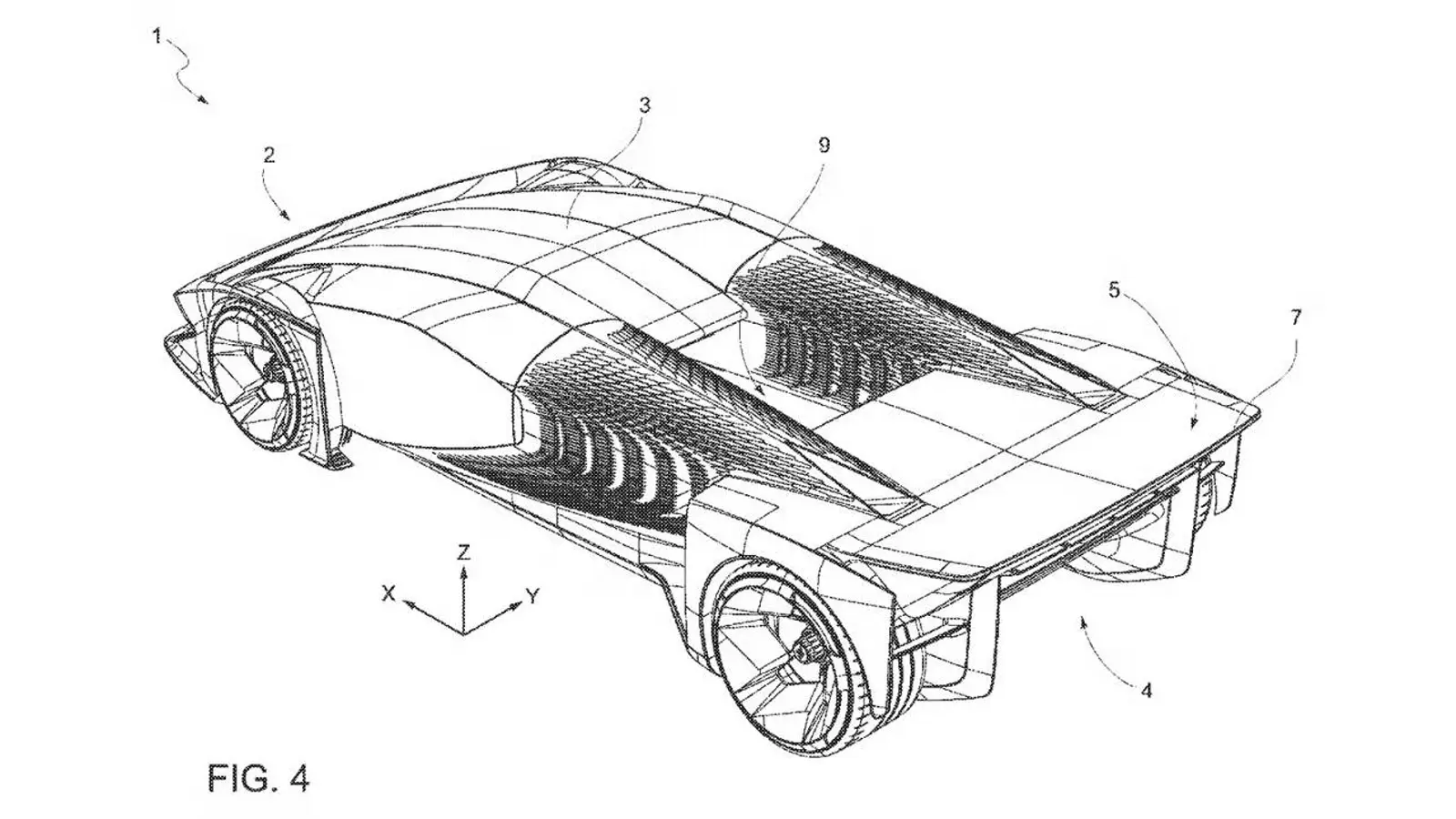
Ferrari has found an unexpected place for active aerodynamics — the taillights. A U.S. patent application published on August 20, No. 20260242013, describes a movable light unit that normally works only as a taillight but, once shifted, interacts with the rear wing or spoiler and starts to affect aerodynamic load.
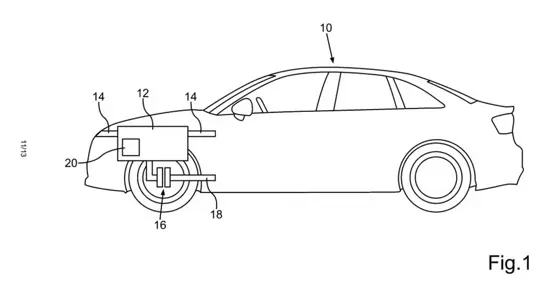
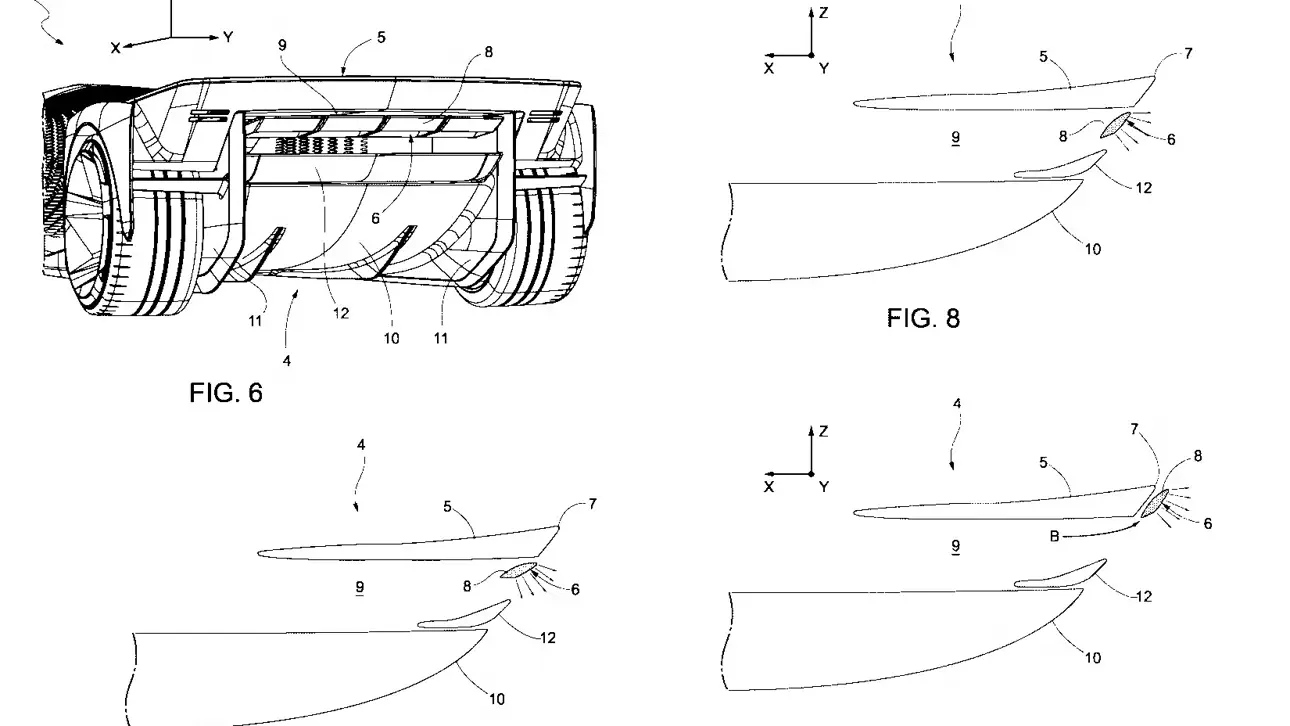
This isn’t a patent for a drawn-up “hypercar of the future.” The filing protects the operating principle itself, and the diagrams show several body variants. The light element can slide backward and upward past the edge of the wing, or sit inside an aerodynamic channel between the upper profile and the diffuser. In one mode, it also changes the cross-section of that channel.
The most interesting detail is buried deeper in the description. Ferrari envisions splitting the light bar into independent right and left modules that can move separately from each other. The filing explicitly mentions the possibility of changing aerodynamic load on just one side of the car. In theory, that gives engineers another tool for managing balance through a corner, though the exact control algorithm isn’t disclosed in the application.
Movable aerodynamics is nothing new for Ferrari. The company has already patented extendable and adjustable rear elements, and its production models already use active spoilers. But the new design stands out for being multifunctional: a part that normally only handles lighting also becomes part of the aero package.
There’s also an interesting contrast with the current lineup. The electric Ferrari Luce achieved a record-low 0.254 Cd drag coefficient for a road-going Ferrari without any active aerodynamics at all — engineers chose a fixed body for lower mass and a cleaner shape instead. The new patent points in the opposite direction: on future sports models, even the lighting could potentially become a moving element.
The drawings shouldn’t be read as confirmation of a new F80 successor, either. Ferrari is indeed continuing to expand its hypercar family — for example, an apparent open-top F80 prototype was spotted testing over the summer. The aero-taillight application, however, doesn’t name a single future production model.
These documents point to only one conclusion: Ferrari is experimenting not with hypercar styling, but with a new way to control downforce, potentially independently on the right and left sides. Publishing a patent, though, doesn’t mean the technology will necessarily make it onto a production car.
This English edition was prepared using AI translation under editorial oversight by SpeedMe. The original reporting is by Nikita Novikov
Latest Stories