Volkswagen 1.5 TSI full hybrid: why the new HEV does not use 2.0 TSI
 © volkswagen-newsroom.com
Volkswagen built its new Golf and T-Roc full hybrid around a 1.5 TSI and a one-speed transmission. Audi shows that a 2.0 TFSI hybrid can reach 367 PS with a different architecture.
Author: Nikita Novikov
Volkswagen built its new full hybrid around a 1.5 TSI, two electric motors and a one-speed transmission. A version with a 2.0 TSI is technically possible — Audi has already demonstrated that, but with a very different architecture. At the same time, a 400 Nm DSG limit does not explain why Volkswagen chose the 1.5 TSI rather than the more powerful 2.0 TSI for its new full hybrid. Official documentation shows that the new Golf and T-Roc system does not use the DQ400E gearbox cited by some reports.
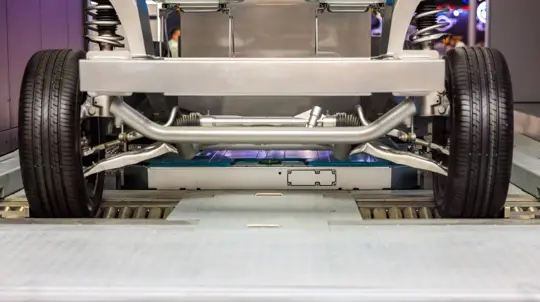
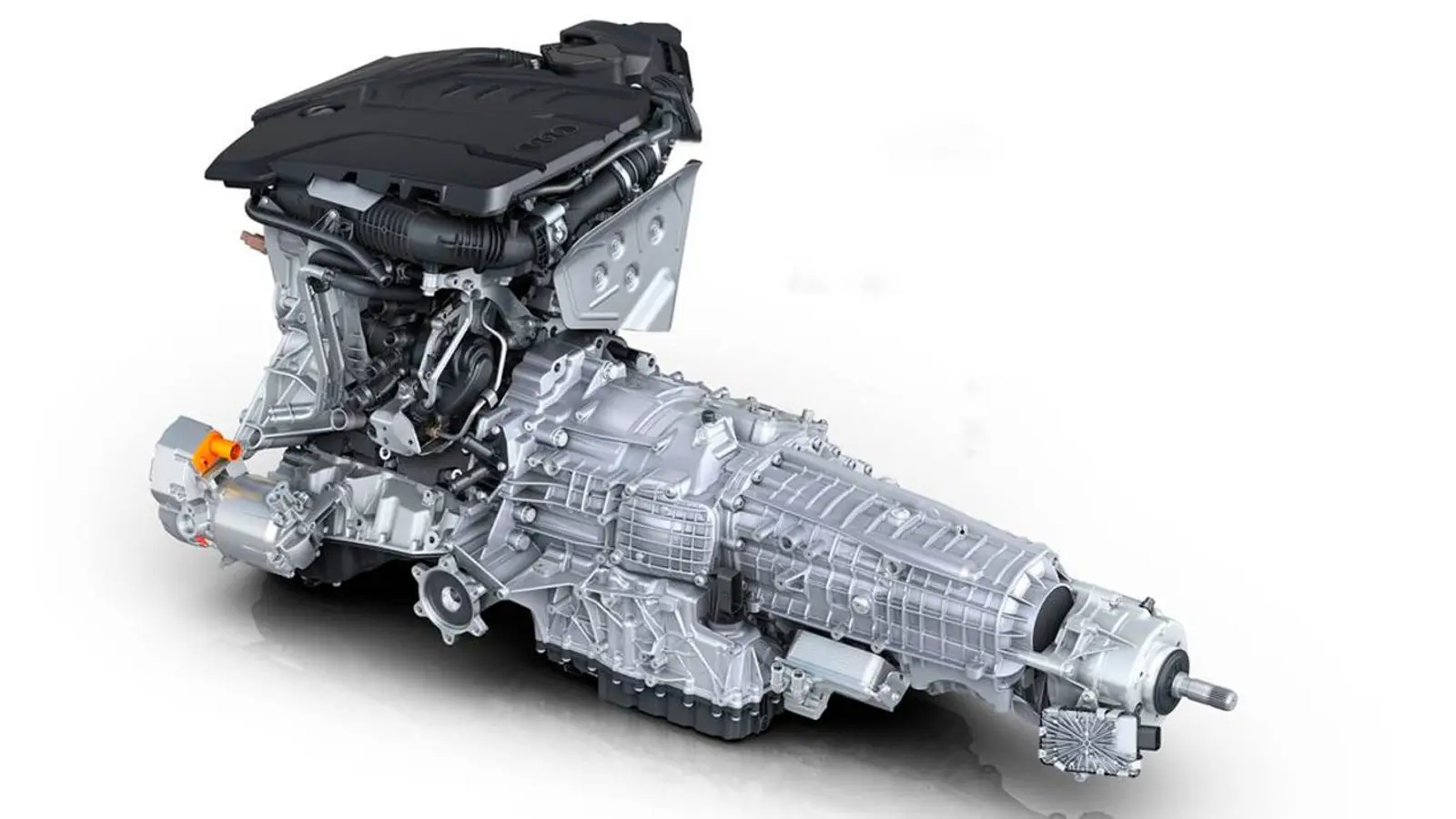
Volkswagen developed a dedicated hybrid module. It contains the traction motor, a second motor-generator, power electronics, the differential, a one-speed transmission and a controlled multi-plate clutch. The clutch connects the 1.5 TSI evo2 to the wheels when needed. At low speed the car can drive electrically, then operate as a series hybrid and, from roughly 60 km/h, as a parallel hybrid. Battery capacity is just 1.6 kWh.
That is why linking the choice of the 1.5 TSI directly to the limit of the six-speed DQ400E is incorrect. Volkswagen designed the new HEV from the outset as a separate system for high-volume front-wheel-drive models. Golf and T-Roc versions with 136 and 170 PS are planned.
The 2.0 TSI itself is perfectly capable of working in a hybrid powertrain. On the longitudinal PPC platform, the Audi A5 e-hybrid combines a 252 PS 2.0 TFSI with an electric motor and delivers either 299 or 367 PS, while maximum system torque reaches 450 and 500 Nm respectively. It uses a different architecture and a seven-speed S tronic.
CUPRA already shows a clear separation of roles in the current Leon Sportstourer. Its petrol 2.0 TSI VZ produces 333 PS and 420 Nm, while the plug-in e-Hybrid uses a 1.5 TSI and delivers up to 272 PS.
CUPRA has not yet disclosed the technical details of a production Leon full hybrid: neither specifications nor launch timing have been announced. However, SEAT and CUPRA CEO Markus Haupt has publicly discussed the future use of the Group's full-hybrid system in the CUPRA Leon and Formentor. A separate official roadmap schedules a SEAT Leon full hybrid for 2028.
The more accurate conclusion is therefore that the 2.0 TSI is not ruled out of hybridisation by a technical limitation. Volkswagen created its new mass-market full hybrid around the 1.5 TSI for front-wheel-drive models, while the 2.0 TSI continues to underpin more powerful variants and other forms of electrification. How CUPRA will tune the new HEV for a sportier Leon will become clear only when the powertrain is officially revealed.
This English edition was prepared using AI translation under editorial oversight by SpeedMe. The original reporting is by Nikita Novikov
Latest Stories