Shift-by-wire gear selectors: why cars automatically engage Park or the parking brake
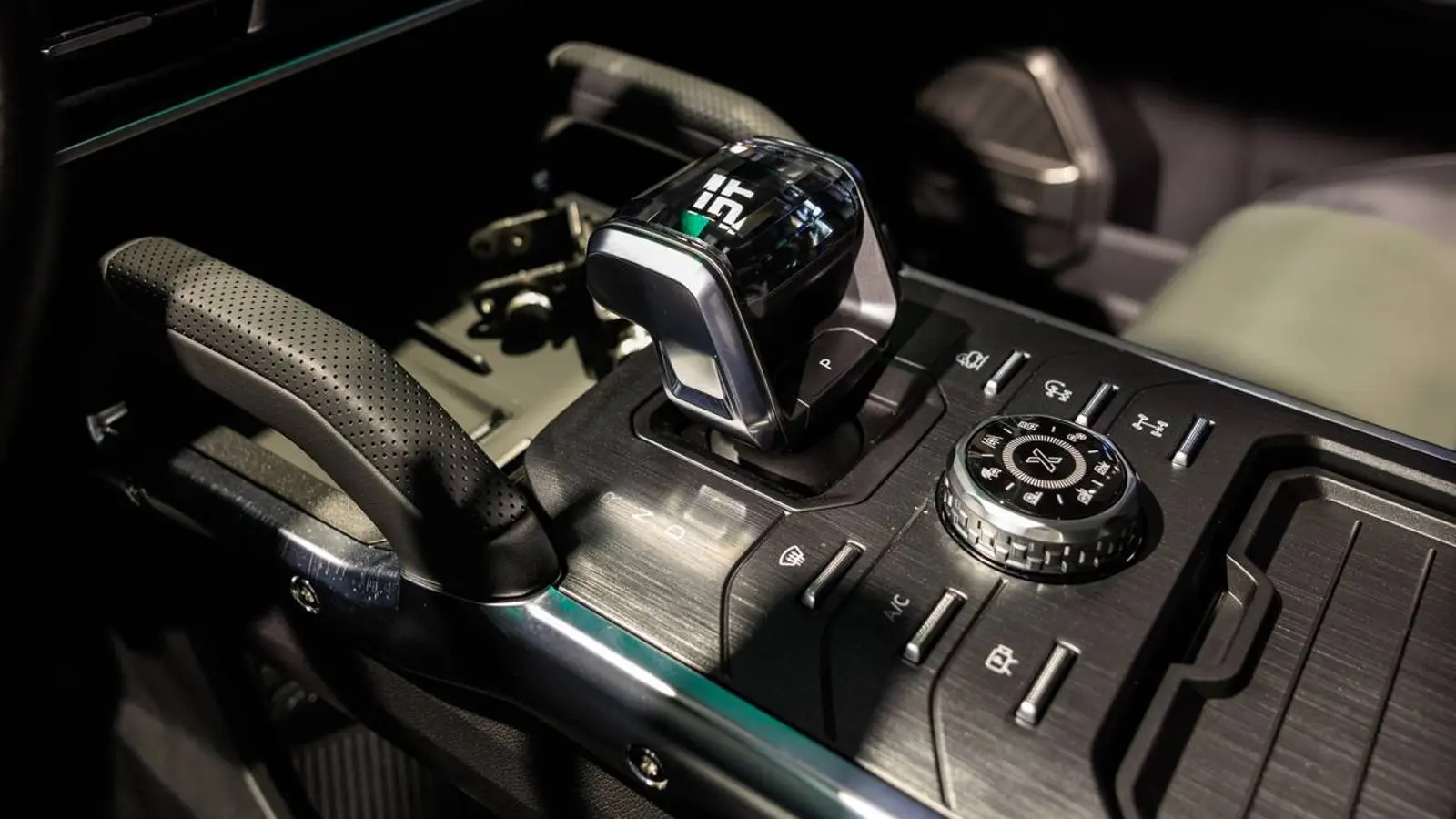 © A. Krivonosov
Shift-by-wire selectors save cabin space but can hide the active gear. Modern cars may engage Park or the electronic parking brake to prevent rollaway.
Author: Nikita Novikov
A rotary dial, buttons or a small joystick can replace a traditional automatic-transmission lever and free up cabin space, but they also create an unusual risk: the physical position of the selector no longer always shows which gear is actually engaged. That is why modern cars with electronic selectors use rollaway protection that can automatically engage P or apply the electronic parking brake if the driver tries to leave the vehicle.
In a shift-by-wire system there is no mechanical link between the selector and the transmission. The driver effectively sends an electronic command to a control unit, which then selects the requested mode. This allows the control to be placed almost anywhere in the cabin, but with a spring-loaded joystick or push buttons the active gear cannot be determined from the position of the control alone.
The problem has a documented history. In NHTSA's final report on Jeep Grand Cherokee, Dodge Charger and Chrysler 300 vehicles with an electronic monostable selector, the investigation covered 811,586 vehicles, 686 complaints, 266 crashes and 68 injury incidents. The regulator found that the selector, which returned to a central position, did not provide the familiar tactile and visual feedback. Drivers could mistakenly believe Park was engaged, leave the vehicle with the engine running and then see it begin to move.
The design has changed significantly since then. Consumer Reports says that by 2026 new vehicles with electronic selectors are equipped with rollaway protection. Depending on the model, the car may automatically engage P when the driver's door is opened or the vehicle is switched off, while another implementation can apply the electronic parking brake.
Those functions are not the same. P locks the transmission in its parking position, while the EPB holds the vehicle through the brakes. Even with Auto Park, drivers should make sure the vehicle is actually secured before getting out and, especially on a slope, use the parking brake in accordance with the owner's manual.
Used cars and vehicles with an unknown software-update or recall history deserve extra attention. There is no single algorithm across all brands: one car may shift itself into P when the door opens, another may apply the parking brake, and an older model may have no automatic protection at all. The owner's manual describes the exact behavior, and a seller can be asked to demonstrate the system before purchase.
If a car automatically moves from N to P when the driver's door opens, that is not necessarily a fault either. On some modern models this logic deliberately prevents the vehicle from being left unsecured. A separate Car Wash, Tow or equivalent mode may therefore be required for conveyor car washes, loading onto a tow truck or other situations in which the vehicle must remain free-rolling in Neutral.
This English edition was prepared using AI translation under editorial oversight by SpeedMe. The original reporting is by Nikita Novikov
Latest Stories