Tesla Plastic Modular Structural Dash patent: design and repair implications
 © A. Krivonosov
Tesla application US 2026/0307489 A1 describes a molded plastic structural dash that integrates multiple functions; production and repair procedures are still unknown.
Author: Dmitry Novikov
Tesla has proposed making the front cabin bulkhead as a single molded plastic component that combines the front wall structure with the cowl area below the windshield. US patent application 2026/0307489 A1 was published on October 8, 2026. The concept is intended to reduce the number of separate parts and assembly operations.
The filing, titled Plastic Modular Structural Dash, describes a monolithic molded plastic panel. HVAC ducts, noise-insulation elements, equipment mounting points and seal channels could be integrated into the part. Ribs and fiberglass reinforcement are also contemplated.
The approach is different from Gigacasting. Gigacasting creates large body structures as high-pressure metal castings; Tesla's filing instead covers a polymer module with mounting points and functional features molded in. In production, that could reduce the number of separate components and the operations needed to join them.
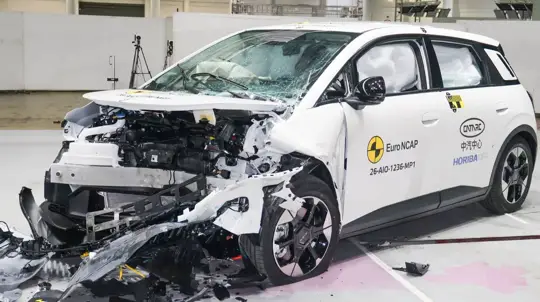
Repair is at least as important as manufacturing savings. Tesla's current Model Y 2025+ body-repair procedure for replacing the Dash Reinforcement Assembly requires removal of the windshield, several front-body components and, on all-wheel-drive versions, the high-voltage battery. The fastener list includes 64 high-strength structural rivets plus other rivets, bolts and structural adhesive.
That example illustrates the access complexity of an integrated structure already used on a production vehicle, but it is not a repair procedure for the proposed plastic part. The new design could simplify factory assembly, while repair cost would depend on the material, damage pattern and whether Tesla permits local repair or requires replacement of the complete module.
The issue is not unique to Tesla. As carmakers move toward larger integrated structures, damage to a small area can sometimes involve work on a much larger component. A monolithic design alone does not prove worse repairability; the result depends on the material, structural design and approved repair method.
Tesla filed the application on April 2, 2025, and it remains pending. No production model, launch date or savings figure has been disclosed. Tesla has also patented other concepts long before any confirmed series use, including pulsed-laser technology for cleaning vehicle glass, so publication of a patent document does not mean a feature is headed directly to production.
The practical value of the concept will become clearer only when production specifications, test results and official repair procedures appear. Those documents will show whether combining the parts benefits only the factory or can also make post-crash service easier for owners.
This English edition was prepared using AI translation under editorial oversight by SpeedMe. The original reporting is by Dmitry Novikov
Latest Stories