BMW M explains why keeping the manual gearbox is becoming difficult
 © A. Krivonosov
BMW M boss Frank van Meel says higher torque, fewer suppliers and 48V integration make future manuals harder, although the gearbox is not ruled out.
Author: Nikita Novikov
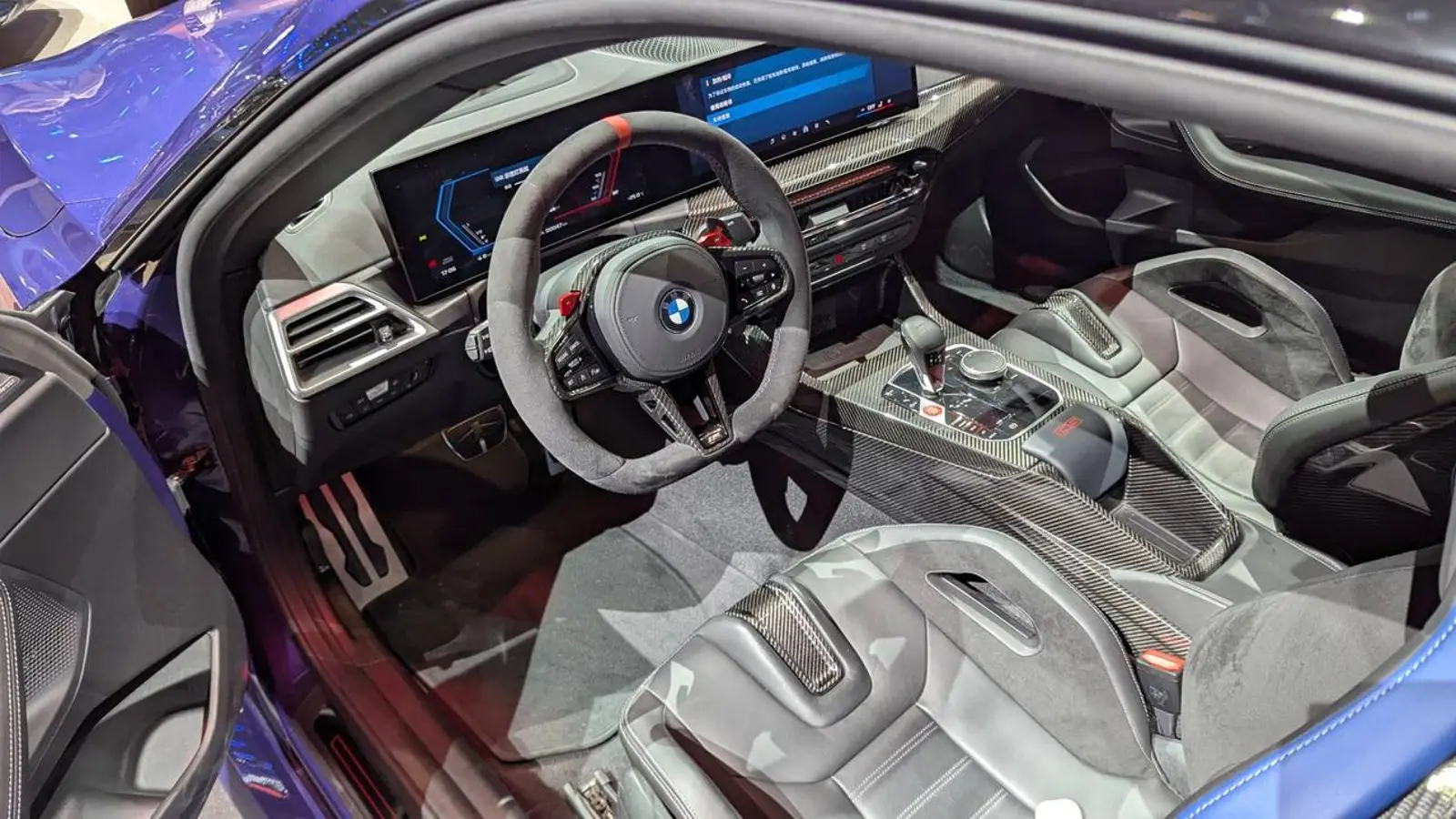
The manual gearbox already limits the current BMW M2. With the same 480 hp output, the rear-wheel-drive car makes 550 Nm with the six-speed manual and 600 Nm with the eight-speed M Steptronic. BMW's official figures confirm the 50 Nm gap, while BMW M chief Frank van Meel also points to rising power and torque as one of the obstacles to keeping a manual. Integration with 48-volt systems now adds another challenge.
In an interview with BMWBLOG, van Meel said retaining a manual transmission in future performance cars will be very difficult. Along with rising engine output, he cited a shrinking pool of manual-transmission suppliers and the challenge of integrating a manual gearbox with a new 48-volt electrical architecture. BMW M has not made a final decision to abandon the manual: van Meel stressed that it remains under consideration and engineers are still looking for solutions.
The consequences of the technical limits can already be seen in the current M2. According to BMW's official German specifications, the rear-wheel-drive coupe reaches 100 km/h in 4.2 seconds with the manual and 4.0 seconds with the eight-speed automatic. The all-wheel-drive M2 M xDrive, offered only with the eight-speed automatic, completes the sprint in 3.7 seconds.
There is an important electrical nuance. A 48-volt system does not by itself rule out manual shifting: Hyundai, for example, has combined a 48-volt mild-hybrid system with a six-speed iMT intelligent manual transmission using an electronically controlled clutch. Van Meel's comments should therefore be read as describing the challenges of BMW M's specific high-performance architecture, not a universal incompatibility between the technologies. The current BMW M2 does not use a 48-volt hybrid system.
Customer demand remains significant. Van Meel says roughly 50% of BMW M2s sold in the United States are fitted with the six-speed manual. The limited BMW M3 CS Handschalter, with rear-wheel drive and three pedals, was effectively sold out within the first week after its announcement, according to BMWBLOG. But small volumes and fewer suppliers make the business case for developing new manual gearboxes harder.
BMWBLOG expects the next gasoline-powered M3, due around 2028, to use a 48-volt mild-hybrid system, xDrive all-wheel drive and an automatic transmission. BMW has officially confirmed that the future combustion-engine M3 will retain an inline-six engine, but the transmission and hybrid details remain information from BMWBLOG's sources rather than official specifications.
For now, the manual remains available in the rear-wheel-drive BMW M2 and the base M4 Coupé. Van Meel has not ruled out keeping it in the future, but he says he cannot make any promises. One of the clearest indicators will be the technical configuration of the next gasoline-powered BMW M3, which will show whether engineers can reconcile new electrification and performance demands with the traditional six-speed gearbox.
This English edition was prepared using AI translation under editorial oversight by SpeedMe. The original reporting is by Nikita Novikov
Latest Stories