Volvo NVIDIA autonomous driving: Hyperion, Alpamayo and Level 2 explained
 © volvocars.com
Volvo and NVIDIA are working on end-to-end automated driving. The first system is expected before 2030, but it will still require driver supervision.
Author: Polina Kotikova
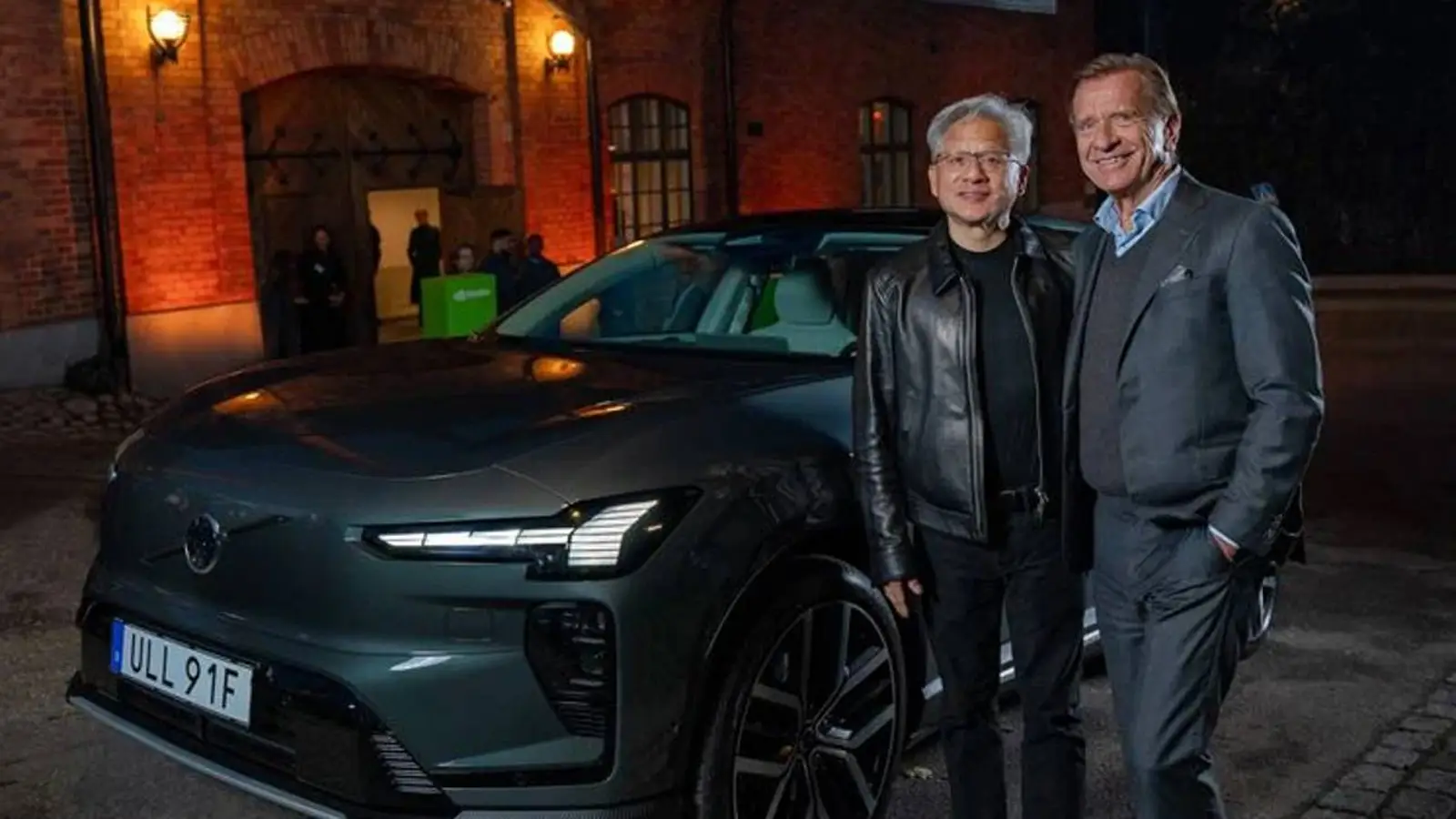
Volvo Cars and NVIDIA announced on October 15 that they are developing technology designed to drive a car from the beginning to the end of a trip, including intersections and parking areas. The first version, however, is expected to require continuous driver supervision. Full autonomy remains a goal, not an available feature.
The architecture will combine the NVIDIA Hyperion computing and sensor platform, Halos OS software and the AI-based Alpamayo Stack. Alpamayo is intended to interpret complex traffic scenarios and determine what the vehicle should do next.
Volvo chief executive Håkan Samuelsson described the partnership: “By working with NVIDIA, we bring together two strengths: advanced safety expertise and world-class artificial intelligence technology.”
There is a significant difference between what a computing platform can do and the autonomy a production car is permitted to offer. According to The Verge, citing company representatives, the initial system will be classified as L2++ and is expected before the end of the decade.
L2++ is not a separate level in the international SAE classification. Even if drivers can take their hands off the wheel, they must keep watching the road and be ready to intervene. An eyes-off mode, under defined conditions, belongs to Level 3 automation.
There is also a hardware caveat. In 2025, Volvo began building EX90 and ES90 vehicles without lidar because of limited equipment availability. The Verge reports that the first version of the new NVIDIA system will also omit lidar, although its future addition remains possible.
Current EX90 and ES90 models already use NVIDIA Orin processors. That does not establish compatibility with the future Hyperion system.
The companies began working together in 2017, when they discussed vehicles with autonomous capabilities by 2021. NVIDIA now offers a more advanced architecture, but Volvo has yet to name the first model or the final operating conditions.
NVIDIA founder Jensen Huang described the ambition: “Accelerated computing has transformed the automobile into an intelligent machine capable of understanding the world around it.”
The real milestone will be the unveiling of a production Volvo equipped with the system and a clearly specified level of driving automation.
This English edition was prepared using AI translation under editorial oversight by SpeedMe. The original reporting is by Polina Kotikova
Latest Stories