Tesla moves closer to launching its fully autonomous Cybercab robotaxi
Tesla edges closer to launching the fully autonomous Cybercab robotaxi
Tesla moves closer to launching its fully autonomous Cybercab robotaxi
Tesla appears to be entering the final production phase for the fully autonomous Cybercab, with steering-wheel-free and pedal-free cars spotted at its Texas plant.
2026-04-19T13:10:01+03:00
Tesla has moved a step closer to launching its fully autonomous Cybercab robotaxi. Around 14 production-spec vehicles without a steering wheel or pedals have been spotted at the company’s Texas plant, pointing to a shift into the final stage of production.Earlier test versions used temporary controls to comply with safety requirements, but the latest cars no longer carry those elements. The Cybercab was conceived from the outset as a fully autonomous vehicle designed to operate with Full Self-Driving and no driver involvement.The cars feature a two-seat layout, a minimalist cabin and no side mirrors. Dropping conventional controls helps cut weight, simplify the design and extend range.Production of the model began in late 2025, and the current batch may be intended for a pilot robotaxi service launch, likely in Austin. Current US regulations, however, limit the production of such steering-wheel-free vehicles to 2,500 units a year without special approvals. The Cybercab underscores the industry’s move toward fully autonomous transport and new mobility formats.
Tesla, Cybercab, robotaxi, autonomous vehicle, Full Self-Driving, self-driving car, two-seater, Texas factory, Austin, steering wheel delete, pedal-free car
2026
Michael Powers
news
Tesla edges closer to launching the fully autonomous Cybercab robotaxi
Tesla appears to be entering the final production phase for the fully autonomous Cybercab, with steering-wheel-free and pedal-free cars spotted at its Texas plant.
Michael Powers, Editor
Tesla has moved a step closer to launching its fully autonomous Cybercab robotaxi. Around 14 production-spec vehicles without a steering wheel or pedals have been spotted at the company’s Texas plant, pointing to a shift into the final stage of production.
Earlier test versions used temporary controls to comply with safety requirements, but the latest cars no longer carry those elements. The Cybercab was conceived from the outset as a fully autonomous vehicle designed to operate with Full Self-Driving and no driver involvement.
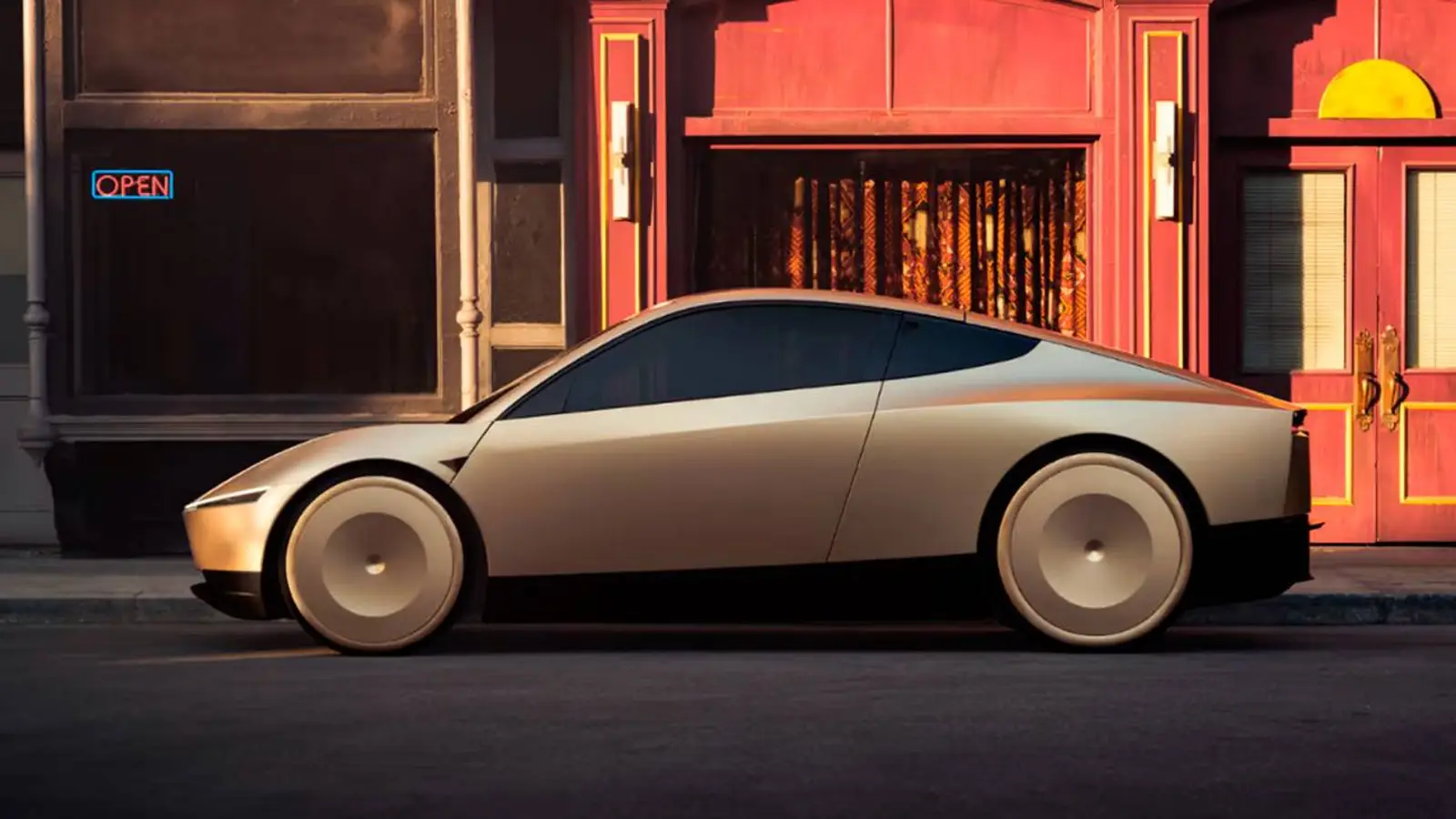
The cars feature a two-seat layout, a minimalist cabin and no side mirrors. Dropping conventional controls helps cut weight, simplify the design and extend range.
Production of the model began in late 2025, and the current batch may be intended for a pilot robotaxi service launch, likely in Austin. Current US regulations, however, limit the production of such steering-wheel-free vehicles to 2,500 units a year without special approvals. The Cybercab underscores the industry’s move toward fully autonomous transport and new mobility formats.