Snowflake on the sidewall: how far does the 3PMSF promise actually go?
 © company.nokiantyres.com
The Three-Peak Mountain Snowflake mark proves a tire passes a snow-traction test, but it doesn't cover braking, cornering or ice. Here's what to know.
Author: Yulia Ivanchik
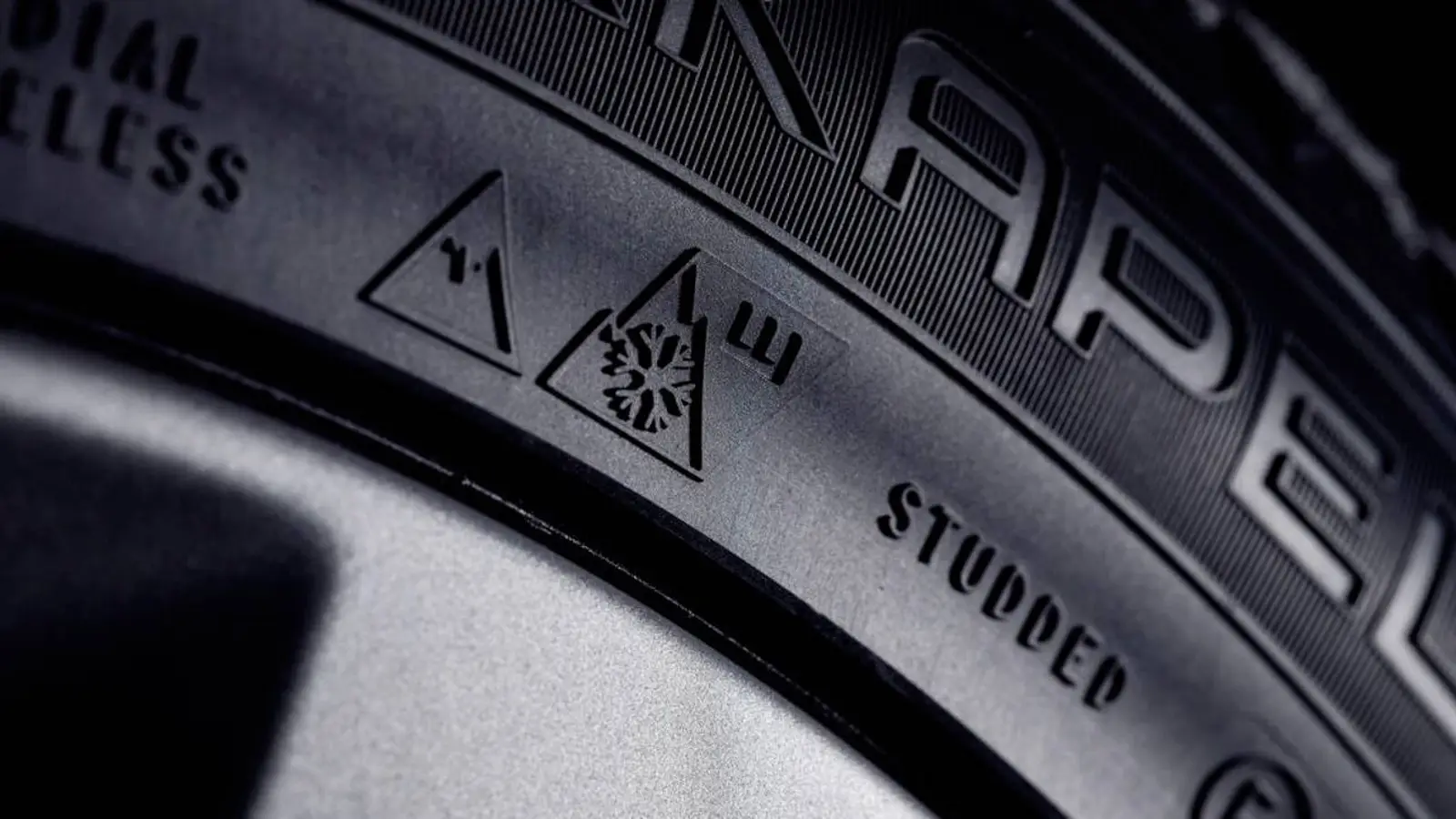
An expert reminded drivers about an important marking found on winter and all-season tires — a three-peak mountain with a snowflake inside. This pictogram is called 3PMSF, or Three-Peak Mountain Snowflake. It is placed on the sidewall of tires that meet a defined minimum level of snow traction. The marking makes it easy to tell a tire that has passed a real winter test from an ordinary tire carrying only the more generic M+S label.
The key difference between 3PMSF and M+S lies in the test itself. M+S stands for Mud and Snow, but in practice it is essentially a manufacturer self-declaration based on tread pattern. The 3PMSF symbol, by contrast, requires passing a standardized snow-traction test. Tire Rack points out an important nuance: the test measures acceleration traction on packed snow. Braking, cornering and ice grip are not assessed.
That is why the «mountain snowflake» symbol should not be treated as a universal safety guarantee. A 3PMSF tire should genuinely outperform a regular M+S all-season on snow, but all-season and off-road tires bearing the symbol do not always replace dedicated winter tires. In hard frost, on ice and in heavy slush, much still depends on the rubber compound, tread depth, tire pressure, vehicle weight and driving style.
This English edition was prepared using AI translation under editorial oversight by SpeedMe. The original reporting is by Yulia Ivanchik
Latest Stories