The end of a diesel legend: what to check before you buy a used 2.0 TDI
 © volkswagen-newsroom.com
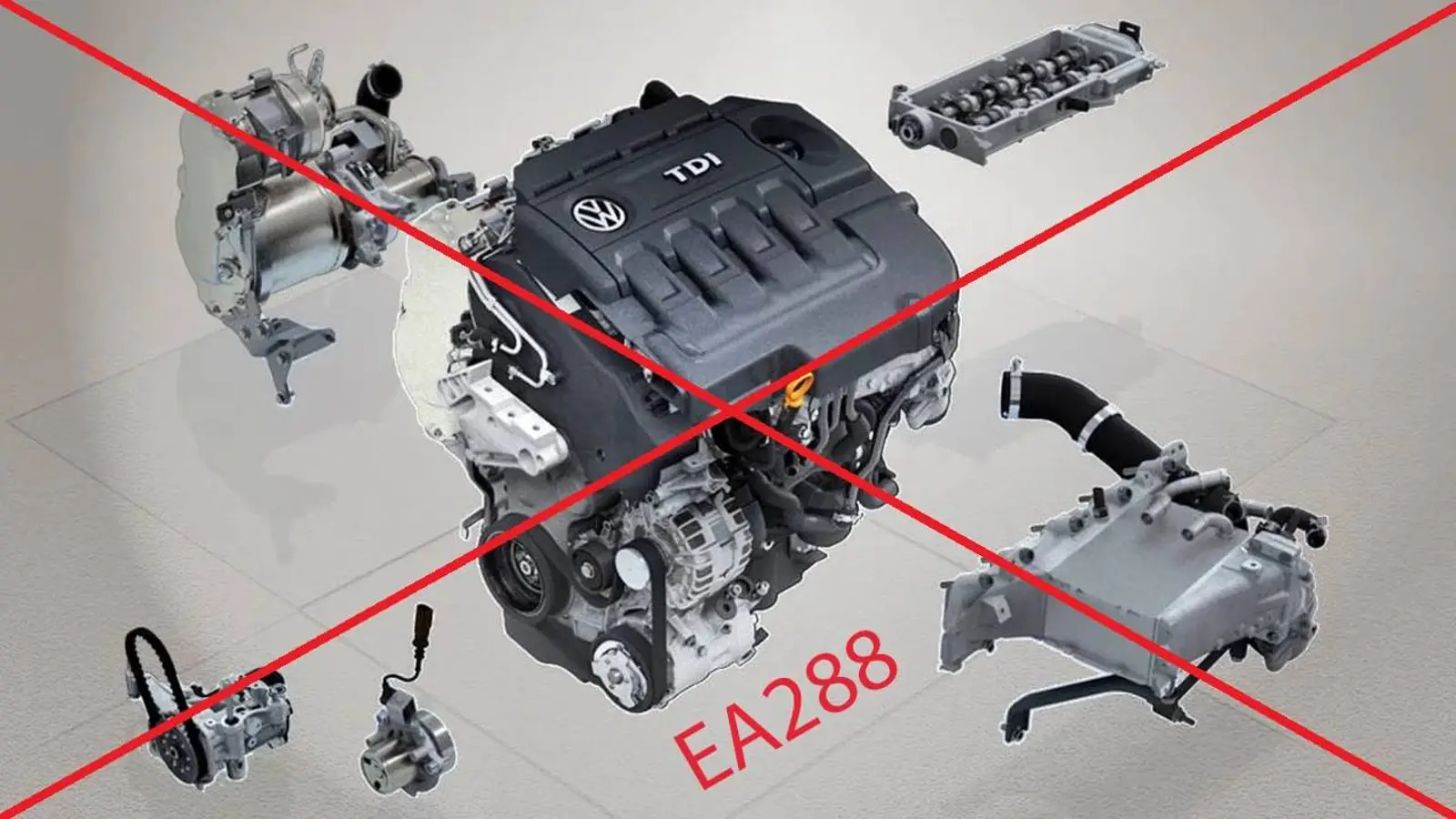
VW is retiring the 2.0 TDI EA288 as the new T-Roc goes hybrid-only. The engine's weak spots — cooling, EGR, SCR, timing belt and oil use — and what to verify before buying one used.
Author: Dmitry Novikov
Volkswagen built its reputation on diesels, yet now it is winding that era down itself. The new T-Roc will be the first model in the range without a diesel option, and Golf is set to follow the same road later. The official reasons are clear enough: emissions fines, Euro 7 and pressure from Brussels. The awkward part is that the farewell coincides with a long list of complaints about the 2.0 TDI EA288 — the engine that was meant to be a cleaner, more dependable heir to VW’s diesel tradition.
In place of diesel, Volkswagen is preparing a self-charging hybrid. The system reaches the T-Roc in the fourth quarter of 2026 and will be offered in 136 hp and 170 hp guises. The stronger version should sit at around 4.5 l/100 km — the very figure buyers used to pick a TDI for. The difference is that an HEV needs no AdBlue, no particulate filter with its diesel regeneration cycles, and no gentle usage routine for frequent short city hops.
On the EA288, the main risk node is cooling. Owners and workshops complain about the expansion tank with its silicate insert: when it disintegrates, the granules can clog the circuit. Add leaks from the thermostat housing, the pump, the EGR, the intercooler and the hoses. A separate headache is the mechanical pump regulator — if it hangs in low-flow mode, the engine heads swiftly toward overheating and the risk of a blown head gasket.
There are the classic diesel ailments too. The SCR system suffers with infrequent use: once opened, AdBlue has a limited life, crystallises and throws up faults. On the 184 hp versions familiar from the Golf GTD and Skoda Octavia RS TDI, owners report raised oil consumption under hard driving. And the claimed timing-belt life of up to 210,000 km strikes many owners as too optimistic: in practice it is safer to budget for replacement at 120,000–150,000 km.
If you are shopping for a used diesel VW, all of this is directly practical. Diesel versions of the Tiguan, Passat, Golf, Skoda Octavia, Superb and Kodiaq with the 2.0 TDI are still all over the classifieds, and some buyers still treat them as a «German forever engine». Against a wave of cheap new crossovers they tempt with running costs and resale value, but age, mileage, AdBlue, EGR, cooling and the price of repairs easily swallow the fuel savings.
Buy a 2.0 TDI today not on the myth of reliability but on the service history: cooling system, belt, pump, EGR, SCR and oil consumption should all be checked before the deal, not after the first long run.
This English edition was prepared using AI translation under editorial oversight by SpeedMe. The original reporting is by Dmitry Novikov
Latest Stories