One gram, ten tennis courts: the zinc battery that came out of a 3D printer
 © newsroom.ucla.edu
Researchers at UCLA built a hybrid zinc battery with a 3D-printed carbon electrode that stores seven times more energy than comparable devices.
Author: Yulia Ivanchik
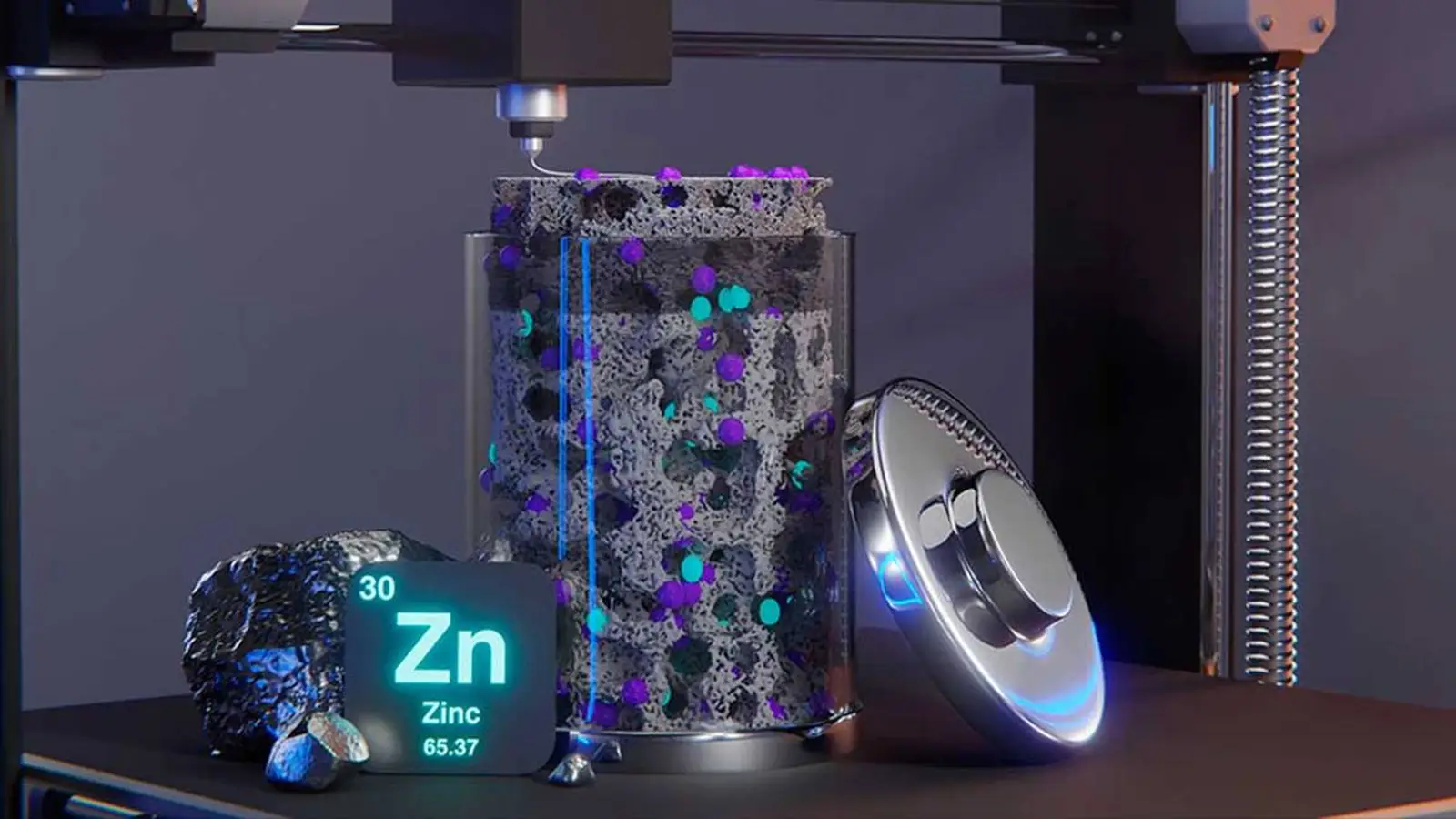
Researchers at the University of California, Los Angeles have unveiled an experimental hybrid battery based on zinc. The technology combines zinc, an aqueous electrolyte and a 3D-printed carbon electrode with an ultra-porous structure.
The core idea is to expand the surface area where energy can be stored. Using high-precision 3D printing, the team created an electrode with a structure resembling a sponge or honeycomb. By the developers' estimate, a single gram of this material, unfolded, would cover roughly ten tennis courts.
The first results look promising. The experimental cell stored seven times more energy than similar hybrid devices and retained 82% of its capacity after 1500 cycles. The hybrid operating principle blends the behaviour of a conventional battery with that of a supercapacitor, which should deliver fast charging and discharging.
Even so, it is too early to speak of zinc quickly replacing lithium-ion batteries in electric cars. This chemistry is better suited to stationary energy storage. Zinc is cheaper, more abundant than lithium, easier to recycle and potentially safer thanks to the aqueous electrolyte — but the technology remains confined to the lab for now.
This English edition was prepared using AI translation under editorial oversight by SpeedMe. The original reporting is by Yulia Ivanchik
Latest Stories