Toyota Tundra V35A Engine Recall 2026: How the Hammer Bearing Test Works
 © A. Krivonosov
Toyota's V35A Crank Bearing Inspection uses a plastic hammer and accelerometer to decide whether a recalled Tundra engine needs replacing under NHTSA campaign 25V767.
Author: Nikita Novikov
Three controlled taps with a plastic hammer on the crankshaft pulley can now decide the fate of a Toyota Tundra’s V6. This isn’t a “hammer fix”: an accelerometer mounted on the crankshaft bolt records the vibrations from the impact, and diagnostic software analyzes the resonance for signs of abnormal wear on the No. 1 main bearing.
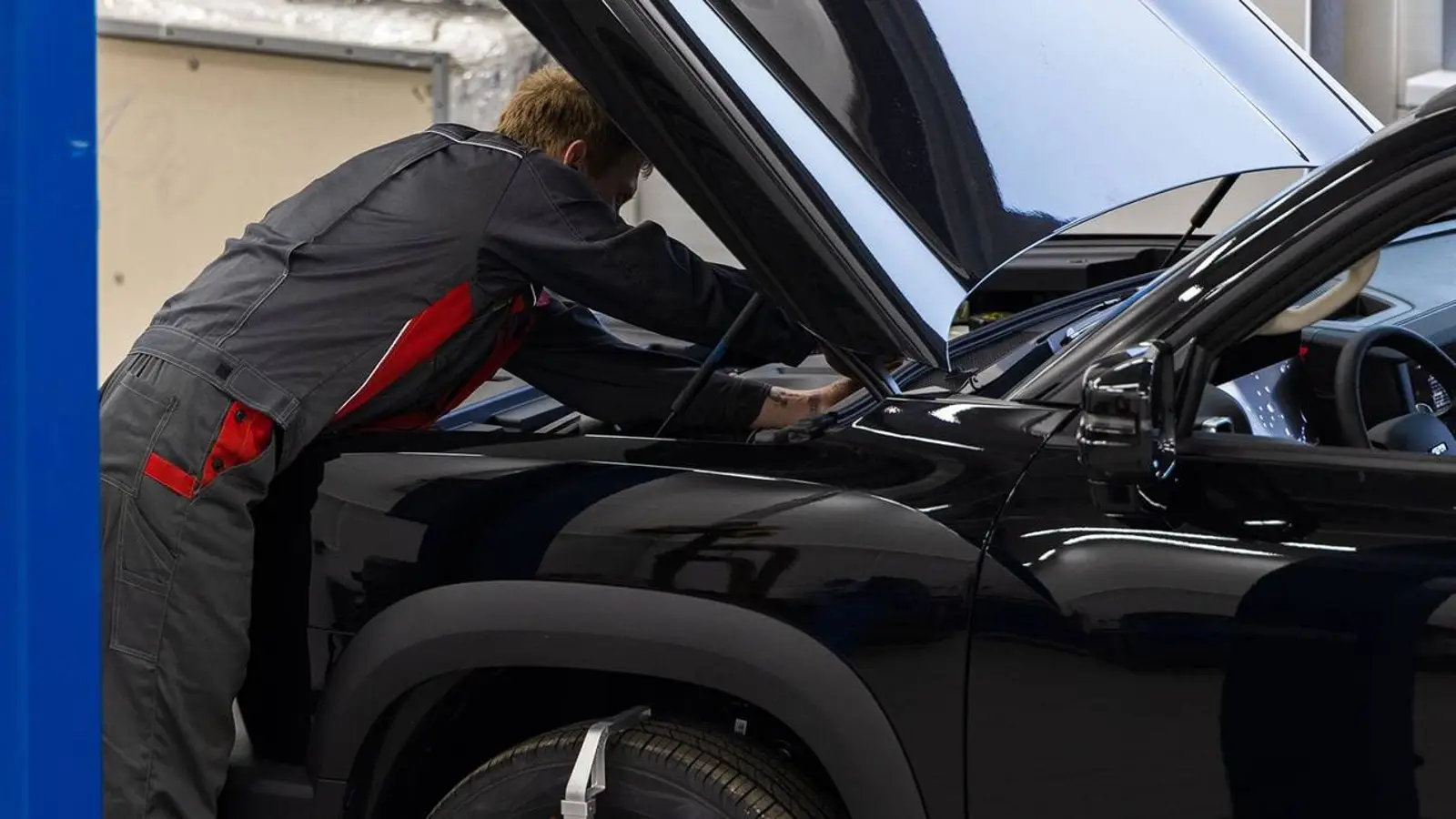
According to the published dealer instructions for the V35A Crank Bearing Inspection, before measuring, a technician changes the oil, warms the 3.4-liter twin-turbo V6 to a specified temperature, removes the accessory belts, and positions the crankshaft correctly. The strike lands near the “three o’clock” position on the pulley, and the software rejects strikes that are too weak, too strong, or doubled. Three valid measurements are required for a diagnosis.
Behind the unusual mechanics is a fully official procedure. NHTSA’s documentation for campaign 25V767 states that dealers must assess the No. 1 main bearing using special software and drive data. If the system can’t confirm the absence of abnormal wear, the engine is replaced free of charge. The campaign covers 126,691 Tundra, Lexus LX, and GX vehicles, including 113,079 Tundra pickups.
In other words, the hammer is only there to trigger controlled vibrations — the engine is essentially used as a tuning fork. Back in June, Pickup Truck + SUV Talk described Toyota’s shift from unconditional engine replacement to software-based diagnostics, and the new instructions reveal exactly how the dealership gathers the extra data the algorithm needs.
The root cause hasn’t changed: metal debris could remain inside some V35A engines after machining, potentially damaging the bearing and causing knocking, rough running, a no-start condition, or a stall. In May 2026, Toyota expanded the campaign by about 44,000 more non-hybrid 2024 Tundra trucks. The company acknowledged that even additional cleaning measures didn’t fully eliminate the problem, so later engines received an improved No. 1 main bearing. Of the roughly 102,000 vehicles in the first U.S. recall, dealers had already repaired more than 77,000 by May.
The V35A saga is already shaping perceptions of Toyota’s broader lineup: the situation with the hybrid-V6 Sequoia is different — the official engine campaign doesn’t cover it. Trying the “hammer test” yourself is pointless: what matters diagnostically is the specified temperature, crankshaft position, strike force, sensor, and signal-processing algorithm — not the sound of the engine itself.
This English edition was prepared using AI translation under editorial oversight by SpeedMe. The original reporting is by Nikita Novikov
Latest Stories