Mercedes-Benz tests ProLogium Gen4 solid-state batteries with up to 400 Wh/kg
 © ProLogium
Mercedes-Benz will test ProLogium Gen4 solid-state cells. The developer claims up to 400 Wh/kg and 5–80% charging in about 6.4 minutes, but series production is not yet announced.
Author: Nikita Novikov
Mercedes-Benz has opened another front in the solid-state battery race. The company signed a new agreement with ProLogium and secured priority access to Gen4 cells for testing. Engineers will evaluate their electrical performance, thermal behavior and safety before the technology can be considered for future production vehicles.
The agreement concerns priority access for testing, not exclusive supply. No specific Mercedes model using Gen4 has been named, and no timetable for automotive mass production of these batteries has been announced.
The numbers are more striking than the agreement itself. ProLogium's official technology page lists a specific energy of up to 400 Wh/kg for Gen4 and charging from 5% to 80% in about 6.4 minutes. The design uses a fully inorganic electrolyte, a ceramic separator and the company's own active safety mechanism.
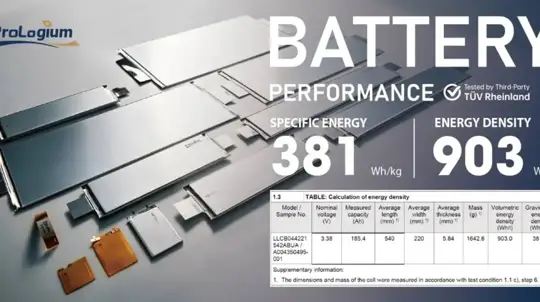
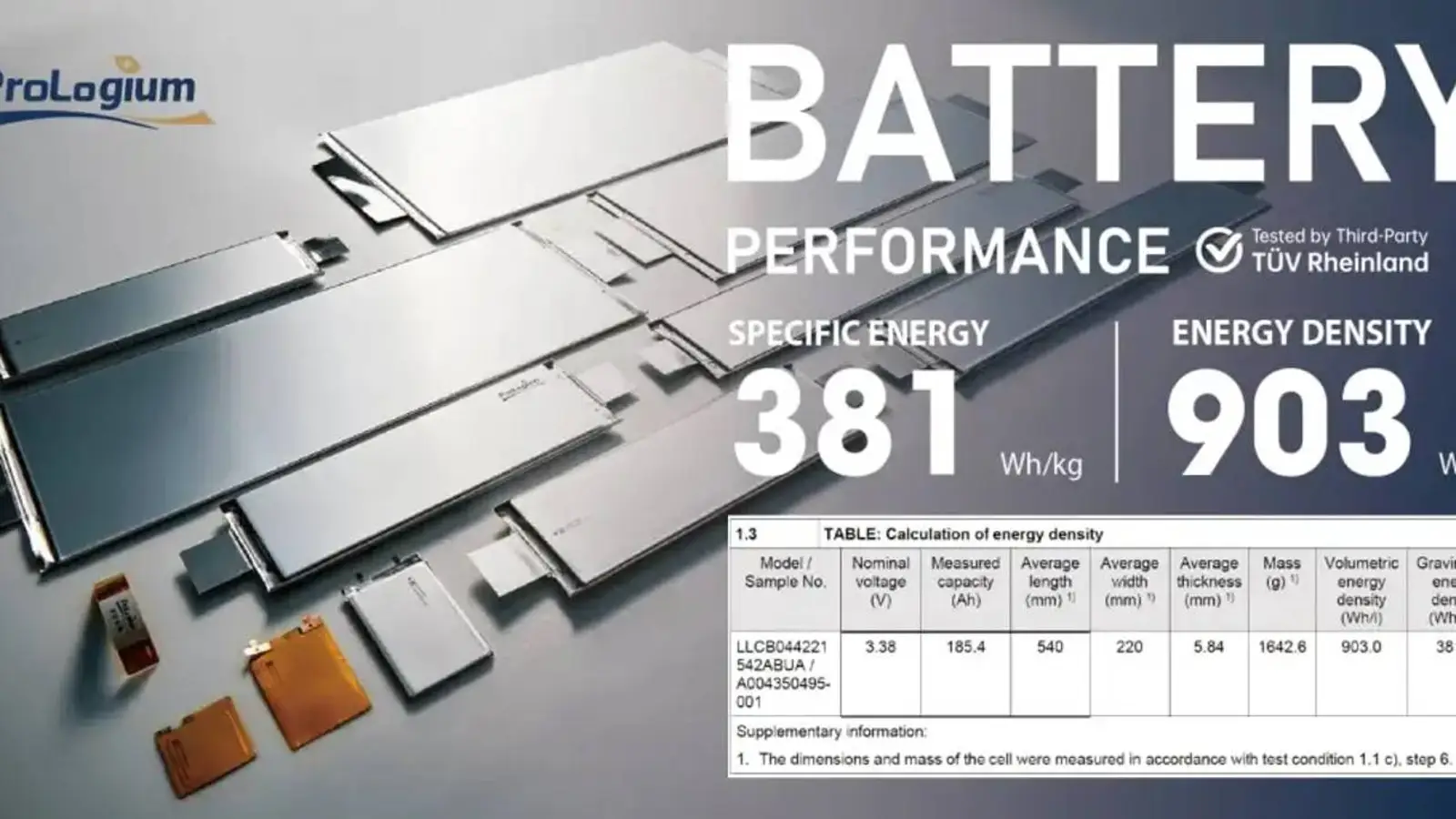
There is, however, an important line between claimed and independently verified performance. TÜV has confirmed 381 Wh/kg for a large-format 185.4 Ah Gen3.5 cell that ProLogium has already moved into mass production in Taiwan. The upper figure of 400 Wh/kg applies to the next Gen4 generation and for now remains a developer-stated specification.
Mercedes is not relying on a single supplier. The company is also working with Factorial, whose FEST cells have already been tested in a real Mercedes-Benz vehicle. This parallel approach lets the automaker compare different solid-state technologies by practical validation rather than presentation slides.
ProLogium is also moving beyond the laboratory stage. Gen3.5 is already being produced at its Taiwan facility, while the company estimates that moving to Gen4 will require changes to only about 10% of existing equipment. In Europe, ProLogium is building a plant in Dunkirk: the first phase is intended to ramp gradually to 4 GWh per year by 2030, while the site's maximum planned capacity is 44 GWh.
Other projects are progressing across the market at the same time, so the significance of today's Mercedes agreement is not a promise of a "six-minute battery" but the move of Gen4 into full validation by one of the world's largest automakers.
The next milestone worth watching is not another record number, but the results of Mercedes' qualification tests and the emergence of a specific vehicle program. Until then, 400 Wh/kg and 6.4 minutes remain the potential of Gen4, not specifications of a future production Mercedes.
This English edition was prepared using AI translation under editorial oversight by SpeedMe. The original reporting is by Nikita Novikov
Latest Stories