One chip to rule every screen: LG's blueprint for the software-defined cockpit
 © lg.com
LG's new automotive solution lets one Qualcomm Snapdragon Cockpit chip drive every screen in the car, cutting hardware complexity for SDV-era vehicles.
Author: Dmitry Novikov
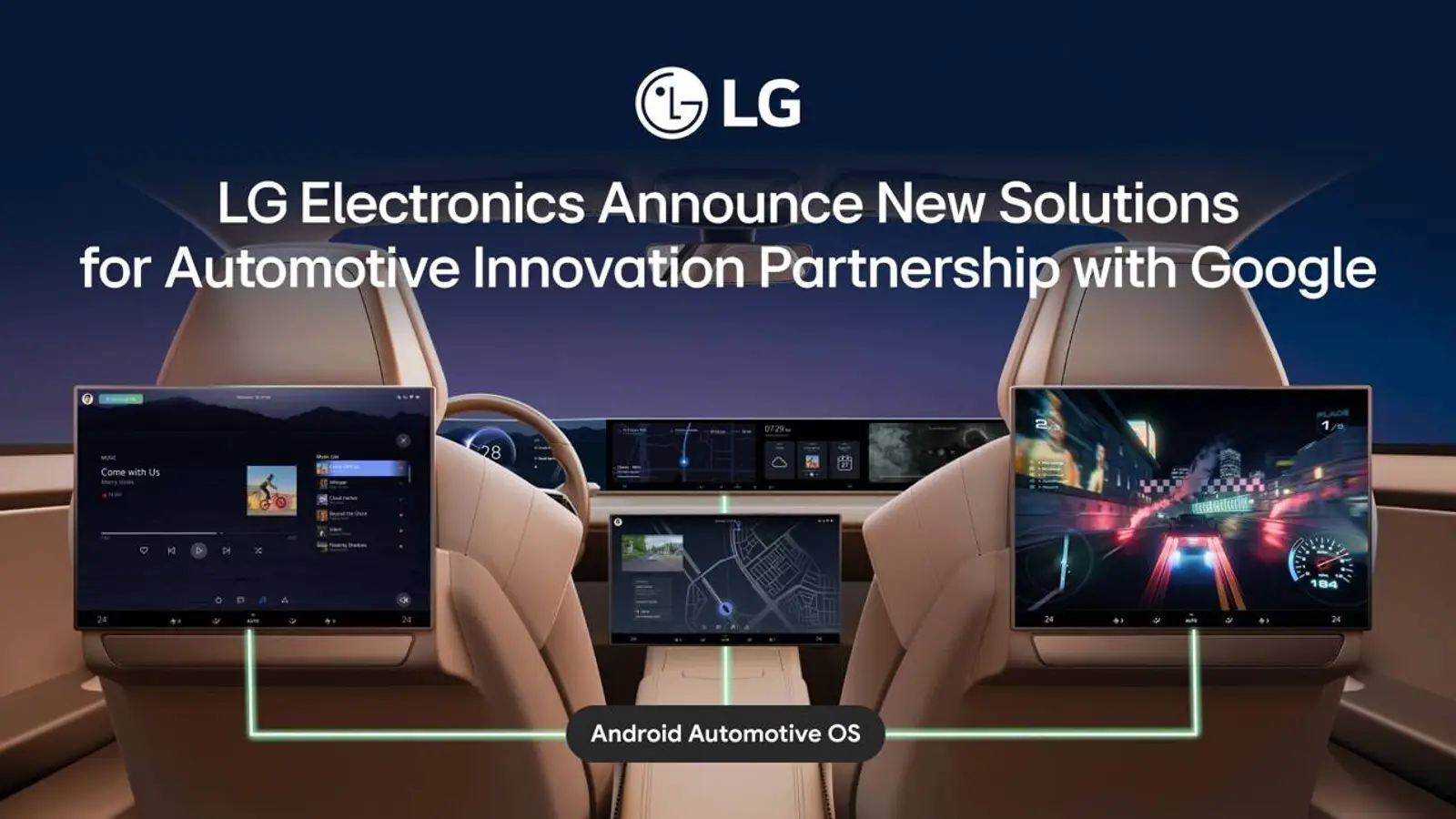
LG has unveiled new multimedia and software-defined vehicle solutions for cars. The core idea: multiple displays inside the cabin can be driven by a single chip, instead of bolting a dedicated control unit onto every screen.
The system is built on Android Automotive OS and Google's AAOS SDV (Software-Defined Vehicles) initiative. At its heart sits the next generation of the Qualcomm Snapdragon Cockpit platform. It is designed to handle navigation, vehicle data, infotainment and a mix of display formats inside the cabin at the same time. For automakers, the practical payoff is real: fewer components mean a simpler architecture, lower integration costs and less risk when scaling the setup across different models.
For passengers, the scenario will feel familiar to anyone who has spent time in a modern Chinese or premium car. The driver sees navigation, the front passenger watches YouTube, the rear passengers have their own content on dedicated screens. Personal accounts, individual settings, content sharing and parental controls are all supported. Voice control lets occupants reshuffle the display layout, launch apps, adjust the volume and operate vehicle functions without unnecessary taps.
Google specifically praised the platform's stability, its multi-display behaviour, its voice interface and LG's compatibility with different chipsets. In the SDV era this matters more than it sounds: the cabin is turning into a digital platform where price, convenience and safety depend less on how big the screens are, and more on how smoothly the whole stack works on a single piece of silicon.
This English edition was prepared using AI translation under editorial oversight by SpeedMe. The original reporting is by Dmitry Novikov
Latest Stories