Nilu27 NILU hypercar 2026: V12 engine, first start-up, price and release timeline
 © Nilu27
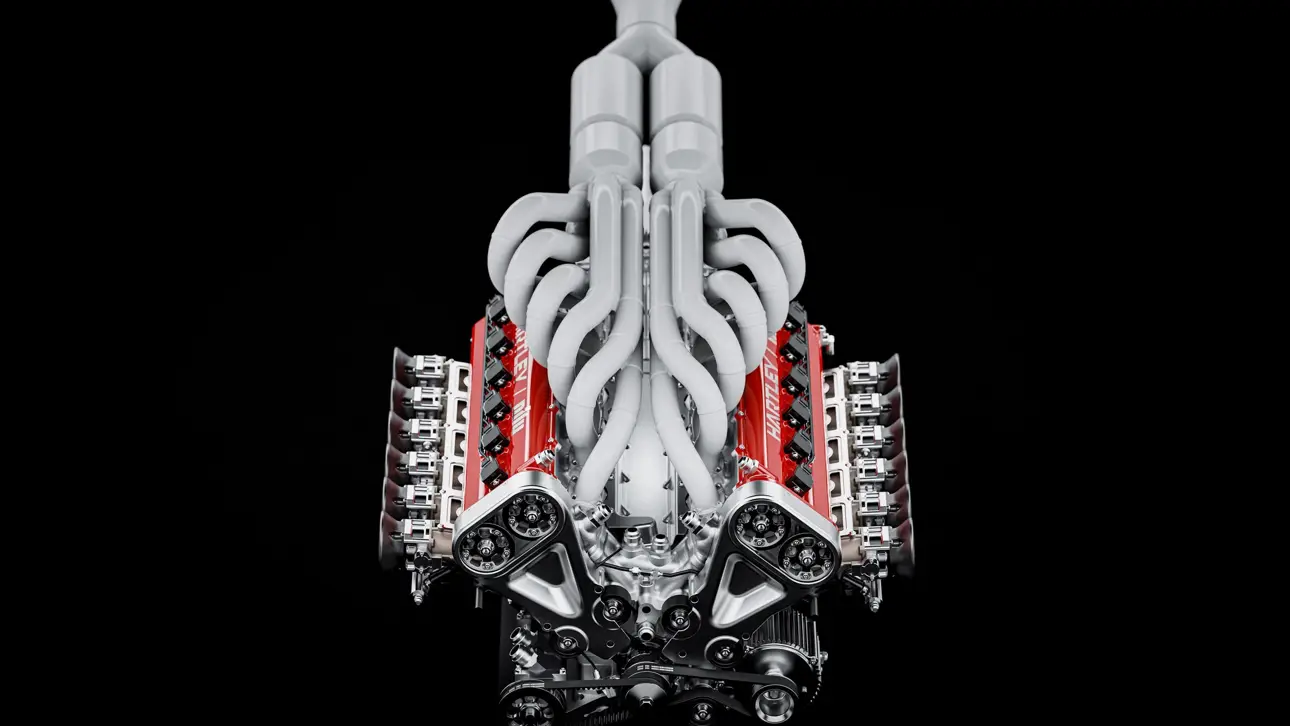
Nilu27 has started its bespoke 6.5-liter naturally aspirated V12, built with Hartley Engines for the upcoming analog NILU hypercar. Redline hits 11,000 RPM.
Author: Nikita Novikov
Nilu made headlines again — not with another render, but with an engine startup. Startup Nilu27 has fired up a 6.5-liter naturally aspirated V12 for the first time, the engine destined to become the heart of an analog hypercar with no drive modes, no touchscreen overload, and no buttons on the steering wheel. In an era of electric records, this car sells almost the opposite idea: driver, mechanics, sound, and minimal digital interference.
The engine was developed together with New Zealand’s Hartley Engines. The original target was 1,070 HP, but the engine already exceeded that figure on its first dyno run. Redline sits at 11,000 RPM, displacement is 6.5 liters, the bank angle is 80 degrees, and it uses a hot-V layout: the exhaust manifolds sit between the cylinder heads so heat escapes through the fully exposed rear engine bay. Nilu27 has also previously quoted 860 Nm of torque at 7,000 RPM.
This isn’t an engine built for a showroom stand. It’s paired with a 7-speed CIMA manual gearbox, center-lock wheels, Michelin Pilot Sport Cup 2 R tires, Brembo brakes, and double-wishbone pushrod suspension. The V12 is now being fine-tuned and calibrated in New Zealand before heading to Lahr, Germany, where it will go into the first running prototype. Nilu27’s official site also lists the CIMA manual gearbox as part of its “most authentic” driving-experience concept.
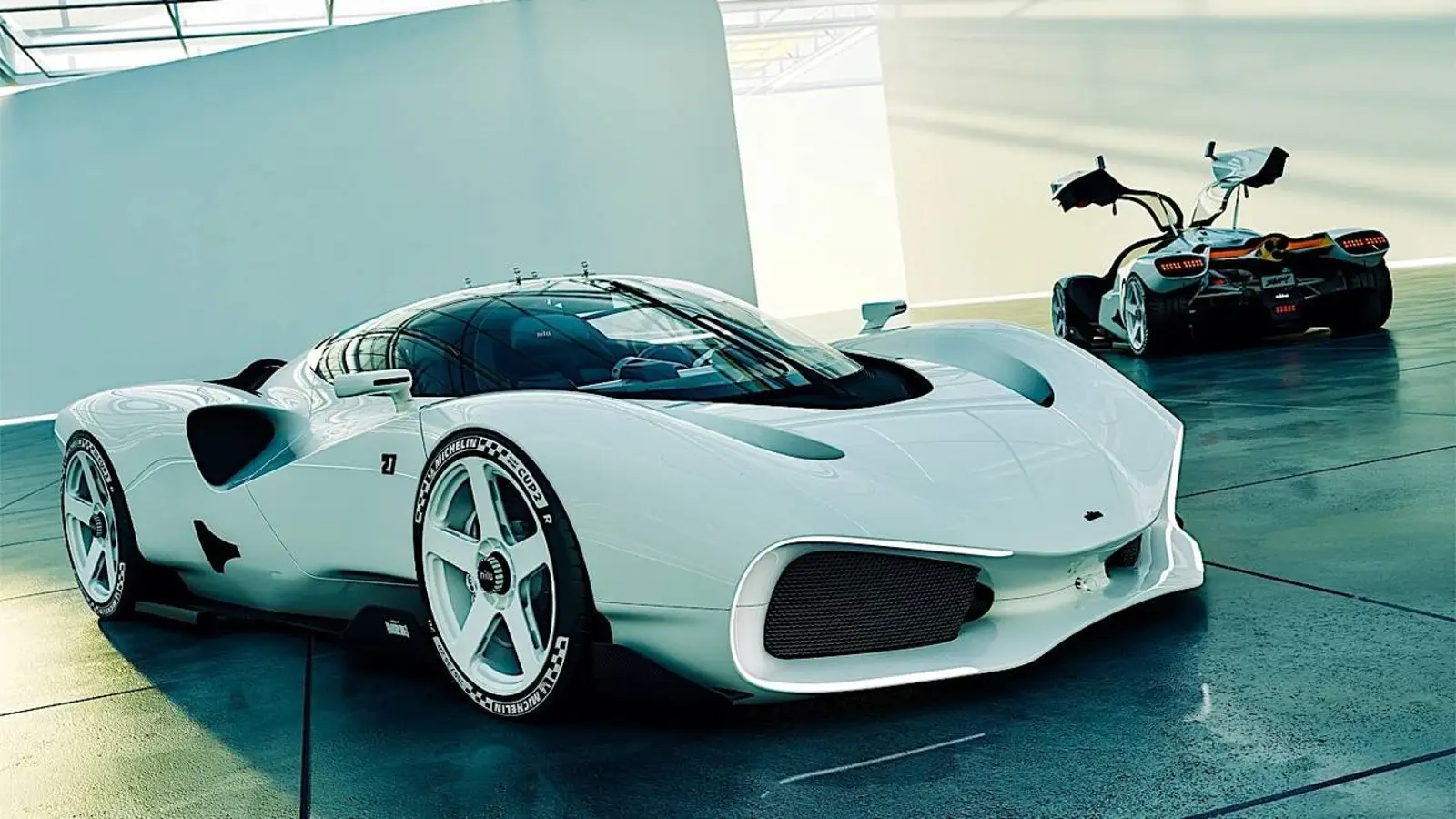
The project’s founder is Sasha Selipanov, a designer previously with Lamborghini, Bugatti, and Koenigsegg. That’s why Nilu doesn’t come across as a garage fantasy but as a deliberate challenge to Rimac, Lotus Evija, AMG One, and the new wave of hybrid hypercars. Instead of battery power and layered drive modes, there’s a carbon monocoque, aluminum tubular subframes, gullwing doors, recessed seats, and a single screen — for the rearview camera, since a mid-engined car like this has almost no rear visibility.
The production plan is deliberately collector-grade: 15 track cars first, then 54 road-legal versions. There’s no official price yet, but if the figure lands anywhere near $3 million, as rumored, that’s a genuinely rarefied price point. For most owners, a hypercar like this will always be more about access — engine servicing, tires, brakes, body parts, and specialists who won’t flinch at near-race-car architecture — than about daily practicality.
Nilu isn’t interesting because it’s the fastest thing out there. It’s interesting because in 2026, someone is still willing to build a brand-new V12 as if a touchscreen isn’t supposed to be the center of the car.
This English edition was prepared using AI translation under editorial oversight by SpeedMe. The original reporting is by Nikita Novikov
Latest Stories